Cranbury, New Jersey: A Blend of Historic Charm and Modern Infrastructure
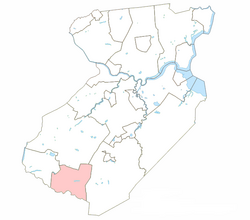
Nestled in the southern portion of Middlesex County, Cranbury is a picturesque township that balances a deep respect for its colonial roots with the demands of modern transit and commerce. Known for its preserved architecture and quiet residential atmosphere, Cranbury offers a unique glimpse into New Jersey's evolution from a rural landscape to a strategic hub of the Northeast corridor.
As of the 2020 United States census, the township is home to 3,842 residents, with recent estimates suggesting a slight growth to 3,960 by 2023. Despite its small population, the township maintains a significant presence due to its location and historic landmarks.
Key Facts
- Incorporation: Established March 7, 1872.
- Land Area: 13.28 square miles of land and 0.15 square miles of water.
- Historic Status: Home to the Cranbury Historic District, listed on the National Register of Historic Places.
- Education: Operates a K-8 school district, with high school students attending Princeton High School.
- Transportation: Bisected by major arteries including U.S. Route 130 and the New Jersey Turnpike.
History and Heritage
Cranbury was officially incorporated as a township in 1872, formed from sections of South Brunswick and Monroe Townships. Over the decades, its borders shifted, including the 1919 carve-out that helped form Plainsboro Township. The community's long history was celebrated during its tricentennial in 1998.
The township is particularly noted for its commitment to preservation. The Updike Parsonage Barn, which dates back to approximately 1759, serves as a testament to this effort; it was disassembled and reconstructed in Barn Park in 2010 to ensure its survival.
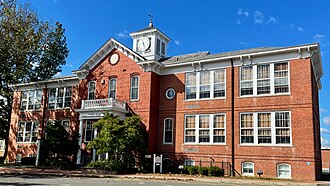
The Cranbury Historic District
The Cranbury Historic District is a 175-acre area recognized by both the state and federal governments. It features a diverse array of architectural styles, including Greek Revival, Vernacular Italianate, and Bungalow/Craftsman. Notable landmarks within the district include the John S. Silvers Mansion (built in 1886) and the Cranbury Inn.
Geography and Demographics
Cranbury covers a total area of 13.43 square miles, with water making up about 1.12% of the total. The township's elevation averages 82 feet. Population trends have remained relatively stable over the last decade, following a period of significant growth between 1990 and 2010.
| Census Year | Population | Percentage Change |
|---|---|---|
| 1980 | 1,927 | -14.5% |
| 2000 | 3,227 | +29.1% |
| 2010 | 3,857 | +19.5% |
| 2020 | 3,842 | -0.4% |
| 2023 (est.) | 3,960 | +3.1% |
Government and Economy
Cranbury is governed by a Township Committee, with Lisa Knierim serving as Mayor (term ending December 31, 2026). The township's fiscal landscape presents a unique contrast: while it boasted the lowest effective property tax rate in Middlesex County at 1.621% in 2023, it recorded the county's highest average property tax bill in 2018 at $11,960.
Politically, the township has a significant number of unaffiliated voters. As of March 2011, 45% of registered voters were unaffiliated, while 30.2% were registered Democrats and 24.7% were Republicans.
Infrastructure and Transportation
Cranbury serves as a critical transit point. The township manages over 51 miles of roadways, with a mix of municipal, county, and state maintenance. The New Jersey Turnpike (Interstate 95) is a dominant feature of the landscape, particularly near exit 8A.
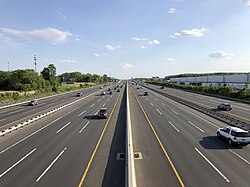
Other vital roads include U.S. Route 130, which supports commercial and light-industrial activity, as well as County Routes 535, 539, 615, and 614.
![U.S. Route 130 is a major commercial and light-industrial highway in Cranbury.[22]](/images/7c/6e/7c6e06bf9d410d87be2bbe57dc3cda06fb2a00c33503496a39f8113b5f3ebef0.jpg)
Education and Community
The Cranbury School District provides public education for students from pre-kindergarten through eighth grade. Because the township does not have its own high school, students transition to Princeton High School for their secondary education.
Notable Residents
Cranbury has been home to a diverse group of influential figures, including:
- Jessica Ware: Canadian-American evolutionary biologist and entomologist.
- Robert Lougy: Former acting New Jersey Attorney General and Superior Court judge.
- Scott Brunner: Former NFL quarterback for the New York Giants.
- Charles McKnight: A physician active during the American Revolutionary War.
Frequently Asked Questions
Where do Cranbury students go for high school?
Students in the Cranbury School District attend Princeton High School after completing eighth grade.
What makes the Cranbury Historic District significant?
The district covers 175 acres and is listed on both the National and New Jersey Registers of Historic Places, featuring architectural styles such as Greek Revival and Vernacular Italianate.
Which major highways pass through Cranbury?
The most prominent highways are the New Jersey Turnpike (Interstate 95) and U.S. Route 130, along with several county routes including 535, 539, 614, and 615.
What is the current population of Cranbury?
According to the 2020 census, the population was 3,842, with a 2023 estimate of 3,960 residents.
Who is the current Mayor of Cranbury?
The current Mayor is Lisa Knierim, whose term expires on December 31, 2026.