Council of Europe: Safeguarding Human Rights and Democracy Across the Continent
The Council of Europe is a leading regional intergovernmental organisation dedicated to upholding human rights, democracy, and the rule of law. Established in the wake of World War II, it serves as a broad-based platform for European nations to collaborate on legal standards and social protections, operating independently from the European Union.
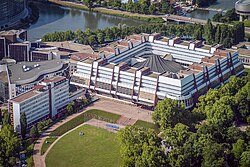
Headquartered at the Palace of Europe in Strasbourg, France, the Council currently comprises 46 member states. Its influence extends through a vast network of conventions and institutions that shape the legal landscape of the continent, ensuring that fundamental freedoms are protected regardless of national borders.
Key Facts
- Founded: May 5, 1949, via the Treaty of London.
- Membership: 46 member states, with additional observers from Canada, the Holy See, Japan, Mexico, and the United States.
- Primary Goal: Protection of human rights and promotion of democracy.
- Core Document: The European Convention on Human Rights (ECHR).
- Headquarters: Strasbourg, France.
- Official Languages: English and French.
History and Evolution
Founding and Early Years
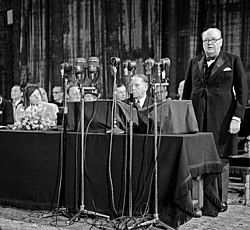
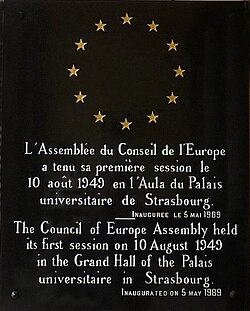
The conceptual framework for the Council was developed during the 1948 Congress of Europe in The Hague, Netherlands. This gathering of politicians and civil society members led to the creation of a Committee for the Study of European Unity, which drafted the blueprint for the organisation. The Council was officially established on May 5, 1949, with ten founding member states.
In its early years, the Council focused on post-war reconciliation. A landmark moment occurred on May 2, 1951, when West Germany was welcomed into the organisation, setting a precedent for enlargement and diplomatic healing.
Expansion and Modern Membership
Over the decades, the Council grew steadily. Iceland joined in 1950, followed by Austria (1956), Cyprus (1961), Switzerland (1963), and Malta (1965). The transition to democracy in the 1970s allowed Portugal (1976) and Spain (1977) to join.
Following the revolutions of 1989 and the dissolution of the Soviet Union, the organisation expanded further to include most post-Warsaw Pact, post-Yugoslav, and post-Soviet states. However, this expansion has not been without conflict. Russia, which joined in 1996, became the first country to be expelled from the Council following its 2022 invasion of Ukraine.
![Current Member states of the Council of Europe. In addition, the European Convention on Human Rights (ECHR) applies in Kosovo as a result of domestic incorporation of the ECHR.[16]](/images/31/c0/31c034025e91ff67df247cbe3152ed438d7a2c7c84864a980f9b94035f9cafea.png)
Aims and Major Achievements
The Council of Europe operates primarily through the creation of legal conventions—treaties that member states agree to implement in their own domestic laws. Its most significant achievements center on the protection of human rights and the promotion of social justice.
Human Rights and Legal Protections
The Council is best known for the European Convention on Human Rights, a treaty that provides a legal framework for protecting fundamental freedoms. To support this and other goals, the Council manages several specialized bodies:
- European Committee for the Prevention of Torture: Monitoring the treatment of detainees.
- European Commission against Racism and Intolerance: Combating discrimination.
- Convention on Action against Trafficking in Human Beings: Protecting victims of exploitation.
- European Social Charter: Ensuring basic social and economic rights.
Specialized Initiatives
Beyond human rights, the Council coordinates efforts in diverse areas, including the Anti-Doping Convention for fair sport and CODEXTER for coordinating counter-terrorism measures. It also protects linguistic and minority rights through the European Charter for Regional or Minority Languages and the Framework Convention for the Protection of National Minorities.

Institutional Structure
The Council of Europe functions through several key institutions that ensure its mandates are carried out effectively.
Leadership and Governance
The Secretary General heads the Secretariat and is elected for a five-year term by the Parliamentary Assembly. As of September 18, 2024, Alain Berset holds this position. Other key leaders include the President of the Parliamentary Assembly and the President of the Committee of Ministers.
Legislative and Regional Bodies
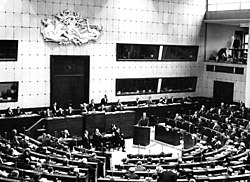
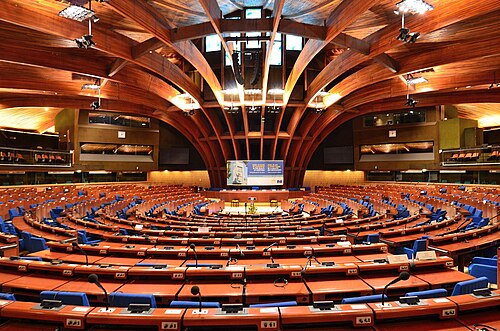
The Parliamentary Assembly (PACE) serves as the legislative heart of the organisation, where representatives from member states debate and pass resolutions.
The Congress of Local and Regional Authorities, established in 1994, ensures that the voices of local governments are heard, guided by the European Charter of Local Self-Government.

Partial Agreements and Specialized Agencies
The Council also oversees various specialized agencies and partial agreements, such as:
- The Venice Commission: Providing legal advice on constitutional matters.
- GRECO: The Group of States Against Corruption.
- Eurimages: A fund supporting the co-production and distribution of films.
- European Directorate for the Quality of Medicines: Managing the European Pharmacopoeia.
Summary of Organisation Details
| Feature | Details |
|---|---|
| Established | May 5, 1949 (Treaty of London) |
| Membership | 46 Member States |
| Headquarters | Palace of Europe, Strasbourg, France |
| Key Institutions | Parliamentary Assembly, Committee of Ministers, Secretariat |
| Primary Focus | Human Rights, Democracy, Rule of Law |
| Official Languages | English, French |
Frequently Asked Questions
Is the Council of Europe the same as the European Union?
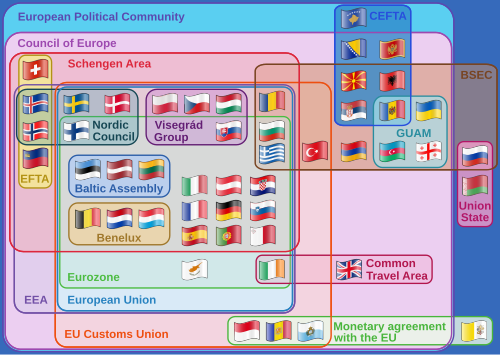
No. The Council of Europe is a separate regional intergovernmental organisation. While both are based in Europe and share similar values, they have different memberships, structures, and mandates. The Council of Europe focuses primarily on human rights and the rule of law across a broader geographic area.
What is the European Convention on Human Rights?
The European Convention on Human Rights (ECHR) is a landmark treaty that defines the fundamental rights and freedoms that all member states must protect. It allows individuals to bring cases against states to a court if they believe their rights have been violated.
Why was Russia expelled from the Council of Europe?
Russia was expelled following its 2022 invasion of Ukraine. Prior to this, Russia had faced sanctions, including the loss of voting rights in the Parliamentary Assembly in 2014 after the annexation of Crimea.
Who is the current Secretary General?
Alain Berset was elected Secretary General on June 25, 2024, and officially assumed the role on September 18, 2024.
How does the Council of Europe protect minority rights?
The Council uses legal instruments such as the Framework Convention for the Protection of National Minorities and the European Charter for Regional or Minority Languages to ensure that minority groups are protected and their cultures preserved.