Council of Europe Convention on the Avoidance of Statelessness in Relation to State Succession
When a nation undergoes state succession—a process where one or more states replace another state's legal identity—the individuals living within those borders often face a precarious legal situation. Without clear legal frameworks, people risk losing their original nationality without acquiring a new one, leaving them stateless. To combat this, the Council of Europe established a specialized treaty to protect the legal identity of individuals during these geopolitical transitions.
The Council of Europe Convention on the Avoidance of Statelessness in Relation to State Succession serves as a critical legal tool designed to ensure that no person is left without a nationality when their state is replaced. This treaty builds upon the foundations of the European Convention on Nationality, providing detailed rules to prevent the gap in citizenship that often follows the dissolution or merger of states.
Origins and Purpose
The impetus for this convention grew from the geopolitical shifts in Eastern Europe during the 1990s and 2000s. A "wave" of state succession during this period created a significant risk of widespread statelessness. In response, the United Nations General Assembly urged member states to develop legal instruments to regulate nationality issues arising from such transitions.
Drafted on March 15, 2006, and signed in Strasbourg on March 19, 2006, this treaty represents the only "positive response" to the United Nations' encouragement to date. It officially became effective on May 1, 2009, after being ratified by three Council of Europe member states.
Key Facts
- Official Citation: CETS 200.
- Effective Date: May 1, 2009.
- Primary Goal: To prevent individuals from becoming stateless during state succession.
- Depositary: The Secretary General of the Council of Europe.
- Official Languages: English and French.
Participation and Adoption
While the treaty provides a vital framework for human rights, its adoption among Council of Europe members has been limited. Currently, there are seven states parties: Austria, Hungary, Luxembourg, Moldova, Montenegro, the Netherlands, and Norway. Additionally, Germany and Ukraine have signed the treaty but have not yet ratified it.
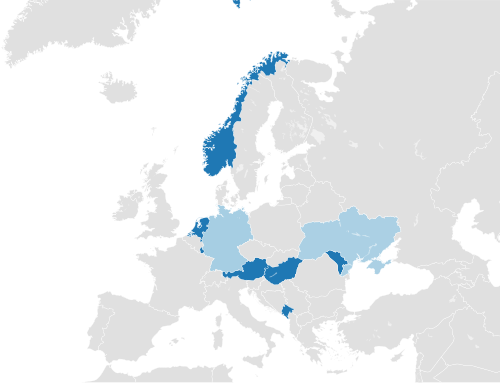
The limited adoption of the treaty has been a point of concern for human rights advocates. In 2019, the Commissioner for Human Rights highlighted that only seven members had joined the convention and urged other member states to adopt international instruments on statelessness and nationality as part of a broader campaign to eradicate statelessness entirely.
Convention Summary
| Detail | Information |
|---|---|
| Drafted Date | 15 March 2006 |
| Signed Date | 19 March 2006 |
| Location of Signing | Strasbourg |
| Effective Date | 1 May 2009 |
| Number of States Parties | 7 |
| Signatories (Non-ratified) | Germany, Ukraine |
Frequently Asked Questions
What is state succession in the context of this treaty?
State succession occurs when one or more states replace another state, which can happen through the dissolution of a country or the merger of territories. This process can lead to individuals losing their original nationality.
What is the main objective of the CETS 200 treaty?
The main objective is to ensure that people do not become stateless—meaning they are not left without any nationality—when the state of their nationality is replaced by another state.
Which countries are currently parties to the convention?
The seven states parties are Austria, Hungary, Luxembourg, Moldova, Montenegro, the Netherlands, and Norway.
Why was this convention created?
It was created in response to a wave of state succession in Eastern Europe during the 1990s and 2000s, following encouragement from the United Nations General Assembly to prevent statelessness.
Who acts as the depositary for this treaty?
The Secretary General of the Council of Europe serves as the depositary for the convention.