Cosmopolitan Distribution in Biogeography
In the study of biogeography, a cosmopolitan distribution refers to the range of a taxon—typically a species—that extends across most or all of the Earth's surface, provided the appropriate habitats are available. While many cosmopolitan species are highly adaptable to diverse climatic and environmental conditions, this is not a universal rule.
A prime example of this phenomenon is the killer whale (orca). These marine mammals maintain resident and transient populations in every major oceanic body, ranging from the Arctic Circle to Antarctica. Similarly, the rock dove, commonly known as the pigeon, has expanded from its origins to occupy most urban areas worldwide, partly due to centuries of domestic breeding.
Key Facts
- Definition: A distribution spanning most of the globe in suitable habitats.
- Opposite: Endemic species, which are native to only one specific geographical location.
- Drivers: High environmental tolerance or rapid dispersal relative to the speed of speciation.
- Human Influence: Many species, such as cats, dogs, and brown rats, became cosmopolitan through human introduction.
- Scale: Cosmopolitanism can apply to a single species or a higher taxon (like a family), but the two are distinct concepts.
Qualifications and Terminology
The phrase "in appropriate habitat" is a critical qualifier. It excludes areas where life cannot realistically exist, such as extreme altitudes, polar regions, or deep oceans for terrestrial animals. For instance, the housefly is considered highly cosmopolitan despite being absent from polar regions and the open ocean.
Biogeographers also use the term pandemism, though its meaning varies. Some authors use it specifically for diseases and pandemics. Others view it as a middle ground between endemism and cosmopolitanism—essentially "subcosmopolitanism"—where a species is found nearly everywhere but has major gaps, such as being completely absent from Australia.
Obstacles to Global Distribution
Oceanic Barriers
The World Ocean is not a seamless highway for migration. Physical obstacles, particularly temperature gradients, create barriers. Tropical waters can be too warm for species from the Northern marine regions or the Southern Ocean to traverse, effectively separating these populations.
Ecological Delimitations
A species may appear cosmopolitan because it is found in all oceans, but it may be ecologically limited to specific zones. For example, a species might only inhabit littoral zones (the shore area), specific depth ranges, or estuaries. Terrestrial species may similarly be restricted to forests, mountains, or arid sandy regions, resulting in a distribution that is extended but narrow.
Population Variation and Complexity
It is important to distinguish between the cosmopolitanism of a species and that of a higher taxon. The family Myrmeleontidae is cosmopolitan because it has indigenous species on every continent except Antarctica, yet no single species or genus within that family is globally distributed. In contrast, Apis mellifera (the western honey bee) is likely the only cosmopolitan member of the Apidae family.
Even within a single cosmopolitan species, regional sub-populations often vary. These differences may manifest as subspecies, varieties, or morphs. For example, the African honey bee (Apis mellifera scutellata) and the Cape honey bee (Apis mellifera capensis) are both part of the same cosmopolitan species but have ranges that barely overlap.
Other complexities include temporal and genetic variations:
- Temporal Variation: Migratory birds like the Arctic tern travel from the Arctic to the Southern Ocean, meaning their presence in a region depends on the season.
- Genetic Effects: Because local populations are often too far apart to interbreed, genetic phenomena such as clines (gradual changes in a trait) in Drosophila or ring species in Larus gulls can occur.
Examples of Cosmopolitan Species
Cosmopolitanism is observed in both extinct and living organisms. In the Early Triassic, following the Permian-Triassic extinction event, the Lystrosaurus exhibited a cosmopolitan distribution.
Modern examples include the blue whale, the great white shark, and the wasp Copidosoma floridanum. Many others have achieved this status through human assistance, including humans, cats, dogs, brown rats, and the foliose lichen Parmelia sulcata.
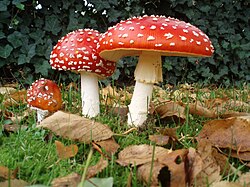
| Category | Examples |
|---|---|
| Marine Animals | Orcas, Blue Whales, Great White Sharks |
| Birds | Mallards, Peregrine Falcons, Ospreys |
| Human-Introduced | Cats, Dogs, Brown Rats, Western Honey Bee |
| Fungi/Plants/Other | Amanita muscaria, Parmelia sulcata, Mytilus (mollusc) |
| Extinct | Lystrosaurus |
Frequently Asked Questions
What is the difference between a cosmopolitan and an endemic species?
A cosmopolitan species is found across most of the globe in suitable habitats, whereas an endemic species is native to and found only in one specific geographical location.
Can a species be cosmopolitan but still have limited habitats?
Yes. This is known as ecological delimitation. A species may be found in every ocean (cosmopolitan) but only live in estuaries or specific depth ranges (ecological limitation).
How does pandemism differ from cosmopolitanism?
While terminology varies, pandemism is often used to describe diseases or as a term for "subcosmopolitanism," where a species is widespread but has significant gaps in its global distribution.
Do all cosmopolitan species have the same characteristics everywhere?
No. Regional sub-populations often develop variations, leading to the formation of subspecies, varieties, or morphs due to the lack of routine interbreeding between distant populations.
How do humans contribute to cosmopolitan distribution?
Humans often transport species to new environments, as seen with the western honey bee, domestic cats, and the fly agaric mushroom, allowing them to establish populations far beyond their original native ranges.