Cormorants and Shags: Masters of the Deep Dive
Cormorants and shags are medium-to-large seabirds renowned for their exceptional diving abilities and distinctive silhouettes. Belonging to the family Phalacrocoracidae, these birds are specialized fish-hunters that have evolved unique physical adaptations to thrive in aquatic environments across the globe.
From the tiny pygmy cormorant to the flightless giants of the Galápagos, these birds occupy a variety of ecological niches. While they are often seen perched on coastlines with their wings spread wide, their true mastery lies beneath the surface, where they propel themselves with a combination of powerful feet and wing strokes to secure their prey.
Key Facts
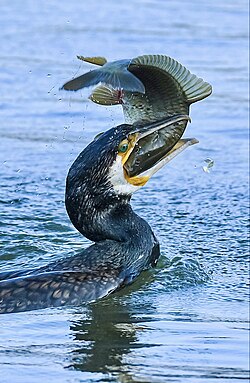
- Diet: Exclusively fish-eaters that hunt by diving from the water's surface.
- Diving Depth: Some species can reach depths of up to 45 metres (150 ft).
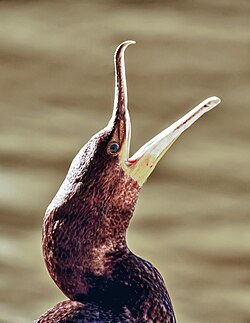
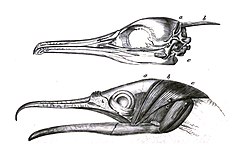
- Physical Traits: Characterized by long, thin, hooked bills and webbing between all four toes.
- Weight Range: Varies significantly from 0.35 kg (pygmy cormorant) to 5 kg (flightless cormorant).
- Flight Cost: Due to short wings optimized for underwater movement, they have some of the highest flight costs of any flying bird.
Physical Characteristics and Adaptations

The anatomy of cormorants and shags is a study in evolutionary trade-offs. To be efficient divers, they possess relatively short wings, which reduce drag underwater but make aerial flight more energy-intensive. Their feet are fully webbed across all four toes, providing maximum propulsion.
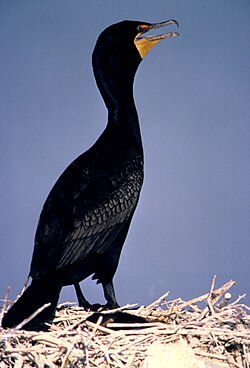
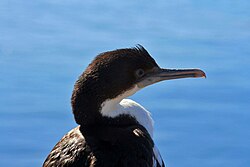
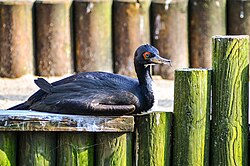
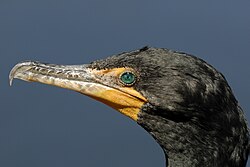
Plumage varies by region. Most Northern Hemisphere species feature dark feathers, while Southern Hemisphere species often display black and white patterns, with some, such as the spotted shag of New Zealand, exhibiting more colorful plumage. Many species also possess brightly colored skin on the face—specifically the lores (the area between the eye and the bill) and the gular skin (the throat area)—which intensifies during the breeding season in shades of blue, orange, red, or yellow.
Size and Diversity
The size disparity within the family is striking. The pygmy cormorant (Microcarbo pygmaeus) is the smallest, measuring roughly 45 cm and weighing 340 g. At the other end of the spectrum is the flightless cormorant (Nannopterum harrisi), which can reach 100 cm and weigh up to 5 kg. Historically, the now-extinct spectacled cormorant (Urile perspicillatus) was even larger, averaging 6.3 kg.
Behavior and Ecology
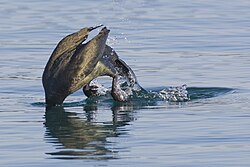
Cormorants are highly skilled underwater hunters. They dive from the surface and use their feet for primary propulsion, supplemented by their wings. This allows them to pursue fish with agility and precision.
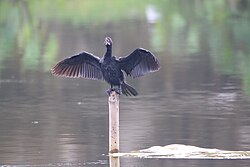
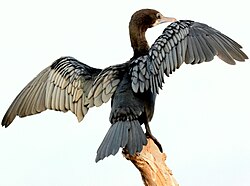
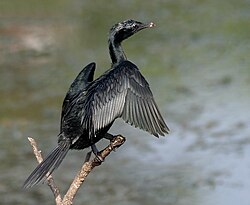
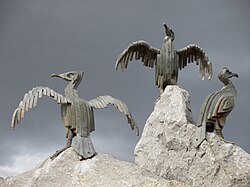
One of the most iconic behaviors of these birds is the "wing-drying" posture, where they stand with their wings spread open. This is often seen in species like the little cormorant, though notably, this behavior is absent in some species, such as the blue-eyed shag.
Taxonomy and Classification
The classification of the family Phalacrocoracidae has undergone significant revision. Historically, many species were grouped into a single genus, Phalacrocorax. However, a landmark 2014 study proposed a seven-genera treatment, which was later standardized by the IOC in 2021 and adopted by the IUCN Red List and BirdLife International.
| Genus | Notable Species |
|---|---|
| Microcarbo | Little cormorant, Pygmy cormorant |
| Poikilocarbo | Red-legged cormorant |
| Urile | Brandt's cormorant, Red-faced cormorant |
| Phalacrocorax | Great cormorant, Japanese cormorant |
| Gulosus | European shag |
| Nannopterum | Flightless cormorant, Double-crested cormorant |
| Leucocarbo | Imperial shag, Guanay cormorant |
Evolutionary History
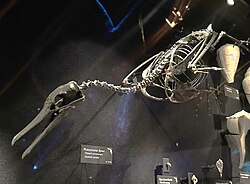
The origin of cormorants is subject to scientific debate. While some fossils from the Late Cretaceous (approximately 66 to 70 million years ago) found in Mongolia and Wyoming have been suggested as early ancestors, many experts believe these may be misidentifications and that the family likely originated much later.
Cormorants in Human Culture
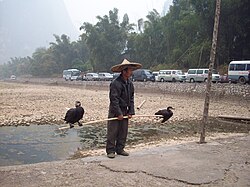
Cormorants have a long history of interaction with humans. In some cultures, particularly in China and Japan, they have been used for traditional fishing, where the birds are trained to catch fish for the fisherman.
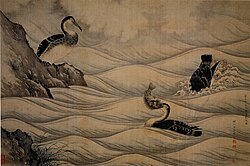
The name "cormorant" itself is a contraction of the Latin corvus marinus, meaning "sea raven." This reflects a long-standing, though mistaken, belief that these birds were related to ravens—a misconception that persisted at least into the 16th century.
Frequently Asked Questions
Why do cormorants spread their wings after diving?
This behavior is primarily used for drying their feathers, although some research suggests it may also play a role in thermoregulation.
How deep can cormorants dive?
While depths vary by species, some cormorants have been recorded diving as deep as 45 metres (150 ft).
Are cormorants related to ravens?
No. Despite the etymology of their name (meaning "sea raven") and early historical beliefs, they are not related to corvids; they belong to the order Suliformes.
What do cormorants eat?
Cormorants are exclusively fish-eaters, utilizing their hooked bills and diving skills to capture prey from beneath the water's surface.
Which is the smallest species of cormorant?
The pygmy cormorant (Microcarbo pygmaeus) is the smallest, weighing as little as 340 g and measuring approximately 45 cm.