Cormorant Fishing: A Global Tradition of Avian Partnership
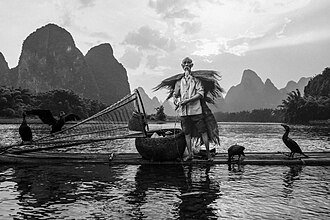
Cormorant fishing is a specialized traditional technique where trained cormorants—diving birds known for their fishing prowess—are used to catch fish in rivers and lakes. Often referred to as "duck fishing," this practice has deep cultural roots across Asia, Europe, and South America. While it was once a vital commercial enterprise for sustenance and trade, today it primarily survives as a cultural attraction for the tourism industry, though it remains a living tradition in specific regions of southwestern China.
The method relies on a unique partnership between human and bird. To manage the catch, fishermen tie a loose snare near the base of the bird's throat. This snare is designed to allow the cormorant to swallow small fish but prevents it from swallowing larger prey, which remains held in the bird's gullet. Once the bird captures a fish, the fisherman brings it back to the boat and prompts the bird to regurgitate the catch.
![Hanging scroll painting of traditional cormorant fishing by Ogata Korin, after 1701. Seikadō Bunko Art Museum, Tokyo.[19]](/images/49/a5/49a5c4f6a5d147b94968b490b766d59c637f6790409ad21d2bdd728175983a63.jpg)
Key Facts
- Domesticated Birds: China is the only country where cormorants have been fully domesticated.
- Ancient Roots: The practice was documented in the 636 CE Book of Sui, the official history of China's Sui dynasty.
- Global Reach: Historically practiced in China, Japan, Greece, North Macedonia, Peru, England, and France.
- Imperial Status: In Japan, certain fishing masters in Gifu and Seki are employed by the emperor as Imperial Fishermen.
- Species Variation: Different regions use specific species, including the great cormorant, Japanese cormorant, and neotropic cormorant.
Regional Practices and Species
Asia: China and Japan
In China, cormorant fishing has been practiced for over a millennium. In Guilin, Guangxi, the technique is famous on the shallow Lijiang River, while the Bai people have utilized it on Erhai Lake since the 9th century. Chinese fishermen typically use the great cormorant (Phalacrocorax carbo).

In Japan, the practice is known as ukai. Originally used to catch ayu (sweetfish), it evolved during the Heian period into a form of amusement for warlords and the aristocracy. Notable figures like Oda Nobunaga and Tokugawa Ieyasu promoted the practice as a means of hospitality and luxury. Today, ukai is practiced in 13 cities, most notably in Gifu on the Nagara River, where the tradition has continued for 1,300 years. Japanese fishers typically employ the Japanese cormorant (Phalacrocorax capillatus).
The Americas and Europe
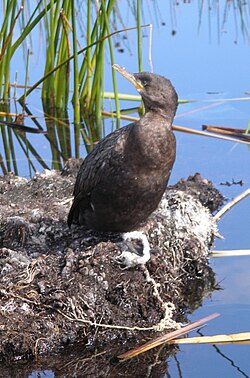
In Peru, the Uru people use the neotropic cormorant (Nannopterum brasilianum) on Lake Titicaca. Some claims suggest this practice began in Peru as early as the 5th century, potentially predating the Japanese tradition by a century.
European traditions are found in Greece and North Macedonia, particularly on Doiran Lake. In Western Europe, the practice was present in England and France during the 16th and 17th centuries. A brief revival occurred in England in the 19th century through the efforts of Francis Henry Salvin, whose exhibitions lasted until approximately 1890.
Summary of Global Cormorant Fishing
| Region | Primary Bird Species | Key Locations | Notable Characteristics |
|---|---|---|---|
| China | Great Cormorant | Lijiang River, Erhai Lake | Only region with fully domesticated birds. |
| Japan | Japanese Cormorant | Nagara River (Gifu/Seki) | Known as ukai; includes Imperial Fishermen. |
| Peru | Neotropic Cormorant | Lake Titicaca | Practiced by the Uru people. |
| Europe | Various / Darters | Doiran Lake, England, France | Ancient traditions in Greece and North Macedonia. |
Frequently Asked Questions
How do fishermen prevent the birds from eating the fish?
Fishermen use a loose snare tied around the base of the bird's throat. This allows the bird to eat small fish for sustenance but prevents it from swallowing larger fish, which are then retrieved by the fisherman.
What is the difference between ukai and other forms of cormorant fishing?
Ukai is the Japanese term for cormorant fishing. While it began as a method for catching ayu (sweetfish), it became a highly stylized art form used for aristocratic entertainment and is now protected by the Imperial Household Agency in certain regions.
Is cormorant fishing still used for commercial food production?
In most parts of the world, it is now primarily a tourist attraction. However, it remains in commercial use in southwestern China, although it faces competition from modern fishing methods.
Which birds are used for this technique?
The species vary by region: the great cormorant in China, the Japanese cormorant in Japan, and the neotropic cormorant in Peru. Occasionally, birds from the genus Anhinga (darters) are also used.