Cordobazo: The 1969 Civil Uprising That Shook Argentina
The Cordobazo was a massive civil uprising that erupted in the city of Córdoba, Argentina, during the final days of May 1969. This explosion of social unrest was not an isolated event but the culmination of growing frustration against the military dictatorship of General Juan Carlos Onganía. Occurring shortly after the Rosariazo protests in Santa Fe Province, the Cordobazo combined the power of organized labor with radical student activism, mirroring the global wave of protests seen in 1968.
Key Facts
- Dates: 19–30 May 1969.
- Location: Córdoba, Argentina.
- Primary Opponents: The military government of General Juan Carlos Onganía.
- Key Figures: Agustín Tosco (labor leader) and Minister of Economy Adalbert Krieger Vasena.
- Catalyst: Economic austerity, suppression of labor rights, and university repression.
- Outcome: Weakened the Onganía regime, leading to his eventual replacement in 1970.
The Roots of Rebellion: The Onganía Regime
General Juan Carlos Onganía seized power in 1966 through a coup known as the Revolución Argentina (Argentine Revolution), which ousted President Arturo Illia. Once in power, Onganía implemented a series of draconian measures designed to reshape Argentine society through corporatism—a system where the state organizes society into corporate groups to manage social conflict and economic production.
The regime's policies were aggressively anti-labor and anti-intellectual. Onganía suspended the right to strike, froze wages, and deactivated the Commission on Minimum Wages. Simultaneously, Minister of Economy Adalbert Krieger Vasena triggered a 40% devaluation of the peso and extended the retirement age. To maintain control, the government enacted a "law on repression of Communism" and utilized the DIPA (Dirección de Investigación de Políticas Antidemocráticas), a political police force, to detain activists.
Universities were targeted as "centers of subversion." The regime reneged on the 1918 University Reform and violently expelled students and teachers during the Noche de los Bastones Largos (Night of the Long Batons). In Córdoba, an industrial hub, Governor Carlos Caballero attempted to implement these corporatist policies, further fueling local resentment.
The Escalation of May 1969
By May 1969, a series of localized strikes and protests began to ripple across the country, often meeting with harsh military repression:
- May 13: Sugar mill workers in Tucumán took their manager hostage over unpaid wages.
- May 14: Automobile workers in Córdoba protested the loss of Saturday rest days.
- May 15: A protest over food ticket prices at the University of Corrientes led to the death of student Juan José Cabral.
- May 17 & 21: Protests in Rosario resulted in the deaths of students Adolfo Bello and 15-year-old Luis Blanco.
The tension reached a breaking point on May 29, 1969, when police shot and killed Máximo Mena. This event triggered an immediate and violent reaction from the population of Córdoba.
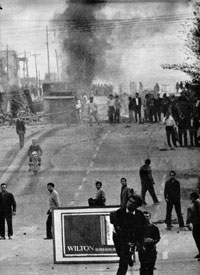
The city descended into chaos as citizens erected barricades and seized control of most urban areas. Protesters targeted symbols of the government's economic policies, burning the headquarters of foreign firms such as Citroën and Xerox. Interestingly, the protesters later assisted firefighters to prevent the blazes from spreading to residential blocks.
The Role of Labor and the CGT
The uprising was galvanized by the CGT (General Confederation of Labour). Specifically, the CGTA (CGT de los Argentinos)—a faction opposed to the collaborationist stance of the general secretary Augusto Vandor—played a pivotal role. Under the leadership of Agustín Tosco, the union called for a national strike following the general strike in Córdoba.
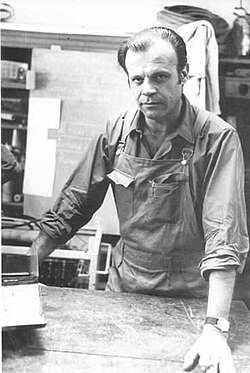
In response, General Onganía deployed the military to crush the insurrection. The CGTA headquarters were raided, and leaders, including Agustín Tosco, were arrested and tried by a War Council.
Consequences and Political Aftermath
The Cordobazo fundamentally altered the political landscape of Argentina. It established a powerful alliance between student movements and the working class and shifted the political center of gravity from Buenos Aires to the interior provinces.
| Area of Impact | Immediate Result | Long-term Effect |
|---|---|---|
| Labor Movement | Rise of sindicalismo clasista (class-based unionism). | Increased influence of leaders like Tosco and René Salamanca. |
| Political Strategy | Rejection of liberal democracy and parliamentarism. | Emergence of the "New Opposition" (Nueva Oposición). |
| Militancy | Validation of violent resistance against dictatorship. | Formation of armed groups (ERP, Montoneros, FAP, FAL). |
| Government | Resignation of Minister Vasena. | Deposition of Onganía in June 1970. |
The uprising exposed Onganía's fragility. He was eventually replaced by General Roberto M. Levingston in June 1970, who continued to govern without elections. This led to the la Hora del Pueblo (The Hour of the People) declaration on November 11, 1970, where major political parties—including the UCR and the Peronist Party—demanded immediate democratic elections.
Levingston was subsequently replaced by General Alejandro Lanusse. Despite attempts to exclude Peronism through the Gran Acuerdo Nacional (Great National Agreement), the pressure for unrestricted elections continued. This culminated in the elections of March 11, 1973, following the formation of the FRECILINA coalition.
Frequently Asked Questions
What was the primary cause of the Cordobazo?
The uprising was caused by a combination of economic hardship (wage freezes and peso devaluation), the suppression of labor rights, and the violent repression of university students and teachers by General Onganía's military regime.
Who was Agustín Tosco?
Agustín Tosco was a prominent labor leader and head of the CGT in Córdoba. He led the CGTA (CGT de los Argentinos), a faction that opposed the military dictatorship and played a central role in organizing the general strike during the Cordobazo.
How did the Cordobazo affect the military government?
It demonstrated the regime's weakness and the population's willingness to use violent means of resistance. This instability led to the resignation of the Minister of Economy and the eventual removal of General Onganía from power in 1970.
What was the relationship between the Cordobazo and the global protests of 1968?
Because of the heavy involvement of radical students and the timing of the events, historians often view the Cordobazo as a continuation of the global spirit of rebellion and student-led protests that occurred worldwide in 1968.
What were the long-term political results of the uprising?
The Cordobazo radicalized Argentine politics, leading to the rise of class-based unionism and the formation of several armed revolutionary groups. It also paved the way for the eventual return to democratic elections in 1973.