Copa Lipton: The Historic Football Rivalry Between Argentina and Uruguay
Long before the modern era of global tournaments, the Copa Lipton (also known as the Copa de Caridad Lipton) served as a premier stage for the intense footballing rivalry between Argentina and Uruguay. Established in 1905, this friendly competition pitted the two powerhouses of the Río de la Plata region against one another in a battle for regional supremacy.
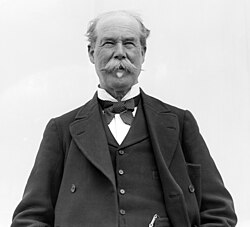
The tournament was made possible by the generosity of Thomas Lipton, a Scottish tea magnate who donated the trophy. Lipton stipulated a specific condition for the competition: the participating teams had to consist exclusively of native-born players. The trophy itself, which remains the oldest international cup housed at the Argentine Association headquarters, was crafted by the English goldsmiths Flokington of Regent Street.
Key Facts
- Founded: 1905
- Abolished: 1992
- Total Editions: 29
- Most Successful Team: Argentina (17 titles)
- Organizers: AFA (Argentine Football Association) and AUF (Uruguayan Football Association)
- Unique Rule: In the event of a draw, the trophy was traditionally awarded to the visiting team.
The Evolution of the Competition
The Golden Age
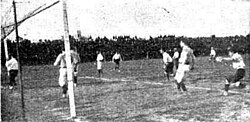
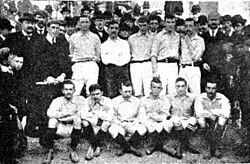
From its inception in 1905 until 1929, the Copa Lipton was largely an annual event, though it faced brief hiatuses in 1914, 1920–1921, and 1925–1926. The 1910s are widely regarded as the "golden age" of the tournament. During this decade, Argentina and Uruguay were the dominant forces in South American football, making the Copa Lipton the most prestigious competition for both national sides.
Decline and Sporadic Play
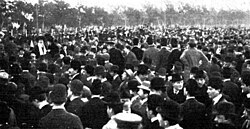
The prestige of the cup began to wane in the 1930s. Several factors contributed to this decline, including the creation of the FIFA World Cup, administrative conflicts between the AFA and AUF, and the expansion of South American competitions to include other nations. Consequently, the tournament shifted from an annual fixture to a sporadic one, with only nine editions played between 1937 and its final match in 1992.
Tournament Statistics and Legacy
Over the course of 29 meetings, Argentina emerged as the more successful side, claiming 17 titles compared to Uruguay's 11. The competition was not only a test of skill but a matter of pride, with the holders of the cup determining the date and rules for the subsequent encounter.
The tournament also highlighted legendary individual performances. Cayetano Saporiti holds the record for the most finals played with 10 appearances, while Angel Romano followed closely with 9 appearances and 6 titles won.
| Category | Argentina | Uruguay |
|---|---|---|
| Total Titles | 17 | 11 |
| Years Won | 1906, 07, 08, 09, 13, 15, 16, 17, 18, 28, 37, 42, 45, 62, 68, 76, 92 | 1905, 10, 11, 12, 19, 22, 23, 27, 29, 57, 73 |
| Total Matches Played | 28 (recorded in overall stats) |
Frequently Asked Questions
Who donated the Copa Lipton trophy?
The trophy was donated by Thomas Lipton, a Scottish tea magnate, who required that only native-born players participate in the tournament.
What happened if a match ended in a draw?
Traditionally, if the match ended in a draw, the cup was awarded to the away team (the visiting side).
Why did the competition lose popularity after the 1930s?
The decline was caused by the birth of the FIFA World Cup, tensions between the AFA and AUF, and the inclusion of more South American nations in regional competitions.
Which player appeared in the most Copa Lipton finals?
Cayetano Saporiti appeared in the most finals, with a total of 10 appearances and 5 titles won.
When was the final edition of the Copa Lipton played?
The final edition of the competition took place in 1992, where Argentina won the title in Montevideo.