Copa Héctor Rivadavia Gómez: The Historic Football Rivalry Between Argentina and Uruguay
In the golden era of South American football, the rivalry between Argentina and Uruguay was cemented not only in major tournaments but through dedicated friendly competitions. One such prestigious series was the Copa Héctor Rivadavia Gómez, a football competition contested exclusively between the national teams of Argentina and Uruguay.
Established in 1935, this cup served as a high-stakes battleground for two of the world's most successful footballing nations, blending sporting excellence with diplomatic ties. The competition ran for nearly a decade before being abolished in 1943.
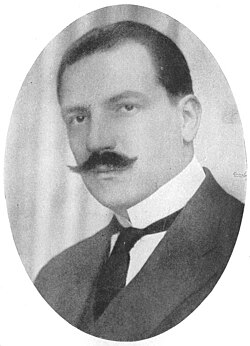
The Legacy of Héctor Rivadavia Gómez
The trophy was named in honor of Héctor Rivadavia Gómez, a pivotal figure in the development of the sport in South America. Gómez was a Uruguayan journalist and politician who served as the president of the Uruguayan Football Federation (AUF). He is most notably remembered as a mentor in the creation of the South American Football Confederation (CONMEBOL), which was officially established in 1916 by the associations of Argentina, Brazil, Chile, and Uruguay.
Competition Format and History
The Copa Héctor Rivadavia Gómez was organized by the AFA (Argentine Football Association) and the AUF (Uruguayan Football Association). Unlike modern tournaments, this was a friendly competition consisting of five editions held between 1935 and 1943. Interestingly, all matches in this series took place at the iconic Estadio Centenario in Montevideo.
While the Copa Héctor Rivadavia Gómez was hosted in Uruguay, it had a parallel counterpart known as the Copa Juan Mignaburu, which was held in Argentina.
Key Facts
- Founded: 1935
- Abolished: 1943
- Participants: Argentina and Uruguay national teams
- Total Editions: 5
- Most Successful Team: Argentina (3 titles)
- Primary Venue: Estadio Centenario, Montevideo
Tournament Results and Statistics
Argentina emerged as the dominant force in the competition, securing three of the five available titles. The matches were often closely contested, reflecting the intense rivalry between the two neighbors.
| Edition | Year | Champion | Score | Venue |
|---|---|---|---|---|
| 1 | 1935 | Argentina | 1–1 | Estadio Centenario |
| 2 | 1936 | Uruguay | 2–1 | Estadio Centenario |
| 3 | 1938 | Argentina | 3–2 | Estadio Centenario |
| 4 | 1940 | Uruguay | 3–0 | Estadio Centenario |
| 5 | 1943 | Argentina | 1–0 | Estadio Centenario |
In the inaugural 1935 edition, Argentina was awarded the cup despite a 1–1 draw, as they were the visiting team. In terms of individual performance, the all-time top scorers of the competition were René Pontoni and José M. Medina, who each scored two goals.
Frequently Asked Questions
Who won the most Copa Héctor Rivadavia Gómez titles?
Argentina won the most titles, securing the championship in three editions: 1935, 1938, and 1943.
Who was Héctor Rivadavia Gómez?
He was a Uruguayan journalist, politician, and president of the Uruguayan Football Federation who helped mentor the creation of the South American Football Confederation in 1916.
Where were the matches played?
All five editions of the competition were held at the Estadio Centenario in Montevideo, Uruguay.
What was the relationship between this cup and the Copa Juan Mignaburu?
The Copa Juan Mignaburu was the counterpart to the Copa Héctor Rivadavia Gómez, held in Argentina in parallel with the Uruguayan-hosted competition.
When did the competition end?
The competition was abolished in 1943, marking the end of its eight-year run.