Convection: The Dynamic Movement of Heat and Fluids
At its core, convection is the process of heat transfer through the physical movement of fluids, which include both liquids and gases. This phenomenon occurs when warmer, less-dense material rises and cooler, denser material sinks, creating a continuous cycle of motion. Whether it is the air circulating in a room or the massive currents moving within the Earth's mantle, convection is a fundamental driver of change in our physical world.
Convection can occur as a single-phase or multiphase fluid flow. It often arises spontaneously due to the combined effects of material property heterogeneity and body forces acting on a fluid. When the specific cause is not identified, it is generally assumed to be driven by thermal expansion—where changes in density lead to buoyancy—and gravity.
Key Facts
- Fluid Requirement: Convection only occurs in fluids (liquids and gases), not in solids.
- Driving Forces: Motion is typically driven by gravity, buoyancy, or electromagnetic forces.
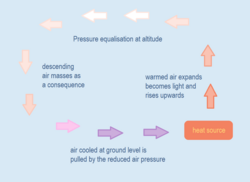
- Natural Convection: Occurs when density differences cause parts of a fluid to become heavier or lighter than others.
- Global Impact: Convection drives Earth's weather, ocean currents, and tectonic plate movements.
- Stellar Presence: Convection is a vital process in stellar physics, visible in the Sun's photosphere.
Mechanisms of Convective Flow
Natural and Gravitational Convection
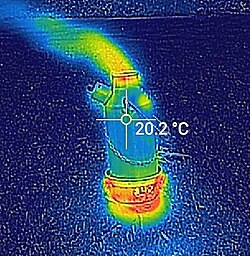
Natural convection is a flow where motion is caused by density variations within a fluid. In most environments, this leads to natural circulation, the ability of a fluid to circulate continuously under the influence of gravity while transferring heat energy. The onset of this process is mathematically predicted using the Rayleigh number (Ra), a dimensionless value that helps determine when convection will begin.
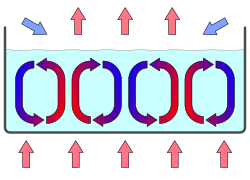
Similarly, gravitational or buoyant convection requires a g-force environment to function, relying on the upward pull of buoyancy to move warmer materials.
Complex Fluid Behaviors
Convection is not always a simple upward-and-downward motion. In some cases, such as when oil and water separate, the flow may be transient (temporary). In other instances, it reaches a steady state, forming stable structures known as convection cells.
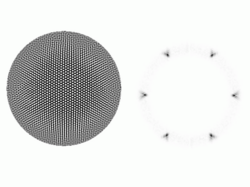
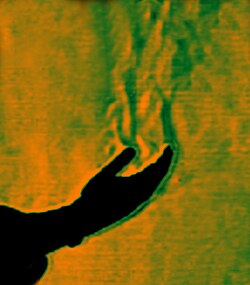
In specialized scenarios, such as double diffusive convection, multiple properties (like temperature and salinity) interact to influence the flow. Even in the freezing temperatures of water, convection behaves uniquely because water's density does not follow a linear path; it reaches a maximum at 4 °C, creating complex recirculation currents as it cools.
Convection in Nature and Science
Atmospheric and Oceanic Circulation
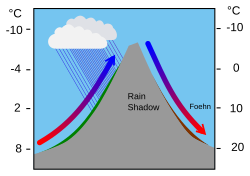
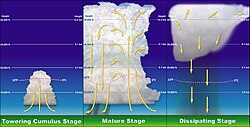
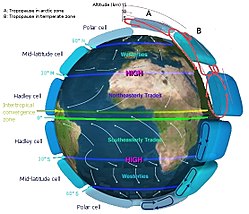
The Earth's climate is heavily dictated by convective processes. In the atmosphere, discrete convective cells are often visible as clouds. When convection becomes particularly intense, it results in thunderstorms. These storms typically progress through three distinct stages: the developing stage, the mature stage, and the dissipation stage.
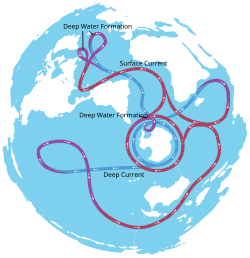
In the oceans, convection helps drive massive currents that redistribute heat around the planet. This movement is essential for regulating global temperatures.
Geological and Stellar Convection
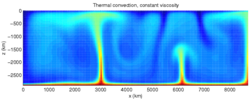
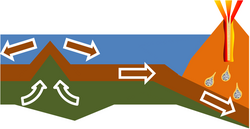
Deep beneath our feet, mantle convection—the slow, creeping motion of Earth's rocky mantle—transfers heat from the interior to the surface. This process is one of the three primary forces that drive the movement of tectonic plates.
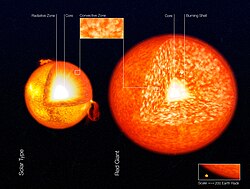
On a much larger scale, convection is a cornerstone of stellar physics. The Sun's photosphere features granules, which are the visible tops of convection cells. These granules, roughly 1,000 kilometers in diameter, consist of hot plasma rising in the center and cooler plasma descending at the edges.
Summary of Convection Types and Scales
| Environment | Medium | Primary Driver | Key Feature |
|---|---|---|---|
| Atmosphere | Gas (Air) | Thermal Buoyancy | Weather and Thunderstorms |
| Oceans | Liquid (Water) | Temperature/Salinity | Global Ocean Currents |
| Earth's Mantle | Semi-solid/Rock | Internal Heat | Tectonic Plate Movement |
| Stars (Sun) | Plasma | Nuclear/Thermal | Photospheric Granules |
Frequently Asked Questions
What is the difference between convection and conduction?
Conduction is the transfer of heat through direct contact within a material, whereas convection requires the physical movement of a fluid (liquid or gas) to transport the heat from one location to another.
How do thunderstorms relate to convection?
Thunderstorms are caused by strong atmospheric convection. As warm air rises rapidly due to buoyancy, it creates intense convective cells that drive the storm's development, maturity, and eventual dissipation.
Why is convection important in nuclear reactors?
In nuclear reactor design, natural circulation can be used as a safety feature. By ensuring the heat source is lower than the heat sink, engineers can use natural convection to maintain cooling even if the mechanical pumps fail.
What determines the start of natural convection?
The onset of natural convection is determined by the Rayleigh number, a dimensionless value that accounts for the fluid's properties, the temperature gradient, and the force of gravity.
How does convection affect tectonic plates?
Mantle convection involves the slow movement of the Earth's rocky mantle. These convection currents act as a driving force that pushes and pulls the tectonic plates across the Earth's surface.