Middle Latitudes: Geography, Climate, and Weather Patterns
The middle latitudes, also known as mid-latitudes or moderate latitudes, are the vast spatial regions of Earth located between the tropics and the polar circles. These areas serve as the dynamic meeting ground for the planet's most contrasting air masses, resulting in some of the most varied and fast-changing weather patterns on Earth.
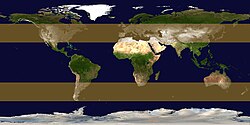
Geographically, these regions are defined by specific coordinates in both hemispheres. In the Northern Hemisphere, they stretch from the Tropic of Cancer (23°26′09.0″) to the Arctic Circle (66°33′51.0″). In the Southern Hemisphere, they span from the Tropic of Capricorn (-23°26′09.0″) to the Antarctic Circle (-66°33′51.0″). Together, these regions encompass Earth's subtropical and temperate zones.
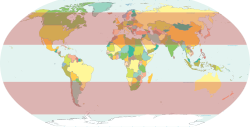
Key Facts
- Location: Situated between the tropics and the polar circles in both hemispheres.
- Weather Dynamics: Characterized by the interaction of cold polar air and warm tropical air.
- Wind Patterns: Home to the "Roaring Forties," where winds are particularly strong, especially in the Southern Hemisphere.
- Climate Diversity: Includes six distinct climate types, ranging from desert to subarctic.
- Storm Activity: Primary region for extratropical cyclones and weather fronts.
Atmospheric Dynamics and Weather
The middle latitudes are defined by atmospheric instability. This region is where weather fronts—the boundaries between two different air masses—typically form. The constant clash between cold air pushing down from the poles and warm air moving up from the tropics creates a volatile environment where weather can shift dramatically within a few hours.
This interaction frequently generates extratropical cyclones (large-scale low-pressure systems that occur outside the tropics). While these are the most common, the region also occasionally experiences tropical or subtropical cyclones that have migrated from their original formation areas closer to the Equator.
The Roaring Forties
One of the most notable wind patterns occurs between latitudes 40° and 50° in both hemispheres, known as the Roaring Forties. In these zones, prevailing winds are often exceptionally strong. Interestingly, these winds are more powerful in the Southern Hemisphere than in the Northern Hemisphere; this is because the Northern Hemisphere contains large landmasses—North America, Europe, and Asia—which act as physical barriers that disrupt wind flow.
Climate Classification
Due to their vast span and varying proximity to oceans and mountains, the middle latitudes are not monolithic. They are divided into six primary climate types:
- Mediterranean: Characterized by warm, dry summers and mild, wet winters.
- Desert: Arid regions with very low precipitation.
- Humid Subtropical: Hot, humid summers and mild winters.
- Oceanic: Mild temperatures year-round with consistent precipitation.
- Humid Continental: Large seasonal temperature differences with hot summers and cold winters.
- Subarctic: Short, cool summers and long, severe winters.
| Hemisphere | Southern Boundary | Northern Boundary | Primary Weather Features |
|---|---|---|---|
| Northern | Tropic of Cancer (23°26′09.0″) | Arctic Circle (66°33′51.0″) | Extratropical cyclones, weather fronts |
| Southern | Tropic of Capricorn (-23°26′09.0″) | Antarctic Circle (-66°33′51.0″) | Strong winds (Roaring Forties), cyclones |
Frequently Asked Questions
What exactly are the middle latitudes?
The middle latitudes are the regions of Earth located between the tropics (Tropic of Cancer/Capricorn) and the polar circles (Arctic/Antarctic Circles), encompassing both subtropical and temperate zones.
Why is the weather so unstable in these regions?
Weather is unstable because cold air masses from the poles and warm air masses from the tropics constantly collide and push against each other, often alternating within a matter of hours.
What are the Roaring Forties?
The Roaring Forties are the latitudes between 40° and 50° in both hemispheres, known for having very strong prevailing winds.
Why are winds stronger in the Southern Hemisphere's mid-latitudes?
Winds are stronger in the Southern Hemisphere because there are fewer large landmasses to obstruct the airflow compared to the Northern Hemisphere, which has North America, Europe, and Asia.
What types of storms occur in the middle latitudes?
The region is primarily known for extratropical cyclones and weather fronts, though it can also experience tropical or subtropical cyclones that have traveled from the Equator.