Continental Climates: Understanding Extreme Seasonal Variations
In the study of meteorology, continental climates are defined by their significant annual temperature swings. These regions experience a dramatic shift between warm to hot summers and harsh, cold winters. Unlike maritime climates, which are moderated by the steady temperatures of the ocean, continental climates are driven by the thermal properties of large landmasses.
This phenomenon, known as continentality, refers to the degree to which a region's climate is influenced by its distance from the ocean. Because these areas are often located deep within large landmasses, they lack the stabilizing effect of sea breezes, allowing air masses to heat up rapidly in the summer and cool down significantly during the winter.
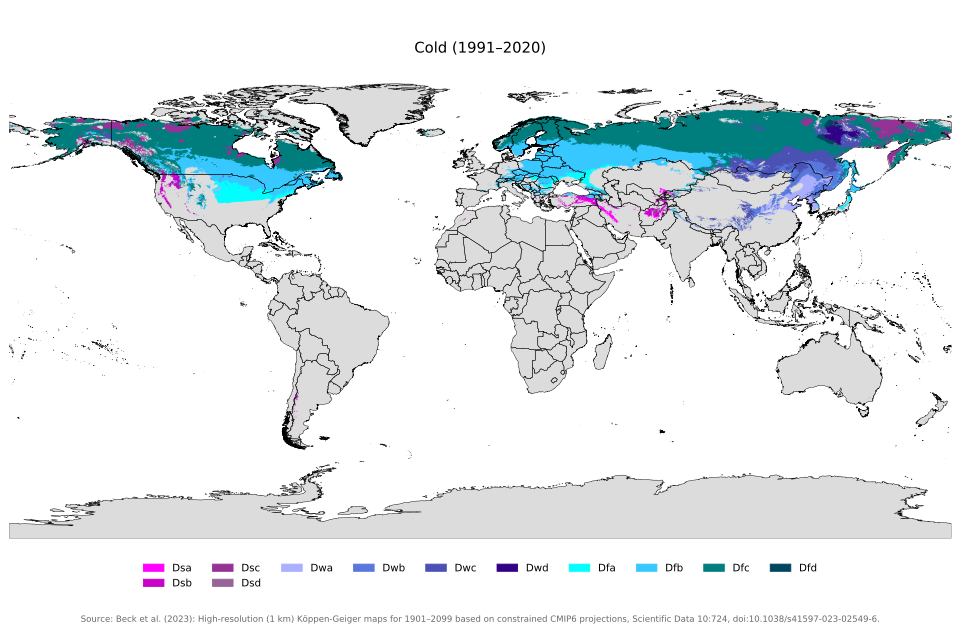
Key Facts
- Temperature Profile: Characterized by at least one month averaging below 0°C (32°F) and at least one month averaging above 10°C (50°F).
- Primary Location: Mostly found in the Northern Hemisphere due to the presence of massive landmasses in North America and Eurasia.
- Precipitation: Generally moderate, often peaking during the warmer months.
- Köppen Identifier: Classified by the capital letter D.
- Seasonal Extremes: Summers can feature frequent heat and thunderstorms, while winters are often marked by heavy frost and snow.
Global Distribution and Geography
Continental climates are typically found in the middle latitudes, specifically between 40°N and 55°N or 60°N. They are most prevalent in the central and eastern parts of the three northern-tier continents. Because of the vast landmasses in the north, these climates are much more common in the Northern Hemisphere than in the Southern Hemisphere.
Major regions featuring these climates include:
- North America: Central and southeastern Canada, and the north-central and northeastern United States.
- Eurasia: Much of the Russian Federation south of the Arctic Circle, eastern and southeastern Europe, northern and northeastern China, northern Mongolia, and most of Korea.
- Central Asia: Parts of Kazakhstan, Kyrgyzstan, and central Afghanistan.
Precipitation Patterns
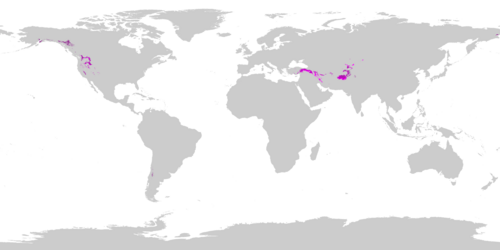
In most continental zones, annual precipitation ranges between 600 mm (24 in) and 1,200 mm (47 in). While most precipitation occurs during the warmer months, there are notable exceptions. In the mountains of the Pacific Northwest of North America and certain areas around the Persian Plateau—including western Iran, northern Iraq, adjacent Turkey, Afghanistan, northern Pakistan, and Central Asia—precipitation may actually peak during the winter.
Snow is a common feature of the winter season, often remaining on the ground for more than a month. While summer weather tends to be more stable, it can still be subject to sudden thunderstorms and intense heat.
The Köppen Classification System
The Köppen climate classification system categorizes continental climates into several distinct subtypes based on temperature and precipitation patterns. These are identified by the letter D followed by specific modifiers.
Standard Humid Continental Climates
These subtypes do not show a significant difference in precipitation between seasons:
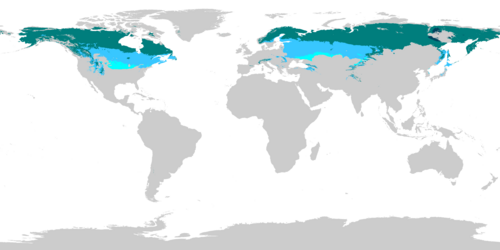
- Dfa (Hot-summer): At least one month averages above 22°C (71.6°F); the coldest month is below 0°C (or −3°C).
- Dfb (Warm-summer): All months average below 22°C (71.6°F); at least four months average above 10°C (50°F).
- Dfc (Subarctic): Only one to three months average above 10°C (50°F).
- Dfd (Extremely cold subarctic): The coldest month averages below −38°C (−36.4°F).
Monsoon and Mediterranean Influences
Some continental climates are modified by seasonal wind patterns or Mediterranean-style moisture cycles:
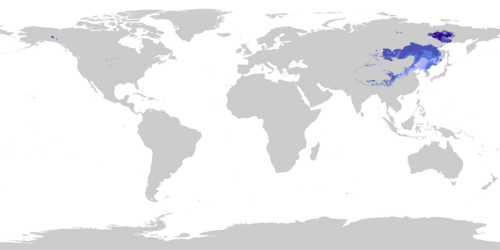
Monsoon-influenced (Dwa, Dwb, Dwc, Dwd)These regions experience a massive seasonal precipitation shift, where the wettest summer month receives at least ten times as much rain as the driest winter month.
These climates feature a winter maximum in precipitation. The wettest winter month receives at least three times as much rain as the driest summer month, and the summer's driest month receives less than 30 mm (1.2 in).
Summary of Climate Subtypes
| Code | Climate Type | Key Characteristic |
|---|---|---|
| Dfa | Hot-summer humid continental | Warmest month > 22°C |
| Dfb | Warm-summer humid continental | Warmest month < 22°C |
| Dfc | Subarctic | 1–3 months > 10°C |
| Dfd | Extremely cold subarctic | Coldest month < −38°C |
| Dwa-d | Monsoon-influenced | Summer rain > 10x winter rain |
| Dsa-d | Mediterranean-influenced | Winter rain > 3x summer rain |
Frequently Asked Questions
What is the main difference between continental and oceanic climates?
The primary difference is continentality. Continental climates are located far from oceans and experience much larger temperature fluctuations between summer and winter, whereas oceanic climates are moderated by the sea, leading to milder temperatures year-round.
Where are continental climates most commonly found?
They are most prevalent in the Northern Hemisphere, specifically in the interior regions of North America and Eurasia, such as central Canada, the northern United States, Russia, and northern China.
How does the Köppen system identify these climates?
In the Köppen system, continental climates are identified by the capital letter D. In the Trewartha climate classification system, they are identified as Dc.
Do all continental climates have snowy winters?
While snow is a common feature and often stays on the ground for over a month, the specific amount and duration depend on the subtype and local geography. However, all continental climates require at least one month to average below 0°C (or −3°C).
Can a continental climate be hot in the summer?
Yes. Subtypes like Dfa and Dwa are specifically classified as "hot-summer" climates because they have at least one month with an average temperature above 22°C (71.6°F).