Continental Army: The Military Force of the American Revolution
The Continental Army served as the primary military force for the United Colonies and, subsequently, the United States during the American Revolutionary War. Established to provide a unified defense against Great Britain, it evolved from a loose collection of colonial militias into a professional fighting force capable of securing national independence.
Formed on June 14, 1775, by a resolution of the Second Continental Congress in Philadelphia, the army was created shortly after the conflict erupted at the Battles of Lexington and Concord. Because of this founding date, June 14 is celebrated annually as the U.S. Army Birthday.
Key Facts
- Founded: June 14, 1775, by the Second Continental Congress.
- Commander-in-Chief: George Washington.
- Peak Strength: 48,000 soldiers (with 231,000 serving in total).
- Active Period: 1775 to 1783.
- Diversity: Approximately 4% of the force were black patriot soldiers.
Origins and Early Development
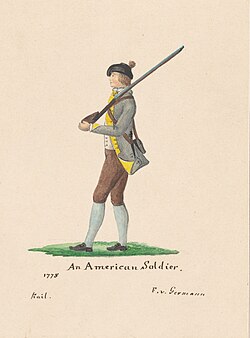
Before the establishment of a standing national army, the colonies relied on Patriot militias—part-time citizen-soldiers focused on local defense—or temporary provincial troops. As tensions with Great Britain escalated following the Intolerable Acts of 1774, these militias began increasing their training.
By April 1775, the Massachusetts Provincial Congress had authorized 26 company regiments, with New Hampshire, Rhode Island, and Connecticut following suit. However, the need for a centralized command became evident. On June 14, 1775, the Second Continental Congress voted to create the Continental Army, incorporating existing forces near Boston (22,000 troops) and New York City (5,000 troops).
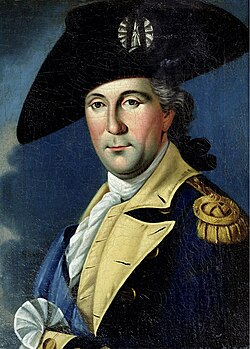
The Congress unanimously appointed George Washington as Commander-in-Chief on June 15, 1775. Washington immediately traveled to Boston to lead the Siege of Boston, marking the beginning of his leadership of the American forces.
Evolution of the Army Establishments
The Continental Army underwent several reorganizations to adapt to the demands of the war:
The Army of 1776
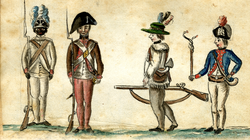
Following the expiration of initial one-year enlistments, the army was reorganized into 36 regiments. Most were standardized to a single battalion of 768 men, though the force remained heavily concentrated in the Northeast.
The Army of 1777–1780
To counter substantial British reinforcements, the "Eighty-eight Battalion Resolve" was passed, requiring states to contribute regiments based on their population. To prevent the devastating manpower shortages seen at the end of 1776, enlistment terms were extended to three years or "the length of the war."
Organizational Structure
Governing Bodies
Administrative control shifted over time. Initially managed by the Continental Congress, military affairs were later handled by the Board of War and Ordnance (established June 1776). By 1781, the Office of the Secretary at War was created to further streamline leadership, with Benjamin Lincoln assuming the role in October of that year.
Command and Inspection
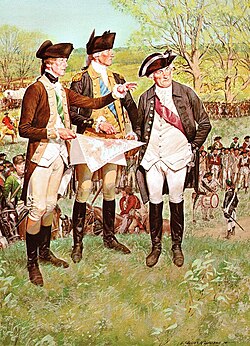
Washington was supported by an Adjutant General for administration and an Inspector General to report on troop conditions. Baron von Steuben, who served as Inspector General from 1778 to 1784, effectively became the army's chief of staff, implementing critical training reforms.
Territorial and Logistical Support
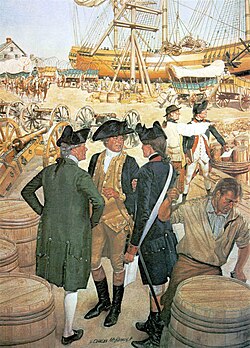
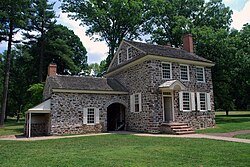
To decentralize command, the army was divided into territorial departments (such as the Northern, Southern, and Middle Departments). Logistics were managed by the Quartermaster General, who handled transportation and camp layouts, and a dedicated hospital department established in July 1775 to provide medical care via surgeons and apothecary generals.
Personnel and Diversity
The Continental Army was composed of soldiers from all thirteen colonies and states. This included diverse groups such as the Stockbridge Mohican Indian patriot soldiers and black infantrymen, notably within the 1st Rhode Island Regiment.
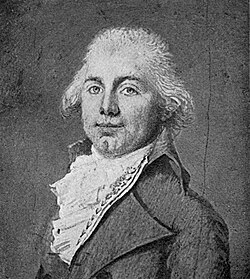
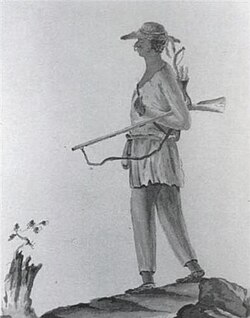
The army's strength fluctuated wildly throughout the war, peaking at 48,000 but seeing significant dips due to enlistment expirations and casualties.
Military Operations and Casualties
The Continental Army engaged in numerous pivotal conflicts, ranging from the early Invasion of Quebec to the decisive Siege of Yorktown. Between 1775 and 1783, the army suffered thousands of casualties, with the highest number of prisoners of war (POW) occurring in 1780.
| Category | Details |
|---|---|
| Founder | Second Continental Congress |
| Leader | George Washington |
| Total Served | 231,000 |
| Peak Size | 48,000 |
| Key Battles | Saratoga, Trenton, Yorktown, Monmouth |
| Successor | Legion of the United States / United States Army |
Ranks and Compensation
Pay varied significantly by branch. For example, an Infantry Colonel earned $75 per month, while a Cavalry Colonel earned $93.75. Privates in the infantry received $6.67 per month.
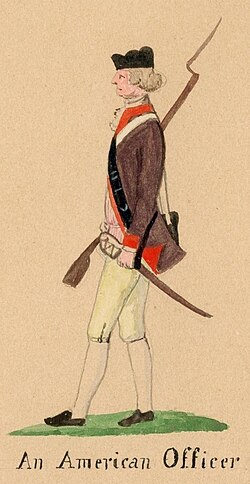
Rank insignia also evolved. In 1775, insignia were primarily cloth for non-commissioned officers. By June 18, 1780, metal epaulettes were introduced for commissioned officers to clearly denote rank on the battlefield.
Frequently Asked Questions
When was the Continental Army formed?
The Continental Army was established on June 14, 1775, by a resolution passed by the Second Continental Congress.
Who was the Commander-in-Chief of the Continental Army?
George Washington was unanimously elected as the Commander-in-Chief on June 15, 1775.
What was the role of Baron von Steuben?
Baron von Steuben served as the Inspector General from 1778 to 1784 and acted as a de facto chief of staff, focusing on the training and condition of the troops.
How diverse was the Continental Army?
The army included soldiers from all thirteen colonies, including black patriot soldiers (approximately 4% of the force) and Native American soldiers, such as the Stockbridge Mohican Indians.
Why did enlistment terms change in 1777?
Enlistment terms were extended to three years or "the length of the war" to avoid the annual depletion of forces that occurred when one-year enlistments expired, which had nearly caused the army to collapse in late 1776.