Conquest of the Desert: Argentina's Campaign for Patagonia
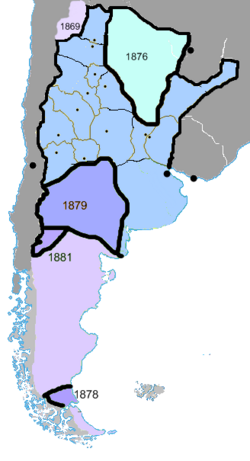
The Conquest of the Desert (Spanish: Conquista del desierto) was a pivotal and controversial military campaign conducted by Argentina between the 1870s and 1884. Led primarily by General Julio Argentino Roca, the operation aimed to establish Argentine sovereignty over the Puelmapu region, encompassing the Pampas and Patagonia. This campaign fundamentally reshaped the geography of the nation, ending Chilean expansion in the area and bringing vast territories under the control of the Argentine state.
While the campaign succeeded in annexing Patagonia and transforming the region into a global agricultural powerhouse, it came at a devastating cost to the Indigenous populations. The conflict resulted in the death of over 1,000 Mapuches, the displacement of more than 15,000 people, and the total extinction of certain groups, such as the Teushen, within a single generation.
Key Facts
- Timeline: 1870s to 1884.
- Primary Objective: Establishing dominance over Patagonia and the Pampas.
- Key Figure: General Julio Argentino Roca.
- Indigenous Groups Affected: Mapuche, Tehuelche, Ranqueles, and Pehuenches.
- Outcome: Argentine victory and annexation of Patagonia.
- Economic Impact: Conversion of Indigenous lands into highly productive agricultural exports.
Historical Background
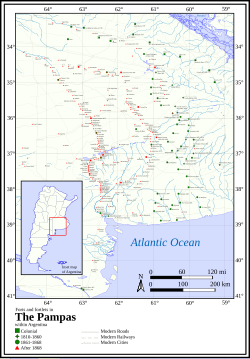
The roots of the conflict date back to the 16th century with the foundation of Buenos Aires. Initial tensions arose when Spanish colonists purchased hinterlands for cattle raising, displacing the traditional hunting grounds of the Querandí (Pampas) people. This led to a cycle of raids and retaliation, with the Spanish building forts to protect their expanding frontier.
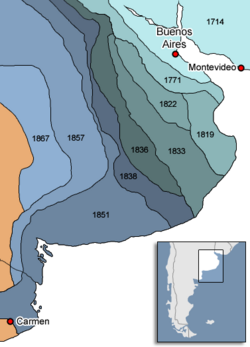
By the end of the 18th century, the Salado River served as the boundary between colonial settlements and Indigenous territories. Following Argentina's independence in 1816, the young republic sought to secure its claimed lands to prevent Chilean encroachment and to provide land for European immigrants.
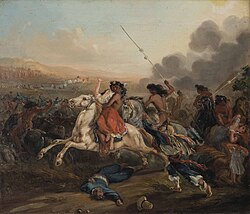
Tensions peaked in 1872 when the Indigenous commander Calfucurá led 6,000 warriors in attacks on cities such as General Alvear and Nueve de Julio, killing 300 settlers and driving off 200,000 cattle. These raids, known as malones, often involved driving stolen livestock into Chile to trade for goods, a practice reportedly supported by Chilean authorities to increase their own influence in Patagonia.
The Strategy of Adolfo Alsina
In 1875, Minister of War Adolfo Alsina proposed a plan focused on populating the region rather than destroying the native populations. His strategy relied on infrastructure and containment. He connected Buenos Aires to various fortines (small fortresses) via telegraph lines to improve communication and response times.
To physically block the malones, Alsina constructed the zanja de Alsina, a 374-kilometer-long trench. Measuring three meters wide and two meters deep, this barrier was designed to slow down cattle drives, making it easier for patrolling Argentine units to intercept raiding parties.
The Roca Campaign and Total Conquest
Following Alsina's death in 1877, Julio Argentino Roca took over as Minister of War. Roca rejected the containment strategy, believing the only solution was to subdue, expel, or extinguish the Indigenous threat to ensure the security and progress of the Republic.
Roca's campaign was executed in systematic sweeps:
- First Sweep (1878): Targeted the area between the Alsina trench and the Rio Negro. By December 1878, 4,000 natives had been captured and 400 killed.
- Second Sweep (1879): Utilizing 6,000 soldiers armed with modern breech-loading Remington rifles, Roca pushed the frontier to the Rio Negro and Neuquén River, effectively creating a border from the Andes to the Atlantic.
This military pressure forced many Mapuches to migrate into Chile. Simultaneously, European-Argentinian settlements began to emerge in the river basins, including Welsh colonists at y Wladfa on the Chubut River.
The Final Push and Border Clashes
After becoming president, Roca ordered Colonel Conrado Villegas to conquer the territory south of the Rio Negro. By 1884, the last rebel groups, led by chieftains Inacayal and Foyel, surrendered in the Chubut Province.
The campaign also sparked diplomatic and military friction with Chile. Chilean authorities supplied arms to the Mapuches to counter Argentine expansion, leading to several border skirmishes in the Pulmarí Valley between 1883 and 1884, resulting in casualties on both sides.
Summary of the Conquest
| Category | Details |
|---|---|
| Belligerents | Argentina vs. Mapuche, Tehuelche, Ranqueles, and Pehuenches |
| Key Commanders | Julio Argentino Roca, Adolfo Alsina, Conrado Villegas |
| Key Technologies | Remington rifles, Telegraph lines, Zanja de Alsina (trench) |
| Territorial Result | Annexation of Patagonia by Argentina |
| Human Cost | 1,000+ killed, 15,000+ displaced, extinction of the Teushen |
Historical Controversy
The legacy of the Conquest of the Desert remains a subject of intense debate in Argentina. Apologists view the campaign as a necessary civilizing mission that defended settlers from brutal raids and opened the frontier for economic development.
Conversely, revisionists and scholars classify the campaign as a genocide. They point to first-hand accounts of mass executions, the killing of prisoners, and the forced deportation of women and children by sea. Critics argue that the primary goal was the extermination of Indigenous tribes to facilitate land seizure for European colonization.
Frequently Asked Questions
What was the primary goal of the Conquest of the Desert?
The primary goal was to establish Argentine dominance over Patagonia and the Pampas, secure the territory against Chilean expansion, and open fertile lands for agricultural production and European immigration.
Who was Julio Argentino Roca?
Julio Argentino Roca was the General and later President of Argentina who directed the most aggressive phases of the campaign, shifting the strategy from containment to the systematic subjugation and expulsion of Indigenous peoples.
What was the 'zanja de Alsina'?
The zanja de Alsina was a 374-kilometer-long trench, three meters wide and two meters deep, built to act as a physical barrier to prevent Indigenous tribes from driving stolen cattle out of settled areas.
How did the campaign affect the Indigenous populations?
The campaign was devastating; it resulted in thousands of deaths, the displacement of over 15,000 people, the enslavement of survivors, and the total extinction of some tribes, such as the Teushen.
Why is the campaign considered a genocide by some historians?
Some historians label it a genocide because of evidence of mass executions, the intentional destruction of entire tribes, and the systematic deportation and forced servitude of the surviving Indigenous populations.