Connecticut Company: The Rise and Fall of a Transit Empire
The story of the Connecticut Company is a sweeping saga of corporate ambition, rapid industrial expansion, and the eventual transition from rails to rubber. Born from the strategic acquisitions of the New Haven Railroad, this network once formed a critical electric artery connecting the major cities of New England, creating a seamless link between New York City and Boston.
The Era of Rapid Expansion
The foundation of the empire began in 1895. After securing control of the New York and New England Railroad, the New Haven Railroad dominated nearly 90% of Connecticut's steam railroad mileage. Seeking to diversify, the New Haven began acquiring local electric street railways, starting with the Stamford Street Railroad in April 1895 and the Meriden Electric Railroad in October of the same year.
By 1899, the strategy shifted toward rural connectivity. The New Haven partnered with contractors Sanderson & Porter to control the People's Tramway. Through a series of complex mergers and renaming efforts, this evolved into the Worcester and Connecticut Eastern Railway by 1902. This expansion created a vital corridor from Worcester, Massachusetts, south to Central Village, with strategic branches reaching as far as Providence, Rhode Island.
The Birth of the Consolidated Railway
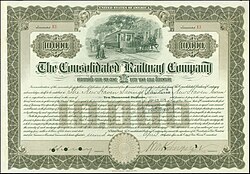
On May 18, 1904, the New Haven established the Consolidated Railway as a corporate shell to manage its growing portfolio of electric subsidiaries. This entity absorbed various local systems, including the Fair Haven and Westville Railroad. By late 1904, the completion of the Wallingford Tramway provided the final link in a continuous electric route stretching from New York City to Boston via Hartford, Springfield, and Worcester.
Between 1904 and 1906, the Consolidated Railway aggressively acquired dozens of lines across Connecticut and Massachusetts. These included the New London, Norwich, and Montville Street Railways, as well as the Springfield and Hartford Street Railways. This consolidation gave the New Haven unprecedented control over regional transit.
Formation of the Connecticut Company
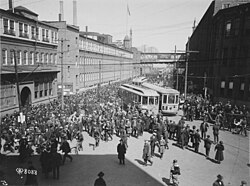
In 1907, the New Haven streamlined its operations. On May 31, the Consolidated Railway was merged into the New Haven, and the Thomaston Tramway was renamed the Connecticut Company. This new entity became the primary operator for all of the New Haven's electric railway properties.
To maintain its status as an intrastate carrier and avoid the jurisdiction of the Interstate Commerce Commission (ICC), the New Haven carefully managed the company's boundaries. In 1910, the New Haven took direct operation of three short segments that crossed state lines, ensuring the Connecticut Company remained strictly within state borders.
Key Facts
- Peak Connectivity: Created a continuous electric railway route between New York City and Boston.
- Corporate Parent: Originally controlled and developed by the New Haven Railroad.
- Strategic Shift: Transitioned from streetcars to intercity buses starting in the 1920s.
- Legal Battles: Subject to a major antitrust suit under the Sherman Antitrust Act in 1914.
- Final Transition: The state of Connecticut purchased the company's property in 1976 to form Connecticut Transit.
Legal Challenges and the Shift to Buses
The company's dominance did not go unchallenged. In July 1914, the U.S. Attorney General sued the New Haven for violating the Sherman Antitrust Act, alleging an illegal monopoly over New England's steam, electric, and water transportation. As a result, the Connecticut Company was placed under the control of voting trustees to separate it from the New Haven.
While the trusteeship was eventually dissolved in 1925, the era of the trolley was waning. The state authorized the first major replacement of rail lines with intercity buses north of Norwich in November 1925. Throughout the 1930s, rail abandonments accelerated. By 1937, only city and suburban lines remained.
| Year | Event | Impact |
|---|---|---|
| 1904 | Formation of Consolidated Railway | Centralized electric railway subsidiaries |
| 1907 | Connecticut Company Formed | Unified operator for New Haven's electric lines |
| 1914 | Antitrust Lawsuit | Company placed under voting trustees |
| 1925 | First Bus Replacements | Beginning of the end for rural trolley lines |
| 1941 | Hartford Division Conversion | Complete shift to buses in the Hartford area |
| 1948 | New Haven Trolley End | Final streetcars cease operation in New Haven |
| 1976 | State Acquisition | Creation of Connecticut Transit |
The Final Years and Legacy
The decline continued through the mid-20th century. The Connecticut Company officially left New Haven control in June 1964 after defaulting on federal flood loans. The remaining assets were sold for $3,225,000, while a small portion became the East Hartford Freight Company, which operated until 1967.
By 1972, the associated Connecticut Railway and Lighting Company ceased all service due to financial insolvency. Following a strike by drivers and mechanics, the state began subsidizing the remaining services in 1973. Finally, in May 1976, the state purchased the remaining property, establishing Connecticut Transit.
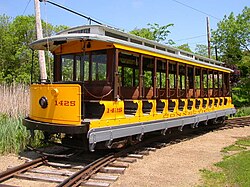
Today, the legacy of this massive network is preserved at the Shore Line Trolley Museum, which acquired a portion of the New Haven-Branford line in 1947, allowing future generations to experience the electric transit that once defined the region.
Frequently Asked Questions
Why was the Connecticut Company separated from the New Haven Railroad?
The U.S. Attorney General filed a suit in 1914 alleging that the New Haven Railroad held an illegal monopoly over transportation in New England, violating the Sherman Antitrust Act. This led to the company being placed under voting trustees.
When did trolleys stop running in New Haven?
Trolleys continued to operate on the streets of New Haven until September 25, 1948, making it one of the last areas to convert to bus service.
What happened to the company in 1964?
The Connecticut Company defaulted on federal flood loans and was reorganized and sold by the United States government for $3,225,000.
How did the Connecticut Company avoid federal ICC jurisdiction?
The New Haven Railroad ensured the Connecticut Company remained an intrastate carrier by taking direct operation of the small segments of track that crossed state lines into New York and Massachusetts.
What is the current successor to the Connecticut Company?
After the state purchased the company's property in May 1976, the operations became known as Connecticut Transit.