Congress of Tucumán: The Birth of Argentine Independence
The Congress of Tucumán stands as one of the most pivotal events in South American history. This representative assembly, which convened in San Miguel de Tucumán, was the body responsible for formally declaring the independence of the United Provinces of South America from the Spanish Empire on July 9, 1816. This declaration laid the groundwork for the modern nations of Argentina, Uruguay, and parts of Bolivia.
The Road to Independence
The journey toward sovereignty began with the May Revolution of 1810, which saw the replacement of the Spanish Viceroy with the Primera Junta (the first autonomous government). While the provinces were steadily moving toward full independence, the revolution faced significant threats. Royalist forces from the Viceroyalty of Peru held a strong position in Upper Peru, creating a precarious environment for the independence movement.
Following a revolution on April 15, 1815, that ended the mandate of Carlos María de Alvear, a General Congress was called. To ensure representation, delegate deputies were sent from all provinces, with one deputy assigned for every 15,000 inhabitants. The sessions officially commenced on March 24, 1816.
However, the assembly was not universal. Delegates from the Banda Oriental (the "Eastern Bank," now Uruguay) and other Liga Federal provinces—supporters of José Gervasio Artigas's democratic federalist project—were rejected on formal grounds. Additionally, Paraguay had already proclaimed its own independence from Spain and remained isolated from the politics of the United Provinces. Despite these absences, representatives from the Upper Peru Provinces (modern-day Bolivia) were present.
The Declaration of July 9, 1816
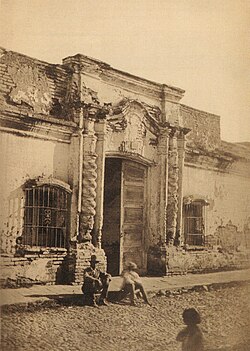
The congress was inaugurated in the private residence of Francisca Bazán de Laguna. Comprising 33 deputies, the assembly utilized a rotating presidency that changed on a monthly basis. Because the congress had the freedom to set its own agenda, the early sessions were marked by extensive discussions.
On July 9, 1816, the assembly reached its historic climax by declaring the independence of the United Provinces of South America. This specific name was chosen strategically to appeal to and potentially incorporate other Spanish American regions seeking independence that were not represented at the congress.
At the moment of the declaration, the President of the Congress was Francisco Narciso de Laprida, a delegate from the San Juan Province.
Post-Independence Struggles and Dissolution
After the declaration, the focus shifted to the structural organization of the new state. The deputies engaged in heated debates regarding the form of government and the location of the executive power. In 1817, the congress moved its operations to Buenos Aires.
Although the body issued a Constitution in 1819, it was ultimately rejected. The Congress was dissolved in 1820 following the Battle of Cepeda, where the Federal League Provinces of Santa Fe and Entre Ríos defeated the Directorship army. This conflict highlighted the deep divide between the Unitarians (who favored a centralized government) and the Federals (who advocated for provincial autonomy).
Today, the site of the declaration is preserved as the "House of Tucumán," a museum and national monument that serves as a reminder of the region's struggle for liberty.
Key Facts
- Date of Independence: July 9, 1816.
- Location: San Miguel de Tucumán, specifically the house of Francisca Bazán de Laguna.
- Representation: 33 deputies, with one representative per 15,000 inhabitants.
- Original Entity: The United Provinces of South America.
- Key Figure: Francisco Narciso de Laprida, President of the Congress during the declaration.
- Outcome: Formal break from the Spanish Empire.
Summary of the Congress of Tucumán
| Feature | Details |
|---|---|
| Start Date | March 24, 1816 |
| Independence Date | July 9, 1816 |
| Total Deputies | 33 |
| Excluded Regions | Banda Oriental (Uruguay) and Paraguay |
| Final Dissolution | 1820 (after the Battle of Cepeda) |
Signatories of the Declaration
The declaration was signed by a diverse group of representatives, including:
- Francisco Narciso de Laprida (President, San Juan)
- Mariano Boedo (Vice-president, Salta)
- José Mariano Serrano (Secretary, Charcas/Bolivia)
- Juan José Paso (Secretary, Buenos Aires)
- Other notable signatories included representatives from Catamarca, Córdoba, Mendoza, Tucumán, Jujuy, La Rioja, and Santiago del Estero.
Frequently Asked Questions
What was the purpose of the Congress of Tucumán?
The primary purpose was to establish a representative assembly to decide the political future of the provinces and formally declare independence from the Spanish Empire.
Why was the entity called the "United Provinces of South America"?
The name was intended to be inclusive, aiming to attract and incorporate other independentist regions in South America that were not present at the congress.
Which regions did not participate in the Congress?
Paraguay remained isolated, and delegates from the Banda Oriental (modern Uruguay) and other Liga Federal provinces were rejected based on formalities.
What led to the eventual dissolution of the Congress in 1820?
The Congress was dissolved after the Battle of Cepeda, where Federal forces from Santa Fe and Entre Ríos defeated the centralist Directorship army, intensifying the conflict between Unitarians and Federals.
What is the "House of Tucumán" today?
The house where the declaration of independence was signed was rebuilt and now serves as a museum and a National Monument.