Confederate States of AmericaAmerican Civil WarJefferson DavissecessionConfederate government

Confederate States of America: History, Governance, and Collapse

Confederate States of America The Confederate States of America (CSA) was an unrecognized state that existed from 1861 to 1865 during the American Civil War. Formed by eleven Southern sta...

Confederate States of America

The Confederate States of America (CSA) was an unrecognized state that existed from 1861 to 1865 during the American Civil War. Formed by eleven Southern states that seceded from the United States, the Confederacy established its own government, currency, and military forces in an attempt to maintain independence and the institution of slavery.

The entity evolved from a confederation of independent states (1861–1862) into a federal presidential republic (1862–1865), led by President Jefferson Davis. Despite its efforts to build a national infrastructure, the Confederacy faced systemic economic struggles and military pressure that eventually led to its total collapse in May 1865.
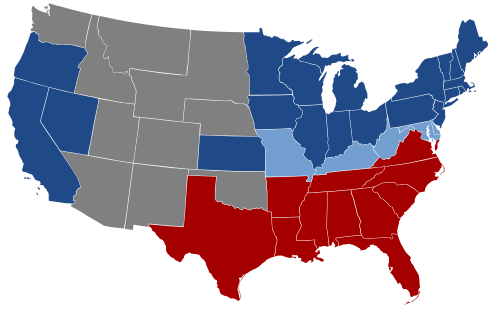
Blue indicates the Union states and light blue Union-supporting slave states (border states) that primarily stayed in Union control, though Kentucky and Missouri had dual competing Confederate and Unionist governments. Red represents seceded states in rebellion, also known as the Confederate States of America. Uncolored areas were territories, with the exception of the Indian Territory, which is present-day Oklahoma.

Key Facts

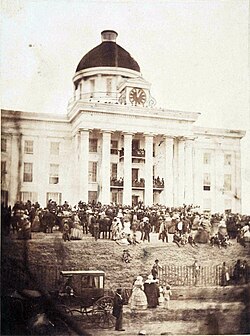
The inauguration of Jefferson Davis in Montgomery, Alabama
  • Duration: February 1861 to May 1865.
  • President: Jefferson Davis (1861–1865).
  • Capitals: Montgomery (AL), Richmond (VA), and Danville (VA).
  • Population: Approximately 9.1 million in 1860, including 3.5 million enslaved people.
  • Outcome: Military collapse and dissolution following the Battle of Appomattox Court House.

The Process of Secession
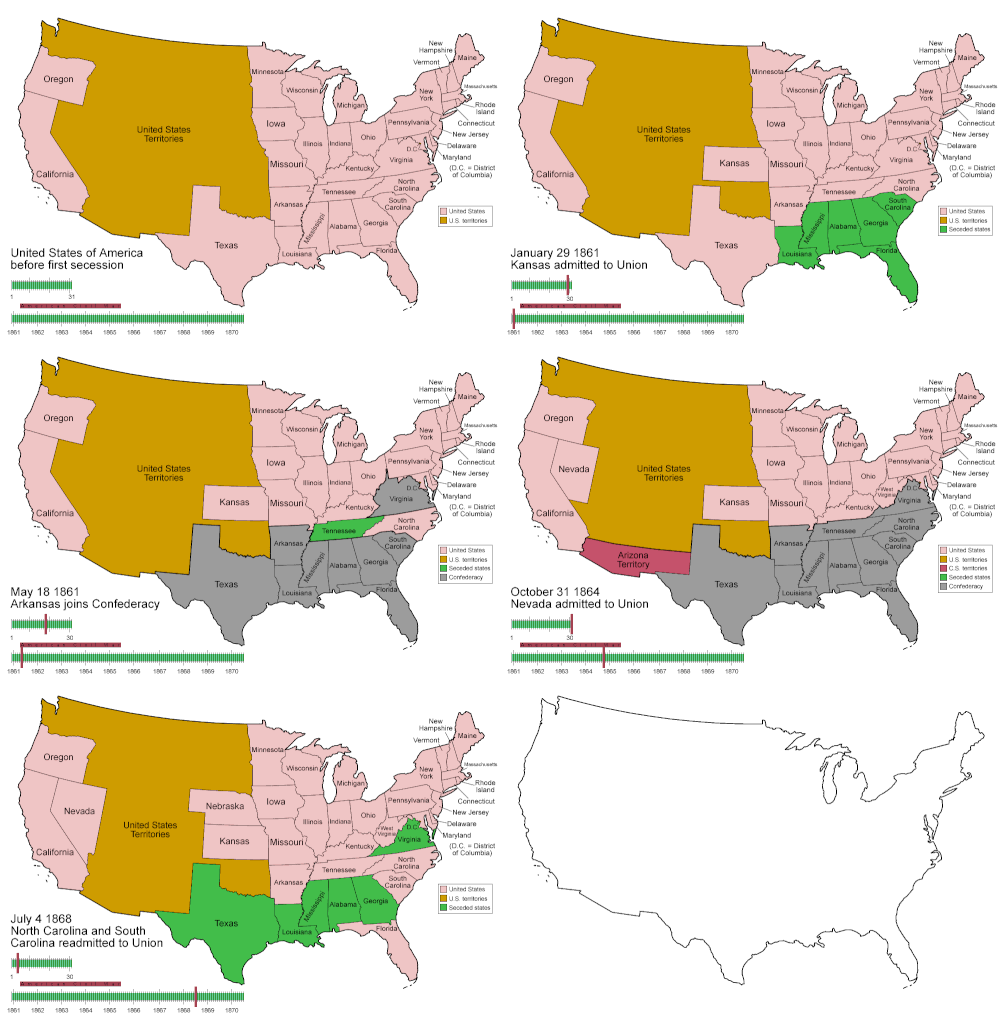
Evolution of the Confederate States between December 1860 and July 1870

Secession occurred in two primary waves. The first wave consisted of seven states that declared their independence before Abraham Lincoln took office on March 4, 1861. The second wave followed the Confederate attack on Fort Sumter on April 12, 1861, and Lincoln's subsequent call for troops.

Order of Secession

  1. South Carolina (December 20, 1860)
  2. Mississippi (January 9, 1861)
  3. Florida (January 10)
  4. Alabama (January 11)
  5. Georgia (January 19)
  6. Louisiana (January 26)
  7. Texas (February 1)
  8. Virginia (April 17)
  9. Arkansas (May 6)
  10. Tennessee (May 7)
  11. North Carolina (May 20)

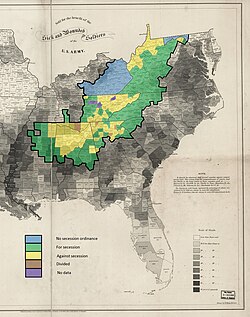
Map of the county secession votes of 1860–1861 in Appalachia within the ARC definition. Virginia and Tennessee show the public votes, while the other states show the vote by county delegates to the conventions.

Government and Administration

The Seal has symbols of an independent agricultural Confederacy surrounding an equestrian Washington, sword encased.[c]

The Confederacy established a structured government with a provisional constitution adopted on February 8, 1861, followed by a permanent constitution on February 22, 1862. The government featured a legislative branch consisting of a Senate and a House of Representatives.

Executive Leadership

Jefferson Davis served as the President throughout the war's duration, supported by Vice President Alexander H. Stephens. The administration managed various departments, including the Treasury, War, and Navy, to coordinate the war effort.
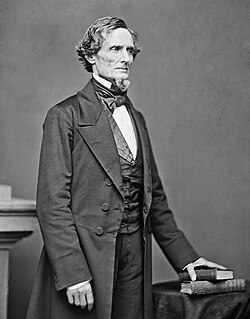
Jefferson Davis, President of the Confederacy from 1861 to 1865

The Confederacy also included representatives from Native American territories, such as Elias Cornelius Boudinot of the Cherokee, reflecting the complex political alliances of the era.

Elias Boudinot, a Cherokee secessionist and Confederate Representative in the Indian Territory of present-day Oklahoma

Capitals of the Confederacy

The seat of government shifted as the military situation deteriorated:

  • Montgomery, Alabama: The initial capital where the Confederacy was created.
  • Richmond, Virginia: The primary capital for the majority of the war.
  • Danville, Virginia: The final temporary residence of the government.
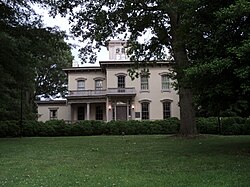
The William T. Sutherlin Mansion in Danville, Virginia was the temporary residence of Jefferson Davis and dubbed the "last Capitol of the Confederacy".

Military and Economy

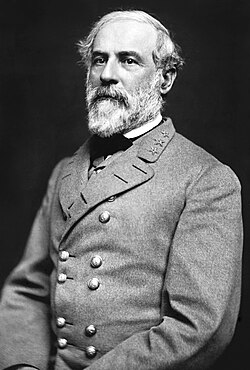
General Robert E. Lee, General in Chief (1865)

The Confederate military relied on a mix of volunteers and conscription (compulsory enlistment). While the CSA saw early victories in 1861, it struggled against the Union's superior resources and manpower.
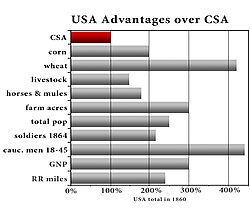
The Union had large advantages in men and resources at the start of the war; the ratio grew steadily in favor of the Union

The economy was heavily dependent on agriculture and suffered from severe inflation and food shortages. The government issued its own currency, the Confederate States dollar, but the lack of industrial capacity and the Union blockade led to widespread economic devastation.
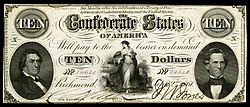
The 1862 $10 CSA note depicts a vignette of Hope flanked by R. M. T. Hunter and C. G. Memminger.

Infrastructure and Urban Impact

Transportation was a critical weakness, with railroads utilizing different gauges (track widths), which hindered the movement of troops and supplies. By 1865, the war had left a trail of destruction; 11 major cities, including Atlanta and Richmond, were severely damaged or destroyed.
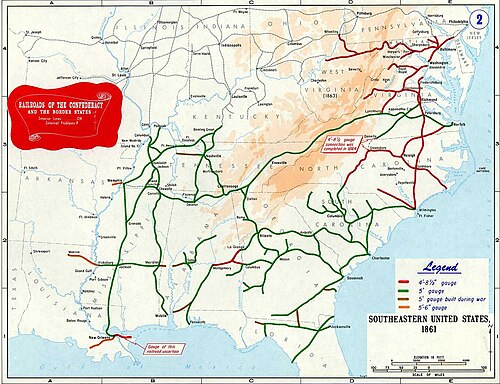
Main railroads of Confederacy, 1861; colors show the different gauges (track width); the top railroad shown in the upper right is the Baltimore and Ohio, which was at all times a Union railroad

Summary of Confederate Governance

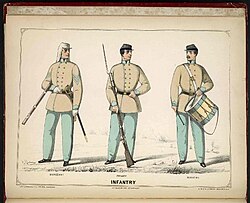
Uniform and dress of the army of the Confederate States.

The following table summarizes the core components of the Confederate States of America.

Overview of the Confederate States of America
Category Details
Government Type Confederation (1861-62), Federal Presidential Republic (1862-65)
President Jefferson Davis
Legislature Bicameral Congress (Senate and House of Representatives)
Currency Confederate States dollar
Motto Deo vindice (Under God, our vindicator)

Southern Unionism

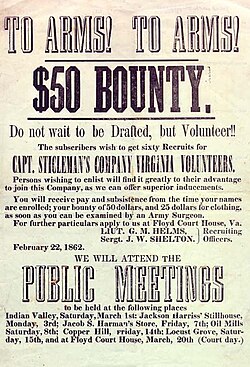
Recruitment poster: "Do not wait to be drafted". Under half re-enlisted.

Not all residents of the seceding states supported the Confederacy. Southern Unionists resisted the war effort and the 1862 conscription acts. In regions like Appalachia, resistance was particularly strong, and some Unionists formed their own military units to fight against the CSA.
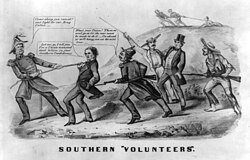
Southern Unionists throughout the Confederate States resisted the 1862 conscription

Frequently Asked Questions

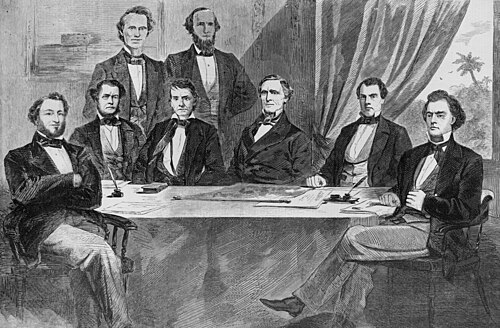
Davis's cabinet in 1861, Montgomery, AlabamaFront row, left to right: Judah P. Benjamin, Stephen Mallory, Alexander H. Stephens, Jefferson Davis, John Henninger Reagan, and Robert ToombsBack row, standing left to right: Christopher Memminger and LeRoy Pope WalkerIllustration printed in Harper's Weekly
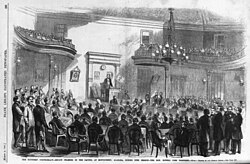
Provisional Congress, Montgomery, Alabama
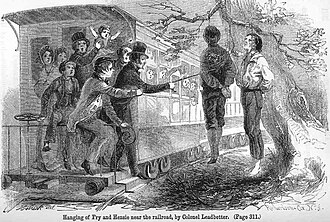
Passers-by abused the bodies of Union supporters near Knoxville, Tennessee. The two were hanged by Confederate authorities near the railroad tracks so passing train passengers could see them.
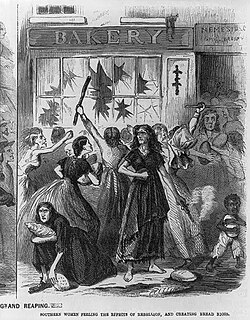
Richmond bread riot, 1863
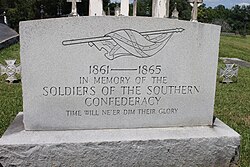
This Confederate memorial tombstone at Natchez City Cemetery is in Natchez, Mississippi.
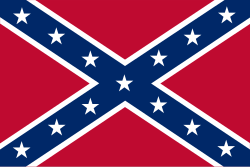
This Confederate Battle Flag pattern is the one most often thought of as the Confederate Flag. It is one of many used by the Confederate armed forces. Variations of this design served as the Battle Flag of the Armies of Northern Virginia and Tennessee, and as the Confederate Naval Jack.
Col. James P. Brownlow, a 22-year-old cavalry colonel from Knoxville, and his regiment of Southern Unionist "mountaineers", were called "damned Tennessee Yankees" by Confederate troops.[262]
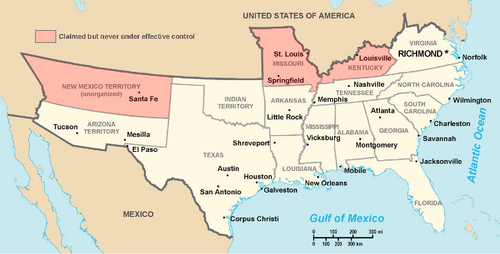
Map of the states and territories claimed by the Confederate States of America
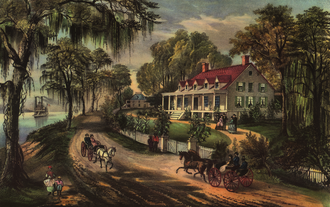
A Home on the Mississippi, Currier and Ives, 1871
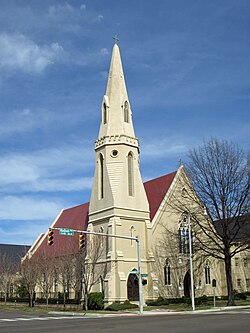
St. John's Episcopal Church, Montgomery. The Secession Convention of Southern Churches was held here in 1861.

Which states formed the original Confederacy?

The original seven states were South Carolina, Mississippi, Florida, Alabama, Georgia, Louisiana, and Texas.

Who was the President of the Confederate States?

Jefferson Davis served as the President of the Confederacy from 1861 to 1865.

What were the capitals of the Confederacy?

The Confederacy had three capitals: Montgomery, Alabama; Richmond, Virginia; and finally, Danville, Virginia.

How did the Confederate economy fail?

The economy suffered from a lack of industrialization, severe inflation of the Confederate dollar, and the impact of the Union blockade, leading to food riots and resource shortages.

What happened to the Confederacy in 1865?

Following the Battle of Appomattox Court House on April 9, 1865, the Confederate military collapsed, leading to the debellation and dissolution of the government by May 5, 1865.