Confederate Kentucky: The Rise and Fall of the Provisional Government
During the American Civil War, Kentucky occupied a precarious position, attempting to maintain neutrality while being torn between Union and Confederate loyalties. This tension culminated in the creation of a provisional government—a temporary administrative body—established to represent Kentucky's interests within the Confederate States of America.
The struggle for legitimacy and control defined this government's brief existence, as it operated largely in exile or under the protection of the Confederate Army, facing immense challenges in funding, recruitment, and territorial control.
Key Facts
- George W. Johnson served as the first Confederate governor of Kentucky.
- The provisional government's jurisdiction was limited to areas controlled by the Confederate Army.
- The government struggled to meet troop quotas, failing to raise the 46,000 soldiers requested by the Confederate Congress.
- Richard Hawes succeeded Johnson as governor following Johnson's death at the Battle of Shiloh.
- The government was briefly installed in Frankfort in October 1862 before being forced to retreat.
The Administration of George W. Johnson
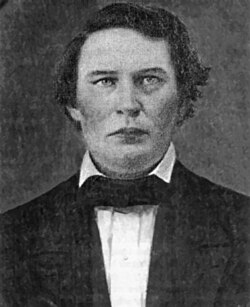
On November 26, 1861, Governor George W. Johnson addressed the citizens of the Commonwealth, attributing the breakup of the United States to abolitionists. Johnson proposed that the Union and Confederacy were equal in strength and suggested a free trade agreement between the two sovereign nations as the only viable solution to the conflict.
Despite his efforts, Johnson's authority was fragile. He offered to resign if the Kentucky General Assembly would cooperate with Governor Magoffin, though Magoffin himself denounced the provisional government and the Russellville Convention, arguing that the will of the majority of citizens should prevail.
Financial and Military Struggles
Throughout the winter of 1861, the provisional government struggled to assert its legitimacy. Its jurisdiction only extended to regions held by the Confederate Army, which at its peak covered over half the state. Johnson failed to levy taxes or compel citizens to surrender firearms, and he fell short of the 46,000 troops requested by the Confederate Congress.
Financially, the government was strained. On January 3, 1862, Johnson requested $3 million (approximately $97 million in 2025 currency) for operating expenses. The Confederate Congress approved only $2 million, with spending subject to the approval of President Davis and Secretary of War Judah P. Benjamin. Much of the remaining capital was likely provided by Eli Metcalfe Bruce, a Kentucky congressman who amassed a fortune through various economic activities during the war.
Legislative Efforts and Local Governance
The government attempted to integrate into the Confederate political system. On December 14, representatives were appointed to the unicameral provisional congress. By February 17, 1862, this was replaced by a permanent bicameral legislature, granting Kentucky two senators and 12 representatives.
An election held on January 22 saw military votes outnumber civilian ones. Consequently, only four provisional legislators were elected to the Confederate House of Representatives, and Henry Burnett was elected to the Confederate Senate. Other minor actions included renaming Wayne County to Zollicoffer County in honor of Felix Zollicoffer, who died at the Battle of Mill Springs, and appointing local justices of the peace whose legal marriages were eventually upheld after the war.
Withdrawal and the Death of Governor Johnson
The tide turned following Ulysses S. Grant's victory at the Battle of Fort Henry. On February 7, 1862, General Johnston withdrew from Bowling Green into Tennessee, and Governor Johnson and his government followed a week later. By March 12, the government's headquarters had dwindled to a Sibley tent.
Despite being 50 years old and having a crippled arm, Governor Johnson volunteered for active service under Breckinridge and Colonel Robert P. Trabue at the Battle of Shiloh. On April 7, he was severely wounded in the abdomen and thigh. He was aided by Union General Alexander McDowell McCook, a fellow Freemason, but Johnson ultimately died aboard the Union hospital ship Hannibal. His body was preserved in salt and shipped back to Georgetown, Kentucky.
The Governorship of Richard Hawes
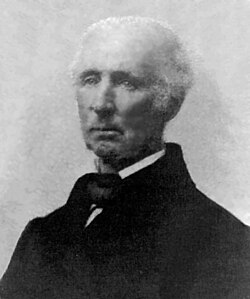
Following Johnson's death, the provisional government elected Richard Hawes as governor. Hawes had been delayed in joining the administration due to typhoid fever, eventually taking the oath of office on May 31 in Corinth, Mississippi.
The 1862 Invasion of Kentucky
In the summer of 1862, Generals Bragg and Edmund Kirby Smith planned an invasion of Kentucky. Governor Hawes traveled to Richmond on August 27 to recommend the plan to President Davis. While Davis remained non-committal, the generals proceeded.
The campaign saw initial success, with Smith winning a major victory at the Battle of Richmond on August 30 and Bragg winning at the Battle of Munfordville on September 13. However, a delay at Munfordville allowed Union General Don Carlos Buell to occupy Louisville on September 25. Bragg subsequently adopted a defensive posture in Bardstown, Shelbyville, and Danville—a decision historian Kenneth W. Noe described as "stupendously illogical."
The Brief Occupation of Frankfort
The Confederate government leaders, who had been waiting in Chattanooga, Tennessee, reached Lexington on October 2. Bragg, disappointed by the low number of volunteers and the abundance of unissued weapons, sought to enforce the Confederate Conscription Act to boost recruitment. To facilitate this, he installed the provisional government in the captured capital of Frankfort.
On October 4, 1862, Richard Hawes was inaugurated as governor. However, the celebration was short-lived; Confederate forces were ambushed by Buell's artillery and forced to retreat almost immediately.
Summary of Confederate Kentucky Governance
| Feature | George W. Johnson Era | Richard Hawes Era |
|---|---|---|
| Primary Focus | Establishing legitimacy and funding | Re-entry into Kentucky via invasion |
| Key Challenges | Low troop recruitment; funding shortages | Typhoid fever; Union military pressure |
| Major Military Event | Battle of Shiloh (Death of Johnson) | Battle of Richmond & Munfordville |
| Capital Location | Bowling Green / Sibley Tent | Corinth, MS / Frankfort, KY (briefly) |
Frequently Asked Questions
Who was the first Confederate governor of Kentucky?
George W. Johnson was the first provisional governor, serving from late 1861 until his death in April 1862.
How did George W. Johnson die?
Governor Johnson volunteered to fight at the Battle of Shiloh, where he was severely wounded in the thigh and abdomen. He died aboard the Union hospital ship Hannibal.
Why was the provisional government unable to raise the requested 46,000 troops?
The government struggled with legitimacy, lacked the ability to effectively levy taxes, and faced difficulty compelling citizens to turn over weapons or enlist.
What happened during Richard Hawes' inauguration in Frankfort?
While the inauguration took place on October 4, 1862, the celebratory atmosphere led to a lapse in security, resulting in an ambush by Union artillery that forced the Confederate forces to retreat.
Was the provisional government's funding fully supported by the Confederate Congress?
No. While Johnson requested $3 million, the Congress approved only $2 million, and much of the operating capital was likely provided privately by congressman Eli Metcalfe Bruce.