Concordats: The Legal Framework Between the Holy See and Sovereign States
A concordat is a formal convention established between the Holy See (the central government of the Catholic Church) and a sovereign state. These agreements serve as the primary legal mechanism for defining the relationship between the Church and a government, specifically regarding the recognition and privileges of the Catholic Church within a particular country and the secular matters that impact church interests.
While the practice of such agreements dates back to 1098, the specific term "concordat" did not enter common usage until the pontificate of Pope Martin V (1413–1431), appearing in Nicholas de Cusa's work, De Concordantia Catholica. Between the 11th century and the start of World War I, the Holy See signed 74 concordats. However, the massive geopolitical restructuring of Europe following the First World War led to the greatest proliferation of these treaties in history, as new legal successor states required updated frameworks.
Key Facts
- Definition: A treaty between the Holy See and a state governing church-state relations.
- Historical Peak: The post-World War I era saw the highest volume of new concordats.
- Modern Usage: After a brief decline following the Second Vatican Council (1965), concordats returned with agreements in Poland (1993) and Portugal (2004).
- Primary Focus: Often centers on religious freedom, legal recognition, and financial privileges like tax exemptions.
The Evolution of Church-State Diplomacy
The nature of concordats has shifted alongside global political trends. In the modern era, the Holy See continues to evolve its mode of relations with various states, often facing challenges due to increasing religious pluralism and secularism in the Western world.
The Napoleonic Example
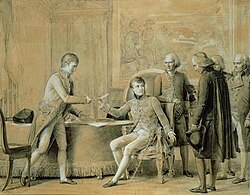
One of the most significant historical examples is the Concordat of 1801 between Napoleon Bonaparte and Pope Pius VII. This agreement followed the chaos of the French Revolution, during which the National Assembly had seized Church properties and abolished Christian holidays. Under the 1801 agreement, the Church renounced claims to lands confiscated after 1790 in exchange for the right to public worship. While this pacified French Catholics and restored ties to the papacy, it largely favored the state; Napoleon later unilaterally amended the agreement via the Organic Articles to further restrict religious practice.
Financial Privileges and Legal Implications
Many concordats grant the Catholic Church specific financial advantages, often framing the Church as a charitable institution. These privileges can range from explicit tax exemptions to indirect legal protections.
- Tax Exemptions: Brazil (2008) and Italy (1984) have concordats that explicitly or indirectly grant tax-exempt status. In Italy, a 1992 law interpreted these exemptions to allow the Church to avoid paying 90% of taxes on commercial activities if a small shrine is present on the premises (such as in a hotel or restaurant), a practice that drew scrutiny from the European Commissioner for Competition in 2007.
- Accountability: The Slovak concordat (2000) ensures that church offertories are not subject to taxation or public accountability requirements.
- Legal Immunity: In Côte d'Ivoire, a 1992 concordat regarding the Basilica at Yamoussoukro—the world's largest church—ensures that the foundation's assets remain untaxed, protects funds from civil and criminal law, and keeps financial documents secret.
Summary of Notable Concordats and Agreements
| Treaty | Contracting Party | Conclusion Date | Entry into Force |
|---|---|---|---|
| Concordat of Worms | Holy Roman Empire | 23 Sep 1122 | - |
| Concordat of Bologna | France | Sep 1516 | - |
| Concordat of 1801 | France | 15 July 1801 | - |
| Lateran Treaty | Italy | 11 Feb 1929 | 7 Jun 1929 |
| Reichskonkordat | Germany | 20 Jul 1933 | - |
| Polish Concordat | Poland | 28 Jul 1993 | 25 Apr 1998 |
| Brazil Concordat | Brazil | 13 Nov 2008 | - |
Frequently Asked Questions
What is the primary purpose of a concordat?
The primary purpose is to establish a legal framework that defines the rights, privileges, and obligations of the Catholic Church within a sovereign state, ensuring the Church's ability to operate while respecting the state's secular laws.
When did the term "concordat" first appear?
Although agreements existed as early as 1098, the term "concordat" first appeared during the pontificate of Pope Martin V (1413–1431) in the work De Concordantia Catholica by Nicholas de Cusa.
Do concordats provide financial benefits to the Church?
Yes, many concordats provide tax-exempt status or shield church finances from public accountability and taxation, as seen in examples from Italy, Slovakia, and Côte d'Ivoire.
How did World War I affect concordats?
The war caused a substantial remapping of Europe, leading to the creation of new successor states. This necessitated a surge of new concordats, marking the period of greatest proliferation in the history of these agreements.
Are concordats still being signed today?
Yes. While their use fluctuated after the Second Vatican Council, recent examples include the 2004 agreements with Portugal and Slovenia, and a 2024 treaty with the Czech Republic.