Conceptual Art: Prioritizing Ideas Over Aesthetics
Conceptual art, often referred to as conceptualism, is a movement in which the concept or idea behind a work is considered equally or more important than traditional aesthetic, technical, or material concerns. In this approach, the physical manifestation of the art is secondary to the intellectual spark that conceived it.
One of the most defining characteristics of conceptual art is that the work may be constructed by anyone simply by following a set of written instructions. This philosophy was central to the definition provided by American artist Sol LeWitt, who argued that the idea becomes a "machine that makes the art," meaning all planning and decisions are made beforehand, leaving the execution as a perfunctory affair.
Key Facts
- Core Philosophy: The idea or concept is the most important aspect of the work.
- Primary Timeline: The first wave of the movement extended approximately from 1967 to 1978.
- Key Shift: A move away from the assumption that an artist's role is to create special material objects.
- Language as Medium: The use of exclusively linguistic means to create art, replacing the brush and canvas.
- Legacy: Influenced subsequent movements including Neo-conceptualism and Post-conceptual art.
Origins and Precursors
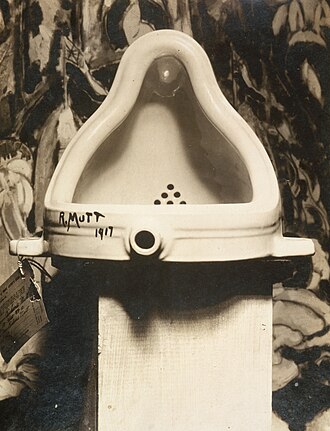
While the formal movement peaked in the late 1960s, proto-conceptualism has roots in early Modernism, notably in the works of Édouard Manet and later Marcel Duchamp. Duchamp's introduction of the "readymade" challenged the very definition of artistic creation.
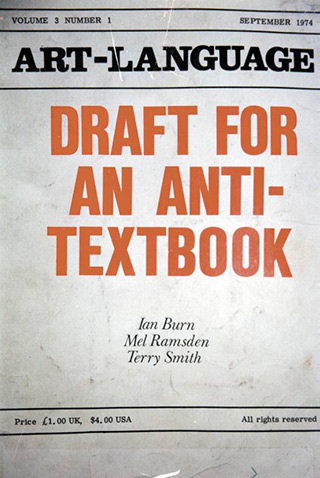
By the 1950s, influential critic Clement Greenberg had already championed a vision of Modern art that examined its own nature. However, the 1960s saw a more radical interrogation. Artists such as Joseph Kosuth and the group Art & Language discarded the conventional art object in favor of documented critical inquiry into the social, philosophical, and psychological status of the artist.
The Role of Language
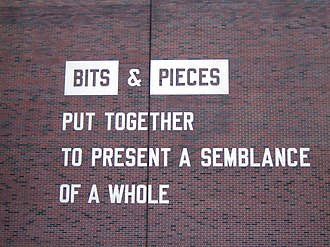
Language became a central tool for the first wave of conceptualists. While text had been used in art previously (such as in Synthetic Cubism), artists like Lawrence Weiner, Edward Ruscha, and Robert Barry began producing art using exclusively linguistic means. In these works, language does not serve as a visual element within a composition but signifies in its own right.
Evolution and Contemporary History
The movement evolved through several stages, moving from the "dematerialization" of the art object toward more diverse applications. Early influencers like Henry Flynt, Robert Morris, and Ray Johnson paved the way for the widely accepted movement of the 70s.
Following the first wave, "post-conceptual" artists—such as Mike Kelley and Tracey Emin—emerged. More recently, Protocolar Art has shifted the focus from the dematerialized idea toward the administrative and physical certification of the artistic gesture.
Neo-Conceptualism and Revival
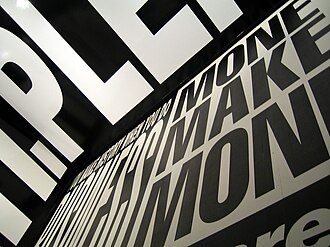
Neo-conceptual art describes practices from the 1980s and 1990s that derive from the original movement. This revival includes the Moscow Conceptualists, U.S. neo-conceptualists like Sherrie Levine, and the Young British Artists (YBAs), including Damien Hirst.
Notable Examples and Artists
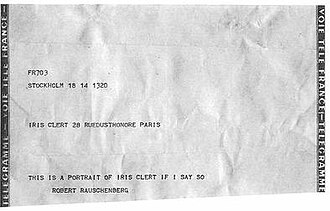
Conceptual art manifests in various forms, from silent compositions to public interventions. Notable examples include John Cage's 1952 work 4′33″, often perceived as silence, and George Brecht's "Event Scores," which are simple instructions for everyday tasks.
| Year | Work/Event | Significance |
|---|---|---|
| 1916–17 | Apolinère Enameled | Rectified readymade altering a paint advertisement. |
| 1952 | 4′33″ (John Cage) | Experimental composition focusing on silence. |
| 1958 | Event Scores (George Brecht) | Instructions for everyday tasks; central to Fluxus. |
| 1969 | Art after Philosophy (Kosuth) | Seminal manifesto defining art as an inquiry into its own nature. |
| 1970 | Conceptual Art and Conceptual Aspects | First dedicated conceptual-art exhibition in New York. |
The movement has been shaped by a vast array of artists, including Sol LeWitt, Joseph Beuys, Yoko Ono, Marina Abramović, and Barbara Kruger, each expanding the boundaries of what constitutes an "art object."
Frequently Asked Questions
What is the main goal of conceptual art?
The main goal is to prioritize the idea or concept over the physical or aesthetic result. It questions the nature of art and challenges the assumption that art must be a material object created by the artist's hand.
Can anyone create conceptual art?
Yes, in many cases. Because the "idea is the machine that makes the art," some works consist of written instructions that can be executed by anyone, meaning the artist's primary role is the planning and decision-making process.
How does conceptual art differ from traditional art?
Traditional art typically focuses on technical skill, material beauty, and the final visual product. Conceptual art shifts this focus to the intellectual process, often using language, documentation, or performance instead of paint and canvas.
What is Neo-conceptualism?
Neo-conceptualism refers to art practices from the 1980s to the present that build upon the foundations of the 1960s and 70s conceptual movement, as seen in the work of the Young British Artists or the Moscow Conceptualists.
What is the significance of language in this movement?
For many conceptual artists, language is not just a tool for description but the medium itself. By using text exclusively, artists can communicate complex philosophical ideas without the "distraction" of visual aesthetics.