CONAE: Argentina's National Space Program and its Evolution
The Comisión Nacional de Actividades Espaciales (National Space Activities Commission), known as CONAE, is the civilian government agency responsible for Argentina's national space program. From its early roots in interplanetary societies to its current role as a leader in Earth observation, CONAE manages the design, launch, and operation of satellites and launch vehicles to advance scientific knowledge and environmental monitoring.
Key Facts
- Founded: Established as CNIE in 1960; transitioned to CONAE in 1991.
- Headquarters: Buenos Aires, Argentina.
- Primary Focus: Earth observation through optical and microwave satellite series.
- Key Infrastructure: Teófilo Tabanera Space Center (CETT) and the Córdoba Ground Station.
- Major Partnerships: Extensive collaborations with NASA, ESA, and the Italian Space Agency (ASI).
- Budget: 7.458 billion ARS (approximately US$77.5 million as of 2021).
Historical Foundations
The Early Pioneers
Argentina's journey into space began in the 1940s with the Sociedad Argentina Interplanetaria (SAI), organized by Teófilo Tabanera. This effort made Argentina the first Latin American nation to establish a spaceflight organization. During this era, Aldo Cocca became a pioneer in space law, contributing to the concept that space is the common heritage of humankind, a principle later adopted by United Nations treaties.
The CNIE Era (1960–1991)
In 1960, the Comisión Nacional de Investigaciones Espaciales (CNIE) was formed. Working alongside the Argentine Air Force, CNIE developed several indigenous multistage high-altitude sounding rockets, including the Centauro, Orión, and Canopus series. This period marked a milestone as Argentina became the first Latin American country to send an object into space using a domestically developed rocket.

During the 1970s, CNIE partnered with the French National Centre for Space Studies (CNES) for the EOLO Program. This project launched 500 stratospheric air balloons to study the dynamics of air displacement within the stratosphere—the atmospheric layer above the troposphere where the ozone layer absorbs ultraviolet (UV) radiation.
Transition to Civilian Space Activities
In the 1980s, Argentina participated in the multinational Condor missile program. However, under pressure from the United States, the program was cancelled in 1991. This led to the creation of CONAE on May 28, 1991, shifting the nation's aerospace efforts from military applications to civilian scientific purposes.
Infrastructure and Research Centers
Teófilo Tabanera Space Center (CETT)
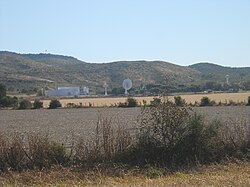
Located in Falda del Carmen, Córdoba, the CETT is the heart of Argentina's space operations. It houses critical facilities for the planning and execution of space missions.
Córdoba Ground Station (ETC)
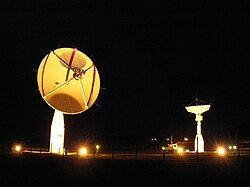
Operational since 1997, the ETC handles Tracking, Telemetry, and Command (TT&C)—the process of monitoring and controlling satellites. It currently manages data for 12 international satellites in addition to Argentine missions. Plans are underway for a second station in Ushuaia to improve data collection over the Antarctic continent.
Advanced Studies and Testing
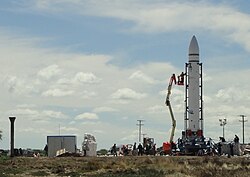
The agency operates the Institute for Advance Space Studies "Mario Gulich" to develop highly skilled human resources. For launch vehicle development, CONAE established the "Polo Espacial de Punta Indio" to test VEx rockets, which serve as technological demonstrators for the Tronador II launcher.
Satellite Systems and Missions
Argentina's satellite strategy is divided into two primary series focused on Earth observation: the optical SAC series and the microwave SAOCOM series.
The SAC Series (Optical Range)
Developed with INVAP and NASA, the SAC series focuses on technological demonstration and scientific research.
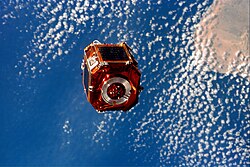
- SAC-A: A technological model launched in 1998 via Space Shuttle.
- SAC-B: The first scientific satellite (1996), focused on solar physics, though deployment issues limited its operation.
- SAC-C: Launched in 2000, it was part of the first International Earth Observation Constellation alongside NASA's Landsat 7, Terra, and EO-1.
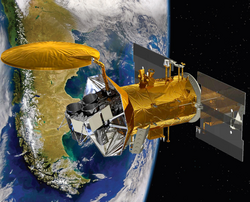
- SAC-D/Aquarius: Launched in 2011, this mission carries a NASA instrument to measure sea salinity and CONAE sensors to monitor fire focuses.
The SAOCOM Series (Microwave Range)
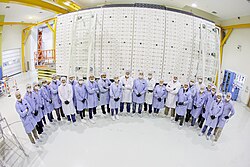
The SAOCOM missions utilize Synthetic Aperture Radar (SAR), a form of radar used to create two-dimensional images or three-dimensional reconstructions of objects. This technology allows for Earth observation regardless of cloud cover or light conditions.
Future Missions
- SABIA-Mar 1 (SAC-E): A joint project with the Brazilian Space Agency for monitoring water and food resources in the Mercosur area.
- SARE: Proposed nanotechnology-based satellites weighing approximately 200 kg.
Launch Vehicles and Airborne Systems
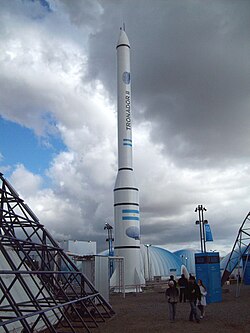
The Tronador II is a multi-stage satellite launcher currently under development. While early tests of the VEx series and third-stage prototypes have faced challenges, the program continues to aim for independent space access. The final launch site is designated as the "Complejo Argentino de Acceso Al Espacio" at the Puerto Belgrano Naval Base.
Additionally, CONAE operates SARAT, a self-developed airborne SAR system used as a test bench for the SAOCOM missions, providing high-resolution L-band polarimetric data.
International Cooperation
CONAE is a member of the International Charter 'Space and Major Disasters,' providing data to assist in natural and man-made disaster relief. Furthermore, a partnership with the European Space Agency (ESA) led to the installation of a 35-meter antenna at the Pierre Auger Observatory in Mendoza, supporting missions like Mars Express and Rosetta.
Summary of Argentine Space Program
| Category | Details |
|---|---|
| Agency Name | Comisión Nacional de Actividades Espaciales (CONAE) |
| Primary Goal | Civilian Earth Observation and Space Research |
| Key Satellite Series | SAC (Optical) and SAOCOM (Microwave/SAR) |
| Main Launch Project | Tronador II |
| Key Partners | NASA, ESA, ASI, INVAP |
Frequently Asked Questions
What is the difference between the SAC and SAOCOM satellite series?
The SAC series utilizes instruments in the optical range for Earth observation and scientific research, while the SAOCOM series uses L-band Synthetic Aperture Radar (SAR) in the microwave range, allowing for imaging through clouds and at night.
What was the purpose of the EOLO Program?
The EOLO Program was a collaboration with the French CNES that launched 500 stratospheric balloons to study the dynamics of air displacement in the Earth's stratosphere.
What is the Tronador II?
The Tronador II is an indigenous multi-stage satellite launcher currently under development to provide Argentina with independent access to space.
How does CONAE collaborate with NASA?
CONAE has collaborated with NASA on several fronts, including the development of the SAC series, the creation of the First International Earth Observation Constellation, and the SAC-D/Aquarius mission to measure sea salinity.
What is the role of the Córdoba Ground Station?
The Córdoba Ground Station (ETC) is responsible for the tracking, command, and control (TT&C) of Argentine satellites, as well as receiving and archiving data from various international missions.