Common Poorwill
The Common Poorwill (Phalaenoptilus nuttallii) is a fascinating nocturnal bird belonging to the family Caprimulgidae, commonly known as nightjars. Found across a wide range from British Columbia and southeastern Alberta, through the western United States, and into northern Mexico, this bird is specially adapted to dry, open environments. Its preferred habitats include grasslands, shrublands, and even stony desert slopes with minimal vegetation.
While many northern populations migrate to central and western Mexico for the winter, some individuals remain further north. What truly sets the Common Poorwill apart from every other avian species is its ability to enter torpor—a state of decreased physiological activity—for extended periods lasting weeks or even months.
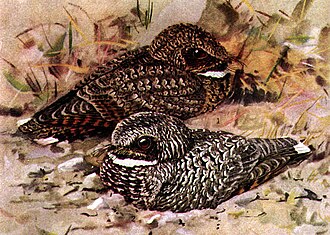
Key Facts
- Unique Ability: The only bird known to enter extended torpor, similar to hibernation.
- Size: The smallest North American nightjar, averaging 18 cm in length.
- Diet: Primarily nocturnal insects like moths, beetles, and grasshoppers.
- Conservation Status: Listed as Least Concern by the IUCN.
- Habitat: Dry, open areas and stony desert slopes.
Taxonomy and Classification
The species was first formally described and illustrated in 1844 by the renowned ornithologist John James Audubon. He originally named it Caprimulgus nuttallii to honor his friend, Thomas Nuttall. In 1880, Robert Ridgway moved the species to its own genus, Phalaenoptilus. The genus name is derived from the Ancient Greek words phalaina (moth) and ptilon (plumage), reflecting the bird's diet and appearance.
Recognized Subspecies
There are six recognized subspecies of the Common Poorwill, varying primarily by color and region:
- P. n. nuttallii: The nominate race, breeding across most of North America.
- P. n. californicus (Dusky Poorwill): Darker and browner; found in western California and north Baja California.
- P. n. hueyi (Desert Poorwill): Paler than the nominate race; found in southeast California, southwest Arizona, and northeast Baja California.
- P. n. dickeyi (San Ignacio Poorwill): Smaller and less marked; resident in southern Baja California.
- P. n. adustus (Sonoran Poorwill): Paler and browner; found from southern Arizona to north Mexico.
- P. n. centralis: Located in central Mexico.
Physical Description
Measuring approximately 18 centimeters (7.1 in) in length with a wingspan of about 30 centimeters (12 in), the Common Poorwill is the smallest nightjar in North America. It is lightweight, typically weighing between 36 and 58 grams (1.3–2.0 oz).
Both males and females feature gray and black patterned plumage on their upperparts, providing excellent camouflage. Their outer tail-feathers are tipped with white, a feature slightly more prominent in males. They are distinguished from other nightjars by their small size, short bills, and rounded wings that reach the end of their short tails when at rest.
Behavior and the Mystery of Torpor
The most remarkable biological trait of the Common Poorwill is its use of extended torpor. On the southern edge of its U.S. range, specifically in California and New Mexico, the bird spends much of the winter inactive and concealed within rock piles. This state is closely related to hibernation.
This behavior was definitively described by Dr. Edmund Jaeger in 1948 after he discovered a hibernating bird in the Chuckwalla Mountains of California. However, historical records show that Meriwether Lewis observed this phenomenon in North Dakota as early as 1804 during the Lewis and Clark Expedition, though the significance was not understood at the time. The Hopi people likely knew of this trait long before, naming the bird hölchko, which translates to "The Sleeping One".
Breeding and Life Cycle
Breeding occurs from March to August in the south and from late May to September in the north. The nest is a simple shallow scrape on the ground, often positioned at the base of a hill or shaded by grass or shrubs.
The typical clutch consists of two eggs, which range in color from white or creamy to pale pink, sometimes with dark mottling. Both parents share incubation duties for 20–21 days, followed by a fledging period of 20–23 days. While usually limited to one brood per year, females may occasionally lay a second clutch within 100 meters of the first while the male tends to the first brood. Interestingly, when disturbed on the nest, an adult will tumble and hiss with an open mouth to mimic a snake.
Diet and Feeding Habits
The Common Poorwill feeds on nocturnal insects, including beetles, grasshoppers, and moths. It often captures prey by leaping from the ground or snatching insects directly off the earth. Like owls, they eject pellets containing the indigestible parts of their prey. They have also been reported to drink water while in flight.
| Attribute | Details |
|---|---|
| Scientific Name | Phalaenoptilus nuttallii |
| Average Length | 18 cm (7.1 in) |
| Weight | 36–58 g (1.3–2.0 oz) |
| Primary Diet | Nocturnal insects (moths, beetles) |
| Unique Trait | Extended torpor/hibernation |
| Conservation Status | Least Concern |
Frequently Asked Questions
What is torpor and why is it special in the Common Poorwill?
Torpor is a state of decreased physiological activity. While some birds use short-term torpor to survive cold nights, the Common Poorwill is the only bird known to enter this state for extended periods (weeks to months), which is essentially a form of hibernation.
How can you identify a Common Poorwill by its sound?
The bird is named for its monotonous "poor-will" call delivered from dusk until dawn. At close range, a third syllable may be audible, making the call sound like "poor-will-low." It also makes a "chuck" note while flying.
Where does the Common Poorwill live?
It is found in dry, open areas with shrubs or grasses, ranging from British Columbia and Alberta in Canada, through the western United States, and into northern Mexico.
How does the Common Poorwill protect its nest?
When an adult is disturbed on its ground nest, it employs a defensive mimicry tactic by tumbling and opening its mouth to hiss, imitating the appearance and sound of a snake.
What do Common Poorwills eat?
They feed on nocturnal insects such as moths, beetles, and grasshoppers, often capturing them from the ground or by leaping into the air.