Common Dwarf Mongoose: Africa's Smallest Carnivore
The common dwarf mongoose (Helogale parvula) is a remarkable small mammal that holds the title of the smallest member of the order Carnivora in Africa. Known for its complex social structures and strategic alliances, this species is a fascinating example of survival and cooperation in the diverse landscapes of the African continent.
Key Facts
- Scientific Name: Helogale parvula
- Conservation Status: Least Concern (IUCN 3.1)
- Size: 16–23 cm in length; 213–341 g in weight
- Diet: Primarily invertebrates (insects, spiders, scorpions)
- Social Structure: Strict hierarchy led by a single breeding pair
- Lifespan: Up to 18 years
Physical Characteristics
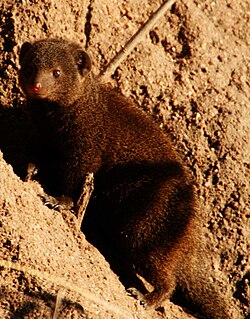
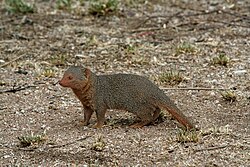
The common dwarf mongoose is characterized by its soft fur, which varies in color from a yellowish red to a very dark brown. Physically, it possesses a large pointed head, small ears, and a long tail. Its short limbs are equipped with long claws, which are essential for foraging and digging.
Distribution and Habitat
Native to a wide range across East and southern Central Africa, the common dwarf mongoose can be found in countries including Angola, northern Botswana, northern Namibia, Zambia, and South Africa (specifically KwaZulu-Natal, Limpopo, and Mpumalanga), as well as Eritrea and Ethiopia.
These animals primarily inhabit open forests, bushland, and dry grasslands at elevations up to 2,000 meters (6,600 ft). They specifically avoid deserts and dense forests. A defining feature of their habitat preference is the presence of termite mounds, which serve as their favorite sleeping locations.
Social Behavior and Ecology
The common dwarf mongoose is a diurnal animal, meaning it is active during the day. It lives in highly organized social groups, typically averaging twelve individuals, though some packs can exceed thirty members.
Social Hierarchy and Breeding
Packs are governed by a strict hierarchy where females generally hold higher positions than males within the same age class. The group is centered around a single breeding pair; the breeding female is the highest-ranking member, followed by the breeding male.
Subordinate members typically do not reproduce, instead dedicating their efforts to caring for and feeding the juveniles. While other females may occasionally give birth during favorable conditions, these litters rarely survive to adulthood. The breeding male maintains this order by using low-intensity threat postures to suppress reproduction attempts by other colony members.
Mutualism and Survival
In a fascinating example of mutualism—a biological interaction where both species benefit—the dwarf mongoose often forages with hornbills. The two species warn each other of approaching predators, such as raptors, marabou storks, snakes, monitor lizards, jackals, and Egyptian mongooses.
Diet and Life History
The diet of the common dwarf mongoose is primarily insectivorous. They feed heavily on invertebrates, including beetle larvae, termites, grasshoppers, crickets, spiders, and scorpions. They supplement this diet with small vertebrates, eggs, and fruit.
Reproduction typically occurs during the wet season (November to May). A breeding female may produce up to three litters per season, with an average of four pups per litter after a gestation period of 49 to 53 days. Pups nurse for 45 days and may be assisted by subordinate females. Juveniles begin foraging with adults at six weeks and reach sexual maturity at three years.
| Feature | Details |
|---|---|
| Body Length | 16–23 cm |
| Weight | 213–341 g |
| Gestation Period | 49–53 days |
| Sexual Maturity | 3 years |
| Primary Habitat | Dry grassland, open forests, bushland |
| Key Predators | Raptors, snakes, jackals, monitor lizards |
Frequently Asked Questions
What is the social structure of a dwarf mongoose pack?
They live in packs with a strict hierarchy led by a dominant breeding pair. The breeding female holds the highest rank, followed by the breeding male. Subordinate members help raise the offspring and generally do not breed.
How do dwarf mongooses interact with hornbills?
They share a mutualistic relationship where they forage together and provide mutual warnings about predators, increasing the survival chances for both species.
Where do common dwarf mongooses sleep?
They are especially common in areas with termite mounds, which they prefer to use as their sleeping places.
What do common dwarf mongooses eat?
Their primary diet consists of invertebrates such as termites, beetle larvae, spiders, and scorpions, though they also eat small vertebrates, fruit, and eggs.
How long do common dwarf mongooses live?
The maximum lifespan of a common dwarf mongoose is approximately 18 years.