Animal Sociality: From Subsocial Care to Eusocial Societies
In the natural world, sociality refers to the degree to which individuals within an animal population associate in social groups and form cooperative societies. This inclination to seek the company of others is known as gregariousness. Far from being random, sociality is a survival response to evolutionary pressures, often emerging as a strategy to mitigate threats from predators or parasites.
A classic example can be found in the family Vespidae. When a mother wasp remains near her larvae in the nest, she significantly reduces the likelihood of parasites consuming her offspring. This behavior highlights the most fundamental building block of animal sociality: parental investment.
Parental investment is defined as any expenditure of resources—including time, energy, and social capital—to benefit one's offspring. While this increases the survival rate of the young, it inherently detracts from the parent's ability to invest in future reproduction or provide aid to other kin.
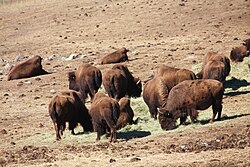
The Spectrum of Sociality
Biologists and sociobiologists categorize animals based on the complexity and permanence of their social structures. This spectrum ranges from animals that are entirely solitary to those that live in highly organized colonies.
Subsociality
An animal is considered subsocial if it cares for its young but exhibits no other social traits. This form of sociality is widely distributed across the animal kingdom, particularly among winged insects, where it has evolved independently many times. Even a very short period of parental care is sufficient for a species to be classified as subsocial.
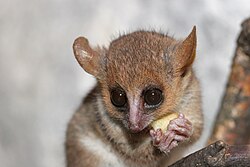
Solitary but Social
When a taxon's most social behavior involves occasionally associating or nesting with other adults, they are described as solitary but social. An intriguing example of this occurs in certain cetaceans. Some individuals of species such as the bottlenose dolphin, orca, beluga, and various other dolphin species live apart from their own kind but interact with humans. Notable examples include Fungie (1983–2020) and Pelorus Jack (1888–1912), with at least 32 such solitary-sociable dolphins recorded between 2008 and 2019.
Eusociality
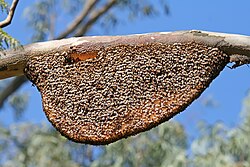
The highest degree of sociality is eusociality. A eusocial taxon is characterized by several strict criteria:
- Overlapping adult generations.
- A reproductive division of labor.
- Cooperative care of the young.
- In advanced cases, a biological caste system.
Classification and Scientific Frameworks
The formal classification of presociality was advanced in 1969 by entomologist Charles D. Michener, who built upon the work of Suzanne Batra. Batra originally coined the terms eusocial and quasisocial in 1966. Michener expanded these categories to include subsocial, communal, and semisocial behaviors, though his initial focus was strictly on insects. Later, E. O. Wilson refined the definition of quasisociality.
While eusociality is most common in insects, some mammals show similar traits. The naked mole-rat (Heterocephalus glaber) and the Damaraland mole-rat (Fukomys damarensis) are considered primitively eusocial. These diploid, highly inbred species live in harsh environments and cooperate to raise siblings under the leadership of a single reproductive queen. However, research by O'Riain and Faulkes (2008) suggests that these animals may outbreed and establish new colonies when resources allow, as a means of avoiding regular inbreeding.
In a controversial 2005 claim, E. O. Wilson and Bert Hölldobler suggested that humans possess a level of sociality sufficient to be classified as a eusocial species.
Key Facts
- Sociality is an evolutionary response to pressures like predation and parasitism.
- Parental investment is the core requirement for subsocial behavior.
- Eusociality requires overlapping generations, cooperative brood care, and reproductive division of labor.
- Mole-rats are among the few mammals exhibiting primitive eusocial traits.
- Solitary-sociable behavior is observed in cetaceans that interact with humans despite living apart from their species.
| Level | Primary Characteristic | Example |
|---|---|---|
| Subsocial | Parental care for offspring only | Certain winged insects |
| Solitary but Social | Occasional adult association | Certain dolphins (e.g., Fungie) |
| Eusocial | Caste system and reproductive division | Honey bees, Naked mole-rats |
Frequently Asked Questions
What is the difference between subsocial and eusocial animals?
Subsocial animals provide care for their offspring but do not form complex societies. Eusocial animals exhibit a much higher level of organization, including overlapping generations, cooperative care of the young, and a division of labor where only certain individuals reproduce.
What is parental investment?
Parental investment is any expenditure of time, energy, or social capital by a parent to increase the survival chances of their offspring, which typically reduces the parent's ability to invest in future reproduction.
Can mammals be eusocial?
Yes, though it is rare. The naked mole-rat and Damaraland mole-rat are examples of primitively eusocial mammals, living in colonies with a single reproductive queen.
What does "solitary but social" mean in the context of cetaceans?
It describes individuals that live apart from their own species but maintain social interactions with other species, most notably humans, as seen in several recorded cases of dolphins and orcas.
Who developed the classification system for presociality?
The system was developed by Charles D. Michener in 1969, based on earlier terminology created by Suzanne Batra in 1966, and was later refined by E. O. Wilson.