Common Descent and the Last Universal Common Ancestor
In the study of evolutionary biology, common descent is the principle that different species share a common ancestor. This process occurs through speciation, where a single ancestral population diverges into multiple distinct species. The closer the relationship between two species, the more recently they shared a common ancestral population.
Modern science suggests that all living organisms on Earth are descendants of a single unique progenitor known as the Last Universal Common Ancestor (LUCA). Estimated to have lived approximately 3.9 billion years ago, LUCA represents the most recent point of convergence for all currently existing life forms.
Evidence for early life is found in the geological record, including biogenic graphite in 3.7 billion-year-old metasedimentary rocks from western Greenland and microbial mat fossils in 3.48 billion-year-old sandstone from Western Australia.
Key Facts
- LUCA: The Last Universal Common Ancestor lived roughly 3.9 billion years ago.
- Genetic Unity: All known life uses a nearly identical genetic code to translate DNA into proteins.
- Biochemical Core: Approximately 23 proteins are universal across all organisms, performing essential functions like DNA replication.
- Animal Ancestry: 6,331 gene groups common to all animals likely originated from a common ancestor 650 million years ago.
- Scientific Consensus: Common descent is regarded as one of the most reliably established facts in science.
The History of the Theory
The concept that all living things are related appears in various indigenous worldviews. In the 1740s, Pierre Louis Maupertuis proposed that organisms diverged through random variation and natural selection. Later, in 1790, Immanuel Kant suggested that similarities in animal forms implied a common original type.
Charles Darwin formalized the theory of universal common descent in his 1859 landmark work, On the Origin of Species. Darwin inferred that all organic beings likely descended from a single "primordial form." While he initially cautioned that analogy could be a "deceitful guide," the scientific community rapidly adopted the theory. By 1907, naturalist Vernon Kellogg noted that almost no recognized naturalists doubted the theory of descent.
Evidence for Universal Common Descent
Common Biochemistry
All known life forms share a fundamental biochemical organization. Genetic information is encoded in DNA, transcribed into RNA via enzymes, and translated into proteins by ribosomes, using energy sources such as ATP and NADPH. The existence of a single set of enzymes for core functions, such as DNA replication, strongly supports a single ancestry.
The Universal Genetic Code
The genetic code—the translation table used to turn DNA information into amino acids—is nearly identical across all domains of life, including bacteria, archaea, plants, and animals. Biologists view this universality as definitive evidence of common descent.
Selectively Neutral Similarities
Some similarities between species have no adaptive advantage, meaning they cannot be explained by convergent evolution (where different species independently evolve similar traits). Examples include:
- Redundant Codons: When multiple species use the same redundant DNA triplet to code for the same amino acid, it suggests a shared ancestor rather than random chance.
- Non-functional Sequences: Shared nucleotide sequences in introns and pseudogenes provide strong evidence of shared heritage.
Phylogenetic Trees
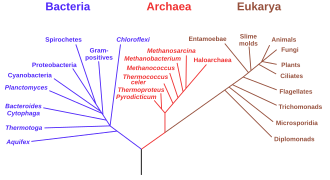
Scientists use phylogenetic trees (genealogic maps of species) to trace evolutionary divisions. Whether constructed using morphological data (appearance and embryology) or molecular data (genetic and protein sequences), these trees produce essentially similar results. A 2010 statistical analysis by Douglas L. Theobald provided strong quantitative support for the unity of life.
Scientific Objections and Nuances
Horizontal Gene Transfer
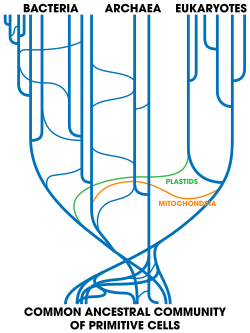
Some researchers point to horizontal gene transfer—the exchange of genetic material between distantly related lineages—as a complication. This suggests that early evolution may have been more like a web than a tree, potentially challenging the concept of monophyly (single ancestry). However, most biologists argue that completely unrelated organisms could not have exchanged functional genes because their coding mechanisms would have been incompatible.
The RNA World Hypothesis
While LUCA had a DNA genome, it is unlikely such a complex cell arose spontaneously. The RNA World hypothesis proposes that life began with simpler, self-replicating RNA molecules that underwent natural selection before the emergence of the DNA-based world. Because the RNA world has been replaced, direct evidence of the very first origin event remains elusive.
Summary of Evolutionary Evidence
| Evidence Type | Key Observation | Implication |
|---|---|---|
| Biochemistry | Universal use of DNA, RNA, and ATP | Shared fundamental biological machinery |
| Genetic Code | Nearly identical translation table | Definitive evidence of single ancestry |
| Neutral Sequences | Shared redundant codons and pseudogenes | Excludes convergent evolution |
| Phylogenetics | Agreement between morphological and molecular trees | Quantitative support for the unity of life |
Frequently Asked Questions
What is LUCA?
LUCA stands for the Last Universal Common Ancestor. It is the most recent population from which all organisms now living on Earth have a common descent, estimated to have existed about 3.9 billion years ago.
How does the genetic code prove common descent?
Because the system used to translate DNA into proteins is nearly identical across all life forms—from bacteria to humans—it is highly improbable that this complex system evolved independently multiple times.
What is the difference between common descent and convergent evolution?
Common descent occurs when species share a trait because they inherited it from a common ancestor. Convergent evolution occurs when unrelated species evolve similar traits independently to adapt to similar environments.
Does horizontal gene transfer disprove a single origin of life?
Not necessarily. While it complicates the "tree" model by showing that genes can move between lineages, biologists argue that such transfers require a shared basic coding mechanism, which still implies a common ancestral origin.
What was the RNA World?
The RNA World is a hypothesis suggesting that before DNA-based cellular life, self-replicating RNA molecules performed both the storage of genetic information and the catalysis of chemical reactions.