Columbidae: The Diverse World of Pigeons and Doves
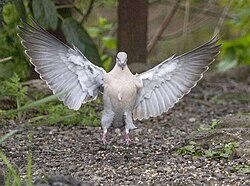
The family Columbidae encompasses a vast and varied group of birds known globally as pigeons and doves. From the tiny ground doves of the Americas to the massive, extinct dodo, these birds have adapted to nearly every environment on Earth. While often associated with urban centers and human proximity, their greatest biological diversity is found in the Indomalayan and Australasian realms.
These birds belong to the order Columbiformes and have a temporal range extending from the Early Miocene to the present day. With 52 genera and 353 species, the family exhibits a remarkable range of dietary habits, including frugivorous (fruit-eating) and granivorous (seed-eating) species.
Key Facts
- Species Count: 353 species across 52 genera.
- Global Reach: Found worldwide, with peak diversity in Australasia and Indomalaya.
- Size Range: Lengths vary from 15 to 75 cm; weights range from 30 g to over 2,000 g.
- Conservation Status: 118 species (34%) are currently at risk.
- Notable Extinctions: Includes the dodo and the passenger pigeon.
Taxonomy and Classification
The classification of Columbidae is complex, with recent phylogenomic studies refining the relationships between genera. The family is generally divided into three primary subfamilies:
Raphinae
This group includes the Old World tropics doves and pigeons. It is highly diverse, featuring the green pigeons (genus Treron), imperial pigeons (genus Ducula), and the crowned pigeons (genus Goura). This subfamily also contains the most famous extinct members of the family, such as the dodo (Raphus) and the Rodrigues solitaire (Pezophaps).
Claravinae
The American ground doves fall into this category, including genera such as Claravis and Columbina.
Columbinae
This subfamily consists of typical pigeons and doves. It includes the widespread Old World pigeons (genus Columba), turtle doves (genus Streptopelia), and the extinct passenger pigeon (genus Ectopistes).

Physical Characteristics and Diversity
Pigeons and doves show significant variation in size and morphology. The largest living species are the crowned pigeons of New Guinea, which can reach lengths of 79 cm and weigh up to 4 kg, making them nearly the size of a turkey.
In contrast, the smallest species are significantly more compact. The extinct dodo represents the extreme upper limit of the family's size, with estimated weights ranging from 10.2 to 27.8 kg, though higher estimates may reflect overweight individuals.
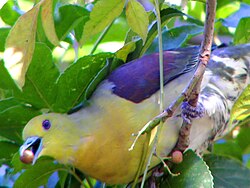
Their anatomy is specialized for their respective niches. For example, fruit-eating species like the White-bellied green pigeon have evolved specifically to thrive on forest produce, while others are adapted for long-distance flight or ground-dwelling lifestyles.
Conservation and Extinction
The family Columbidae faces significant threats. Approximately 34% of species are at risk, with many being tropical island dwellers. The primary drivers of decline include habitat loss, hunting, and the introduction of invasive predators.
The passenger pigeon serves as a stark example of abrupt decline. Once the most numerous bird on Earth—with flocks estimated by ornithologist Alexander Wilson to exceed two billion birds—it was driven to extinction by 1914 due to massive over-hunting and habitat loss.
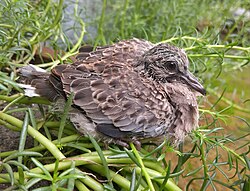
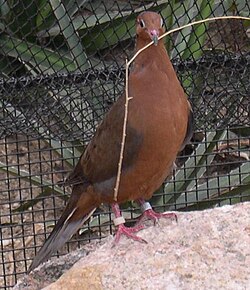
Other species, such as the Socorro dove, are now extinct in the wild, having been decimated by feral cats and habitat destruction. Some species, like the Negros fruit dove, remain in a state of uncertainty, having not been sighted since 1953.
Summary of Columbidae Diversity
| Group/Genus | Common Name | Key Characteristic | Status/Diversity |
|---|---|---|---|
| Goura | Crowned Pigeons | Turkey-sized, New Guinea native | 4 species |
| Ptilinopus | Fruit Doves | Frugivorous specialists | 47 species |
| Columba | Typical Pigeons | Widespread, often urban | 34 species |
| Raphus | Dodo | Flightless, island giant | Extinct |
| Ectopistes | Passenger Pigeon | Massive colonial flocks | Extinct |
Frequently Asked Questions
What is the difference between a pigeon and a dove?
Taxonomically, there is no strict scientific difference; both belong to the family Columbidae. The terms are often used interchangeably, though "dove" is frequently applied to smaller, more slender species.
Which is the largest pigeon species?
Among living species, the crowned pigeons of New Guinea are the largest, reaching up to 79 cm in length. Historically, the extinct dodo was the largest columbid to ever exist.
Why did the passenger pigeon go extinct?
The passenger pigeon went extinct due to a combination of massive over-hunting for food and significant habitat loss in the United States during the 19th century.
Where is the highest diversity of pigeons and doves found?
While they are found worldwide, the greatest diversity of Columbidae species is located in the Indomalayan and Australasian realms.
How many species of Columbidae are currently threatened?
Approximately 118 species, or 34% of the total, are considered at risk, with many of these being tropical island species threatened by predators and habitat loss.