Colonisation in Biology: How Species Expand and Establish Themselves
In the natural world, life is constantly on the move. Colonisation refers to the process by which an organism spreads and develops within a new locality or habitat. This biological phenomenon involves more than just the physical arrival of a species in a new area; it requires the successful establishment of that species within the existing local community. In ecological studies, scientists often use the symbol λ (lowercase lambda) to represent the long-term intrinsic growth rate of a population during this process.
Understanding how species move and settle is fundamental to ecology. It touches upon everything from the microscopic level of bacteria to the massive migrations of humans and large vertebrates across continents.
Key Facts
- Colonisation involves both physical arrival and successful establishment in a new habitat.
- Dispersal is the mechanism by which organisms are scattered over time or space.
- The competition-colonisation trade-off explains how species balance the need to expand with the need to compete for resources.
- Colonisation can occur at various scales, from microscopic biofilms to global range expansions.
- Natural colonisation is distinguished from human-driven translocation, which can lead to invasive species.
The Mechanics of Expansion: Dispersal and Scale
To colonise a new area, a species must first undergo dispersal—the dissemination or scattering of organisms over a specific area or across the Earth. This movement can be driven by physiological adaptations that increase the survival rate of offspring in new ecosystems, or by environmental factors such as global warming, disease, predation, or competition.
Dispersal takes many forms, including the flight of birds, the wind-borne travel of fungi and plant progeny, or the movement of animals in packs. The scale of these events varies significantly:
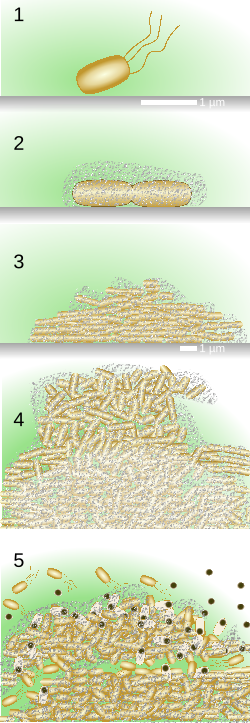
- Microscopic Scale: The formation of biofilms (communities of microorganisms on surfaces) or the development of a microbiome (microorganisms living within an animal or plant).
- Small Scale: The movement of species into new sites, often triggered by environmental changes.
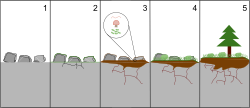
- Large Scale: Range expansion, where a species encompasses vast new territories through long-distance dispersal or gradual encroachments, such as woody plant encroachment.
Ecological Theories and Trade-offs
The Taxon Cycle and Island Biogeography
One classic model in biogeography suggests that for a species to persist, it must continuously colonise new areas throughout its life cycle, a concept known as the taxon cycle. This is closely linked to island biogeography, where colonisation and extinction are the primary drivers of species diversity. This framework is essential for understanding metapopulations—groups of spatially separated populations of the same species that interact.
The Competition-Colonisation Trade-off
A critical factor in maintaining community diversity is the competition-colonisation trade-off. In any environment, species face a choice: they can invest energy into competing for limited resources—such as light, oxygen, or nutrients—or they can invest in dispersal to find more optimal environments. This trade-off helps explain why certain species are excellent at spreading quickly while others excel at dominating a stable habitat.
Notable Colonisation Events in History
Throughout history, various species have undergone significant colonisation events that have reshaped ecosystems:
Arthropods and Land Vertebrates
Approximately 450 million years ago, the first animals to colonise Earth's land were arthropods, with the earliest fossils belonging to millipedes. In more recent history, the colonisation of Madagascar by land-bound vertebrates stands as a major biological milestone.
Birds and Reptiles
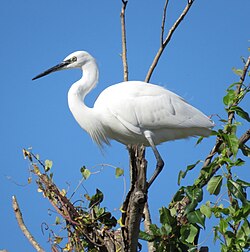
Avian species have shown remarkable expansion capabilities. Examples include the little egret (Egretta garzetta) colonising the New World and Britain, the barred owl in western North America, and the house finch across the eastern USA.
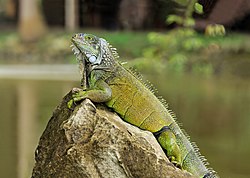
Reptiles also provide striking examples. In 1995, green iguanas colonised Anguilla following a rafting event. Conversely, the colonisation of the Florida Everglades by Burmese pythons was an unnatural event, resulting from the release of exotic pets into the wild.
Summary of Colonisation Types and Examples
| Group | Example Species/Event | Mechanism/Context |
|---|---|---|
| Microorganisms | Biofilms | Microscopic community formation |
| Arthropods | Millipedes | First land animals (450m years ago) |
| Birds | Little Egret | Expansion into the New World |
| Reptiles | Green Iguana | Rafting event in Anguilla (1995) |
| Plants | Pinus species | Wind dispersion |
Frequently Asked Questions
What is the difference between colonisation and dispersal?
Dispersal is the physical movement or scattering of organisms from one place to another, whereas colonisation includes both that movement and the subsequent successful establishment of the species in the new habitat.
How does the competition-colonisation trade-off work?
It is a balance where species must choose between being highly effective at competing for resources in a stable environment or being highly effective at dispersing to find new, unoccupied habitats.
Is all colonisation considered natural?
No. While the term generally refers to natural spread, human-driven movements—known as translocation—can lead to the introduction of invasive species.
What is a biofilm?
A biofilm is a microscopic form of colonisation where communities of microorganisms grow and form a structured layer on a surface.
What is range expansion?
Range expansion is a large-scale colonisation event where a species increases its geographic distribution to encompass new areas.