Candida albicans: The Shape-Shifting Pathogen and Its Biological Complexity
Candida albicans is a highly versatile and opportunistic fungus that plays a dual role in human biology. While often existing as a commensal organism within the human microbiome, it possesses a remarkable ability to transition between different morphological states, a process that can trigger infection. This capacity for rapid change allows the fungus to adapt to various environments, ranging from the healthy human gut to the bloodstream during systemic disease.
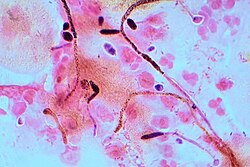
Scientific Classification and Taxonomy
As a member of the kingdom Fungi and the division Ascomycota, C. albicans belongs to the class Saccharomycetes. It is classified within the order Saccharomycetales and the family Debaryomycetaceae. Historically, the species has been known by several synonyms, including Candida stellatoidea, Monilia albicans, and Oidium albicans.
Morphology and Phenotypic Switching
One of the most defining characteristics of C. albicans is its pleomorphism—the ability to exist in multiple forms. This morphological flexibility is central to its survival and virulence.
Yeast-to-Hypha Switching
The fungus can transition from a unicellular yeast form to a multicellular hyphal form (filamentous growth). This switching is a critical component of its pathogenesis, allowing the organism to invade host tissues. During this process, the fungus develops long, branching filaments known as hyphae.

White-Opaque Switching
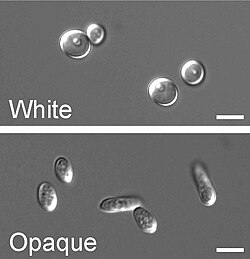
Beyond the yeast-hypha transition, C. albicans undergoes a high-frequency phenotypic switch between two distinct cell types: white and opaque cells. These states differ in appearance, cell shape, and genetic expression. White cells are typically round, while opaque cells are more elongated. This switching mechanism is regulated by complex genetic networks, including the control of the Wor1 gene.

Chlamydospores
Under certain conditions, C. albicans can also produce chlamydospores. These are thick-walled, resting spores that are typically 2–4 μm in diameter, visible under microscopic examination via Gram stain.
Pathogenesis and Disease Role
The ability of C. albicans to change its shape and form biofilms—complex communities of microorganisms attached to surfaces—is a major factor in its ability to cause disease. Biofilm development involves several steps that protect the fungus from host immune responses and antifungal treatments.
Types of Infection
- Superficial and Local Infections: These include common yeast infections affecting the skin or genital areas.
- Systemic Infections: More severe cases where the fungus enters the bloodstream, potentially leading to widespread infection.
Diagnosis and Treatment
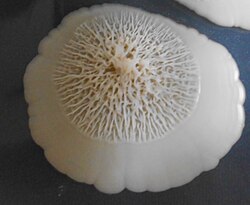
Clinical diagnosis often involves agar plate cultures or the use of chromogenic agar, which uses color changes to help distinguish Candida species from similar fungi. Microscopic examination of swabs can also reveal the presence of yeast cells or hyphae.
Because C. albicans is highly adaptable, treatment must be tailored to the type and severity of the infection:
- Systemic infections: Commonly treated with amphotericin B, echinocandins, or fluconazole.
- Oral and esophageal infections: Often managed with nystatin.
- Skin and genital infections: Typically treated with clotrimazole.
Key Facts
- Morphology: Can switch between yeast, hyphae, and chlamydospores.
- Phenotypic Switching: Features a high-frequency white-to-opaque cell transition.
- Pathogenesis: Uses biofilm formation and filamentation to invade host tissues.
- Classification: A member of the Ascomycota division within the Fungi kingdom.
- Clinical Use: Chromogenic agar is used to differentiate species during diagnosis.
Summary of C. albicans Characteristics
| Feature | Description |
|---|---|
| Kingdom | Fungi |
| Primary Forms | Yeast, Hyphae, Chlamydospores |
| Switching Mechanisms | Yeast-to-hypha; White-to-opaque |
| Common Treatments | Fluconazole, Amphotericin B, Nystatin, Clotrimazole |
| Key Virulence Factor | Biofilm development and filamentation |
Frequently Asked Questions
What is the difference between white and opaque cells?
White cells are generally rounder, while opaque cells are more elongated. These two states represent different genetic programs that allow the fungus to adapt to different environments.
How does C. albicans cause infection?
The fungus uses its ability to switch from yeast to hyphae (filamentation) and its capacity to form biofilms to invade host tissues and evade the immune system.
What are the common treatments for Candidiasis?
Treatment depends on the infection site. Systemic infections may require fluconazole or amphotericin B, while topical or oral infections may be treated with clotrimazole or nystatin.
Can C. albicans be identified in a lab?
Yes, clinicians use methods such as agar plate cultures, Gram staining to look for chlamydospores, and chromogenic agar to identify the specific species.
What is a biofilm in the context of Candida?
A biofilm is a structured community of C. albicans cells that adheres to surfaces, providing protection against both the host's immune system and antifungal medications.