Club Nacional de Football: The Legacy of Uruguay's King of Trophies
Founded on May 14, 1899, Club Nacional de Football stands as one of the most storied institutions in South American sports. Known by nicknames such as Decano (The Dean) and Rey de Copas (King of Trophies), the club is defined by its deep connection to Uruguayan identity. Its iconic white, blue, and red colors are inspired by the flag of José Gervasio Artigas, a national hero of Uruguay.
The club's spiritual home is the Estadio Gran Parque Central, a venue with a capacity of 38,000. This stadium holds a prestigious place in football history as one of the three venues for the inaugural 1930 FIFA World Cup, hosting the historic opening match between Belgium and the United States, as well as the World Cup debuts of Brazil and Argentina.
Key Facts
- Founded: May 14, 1899.
- Home Ground: Gran Parque Central.
- Major Nicknames: Decano, Albos, Bolso, Rey de Copas.
- Historic Achievement: Only Uruguayan club to contribute players to every national team that won an international tournament.
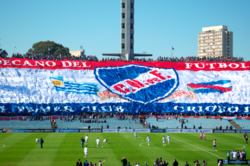
- World Record: Displayed the largest flag ever seen in a football match (600m x 50m) in 2013.
Early Dominance and International Beginnings
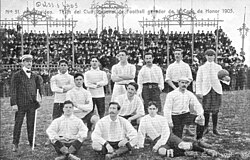
Nacional's influence on the game began early. In September 1903, the club fully represented the Uruguay national team to defeat Argentina 3–2, marking the first international match between national teams in Uruguayan history. By 1905, they secured their first international title, the Copa de Honor Cousenier.
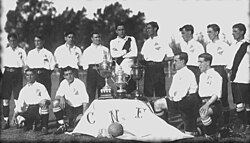
The 1910s saw a period of immense domestic and regional success. In 1915, Nacional achieved a Triple Crown, winning the Primera División, the Tie Cup, and the Copa de Honor Cousenier. They also became the first club to win the Copa Uruguaya en propiedad by securing three consecutive league championships between 1916 and 1917.
Global Ambition and the 1925 European Tour
Nacional played a pivotal role in establishing Uruguay as a global football powerhouse. The club provided key players for the national squads that won Olympic gold in 1924 and 1928, as well as the first FIFA World Cup in 1930.
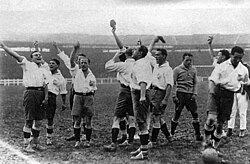
Following the 1924 Olympic success, Nacional embarked on an extensive European tour in 1925. Over six months, they played 38 matches across nine countries, including France, Italy, and Spain. With 26 wins and 130 goals scored, the tour attracted an estimated 800,000 spectators, remaining one of the largest tours in the history of world football.
The Era of 'The White Machine' and the Golden Five
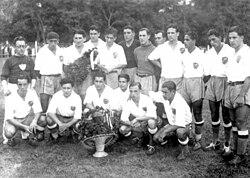
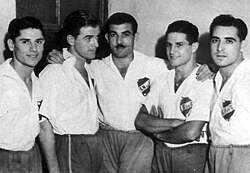
With the professionalization of Uruguayan football in 1932, Nacional formed a legendary squad known as La Máquina Blanca (The White Machine). This era was characterized by offensive brilliance, including a 1933 championship that became the longest in history, eventually decided by a 3–2 victory over Peñarol.
Between 1939 and 1943, under the guidance of coach Héctor Castro, the club achieved the Quinquenio de Oro—five consecutive league championships. A standout moment occurred in 1941 when Nacional won every single game of the season (20/20) and defeated Peñarol 6–0, the largest win in the history of the Uruguayan Clásico.
Continental Glory and Modern Success
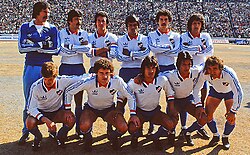
Nacional's international prestige grew with the advent of the Copa Libertadores. After early finals appearances in 1964 and 1967, the club reached the pinnacle of South American football. A crowning achievement came in 1980, when the team won both the Copa Libertadores and the first Copa Intercontinental held in Tokyo.
In the 21st century, Nacional has remained a dominant force in the Liga AUF Uruguaya, securing numerous titles including championships in 2000, 2005, 2008, 2011, and 2016.
Beyond Football: A Multi-Sport Institution
While football is the primary focus, Nacional is a comprehensive sports club. It has a long history in basketball, competing in the Liga Uruguaya de Basketball since 1932. The club also excels in cycling, with multiple wins in the Vuelta Ciclista del Uruguay and Rutas de América. Additionally, Nacional maintains competitive teams in volleyball and futsal, and has a successful history in women's football, winning the Campeonato Uruguayo in 1997, 2000, 2010, and 2011/2012.
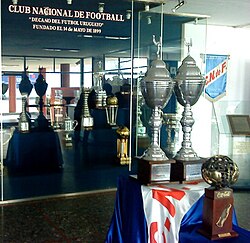
| Category | Details |
|---|---|
| Full Name | Club Nacional de Football |
| Founded | May 14, 1899 |
| Stadium | Gran Parque Central (Capacity: 38,000) |
| Primary League | Liga AUF Uruguaya |
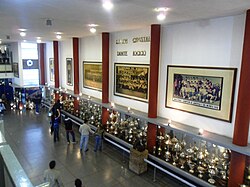
| Key Honors | Copa Libertadores, Intercontinental Cup, Multiple Primera División titles |
Frequently Asked Questions
What is the significance of the Gran Parque Central?
It is the home stadium of Nacional and was one of the three venues for the first FIFA World Cup in 1930, hosting the opening match and the debuts of Brazil and Argentina.
What was the 'Quinquenio de Oro'?
The Quinquenio de Oro refers to the period between 1939 and 1943 when Nacional won five consecutive Uruguayan league championships.
How did Nacional contribute to the Uruguay national team?
Nacional is the only Uruguayan club to have provided players to every national team that has won an international tournament, including the 1924 and 1928 Olympics and the 1930 World Cup.
What is the story behind the world record flag?
In 2013, supporters known as La Banda Del Parque displayed a flag measuring 600 meters by 50 meters during a match against Deportivo Toluca, earning a Guinness World Record for the largest flag in a football match.
Does Nacional compete in sports other than football?
Yes, Nacional is a multi-sport club with successful divisions in basketball, cycling, volleyball, and futsal.