Cleveland: The Forest City
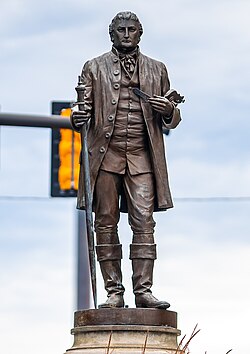
Known affectionately as The Forest City, Cleveland is a major urban center located in Cuyahoga County, Ohio. Founded on July 22, 1796, and named after General Moses Cleaveland, the city has evolved from a strategic lakeside settlement into a hub of industry, arts, and professional sports. With a motto of "Progress & Prosperity," Cleveland blends a rich industrial heritage with a modern commitment to cultural growth.
Key Facts
- Founded: July 22, 1796
- Population: 372,624 (2020 Census); estimated 363,608 by 2025
- Metro Population: 2,171,877 (34th largest in the U.S.)
- Metro GDP: $139.935 billion (2023)
- Nickname: The Forest City
- Government: Strong mayor / Council system, currently led by Mayor Justin Bibb
History and Evolution
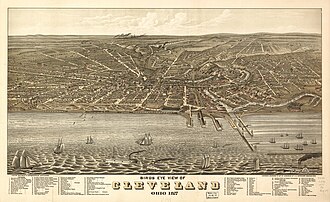
Cleveland's journey began in the late 18th century, incorporating as a village in 1814 and as a city in 1836. Throughout the 19th and early 20th centuries, the city experienced explosive growth, driven by its location on Lake Erie and the Cuyahoga River, which facilitated trade and industrialization.
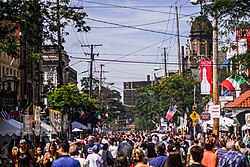
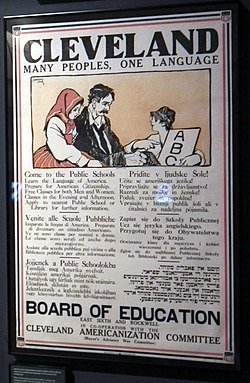
The early 20th century saw Cleveland become a melting pot of global immigration. Multilingual efforts were common to integrate new arrivals, reflecting a diverse population of Italian, Hungarian, Slovene, Polish, and Yiddish speakers.
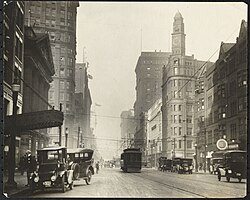
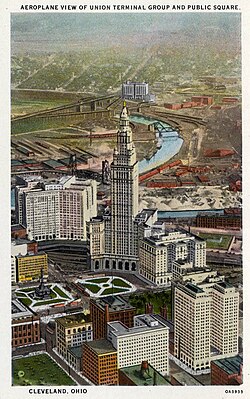
By the mid-20th century, the city had established itself as a financial and commercial powerhouse, characterized by iconic architecture and a bustling downtown core.
Geography and Climate
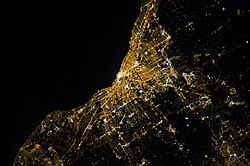
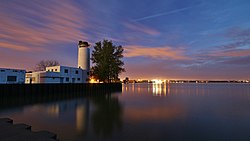
Cleveland is situated at 41°29′57″N 81°41′41″W, with a total city area of 82.48 square miles. The landscape is defined by its proximity to Lake Erie, which significantly influences the local weather patterns.
The city experiences a varied climate with distinct seasons. Summers are warm, with mean maximum temperatures reaching approximately 83.7°F in July. Winters are cold and snowy, with January seeing a mean daily minimum of 22.3°F and significant snowfall averaging 18.4 inches.
City Layout and Architecture
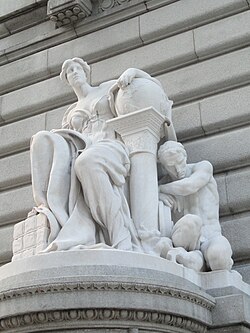
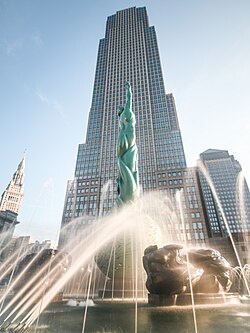
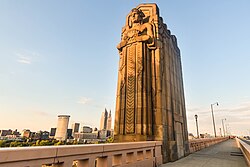
The city's architecture ranges from historic landmarks to modern skyscrapers. The skyline is anchored by structures like the Key Tower, while the Hope Memorial Bridge is famous for its "Guardians of Traffic" sculptures.
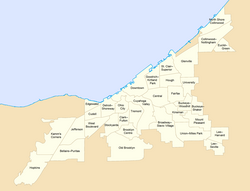
Cleveland is composed of various distinct neighborhoods, including the historic Ohio City and the vibrant Little Italy, known for its Feast of the Assumption.
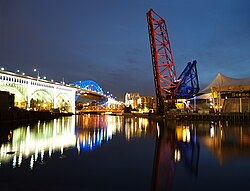
The downtown area features the Flats—the west bank of the Cuyahoga River—which hosts the Jacobs Pavilion amphitheater and serves as a center for entertainment and dining.
Economy and Infrastructure
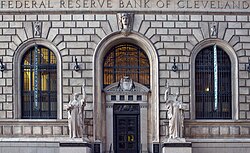
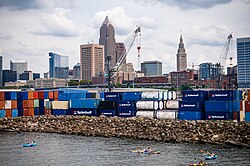
Cleveland serves as a critical economic engine for Ohio. It is home to the Federal Reserve Bank of Cleveland and maintains a robust shipping presence via the Port of Cleveland on Lake Erie.
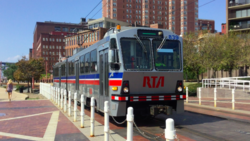
The city's infrastructure includes a comprehensive transit system managed by the RTA, featuring the Waterfront Line and various bus routes to ensure urban mobility.
Arts, Culture, and Recreation
Cleveland is a premier destination for the arts. It boasts the world-renowned Cleveland Orchestra at Severance Hall and the massive Playhouse Square theater district.
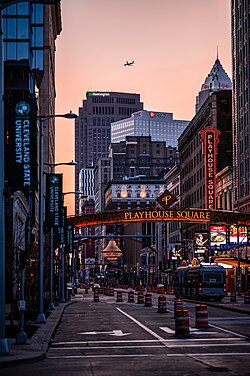
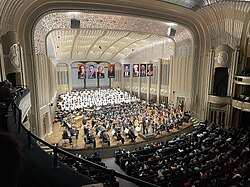
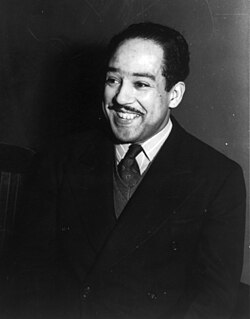
The city's cultural contributions extend to literature and music, having been home to figures like jazz poet Langston Hughes. The Rock and Roll Hall of Fame stands as a global landmark in the North Coast Harbor area.
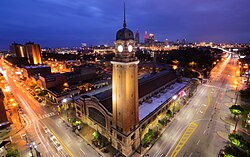
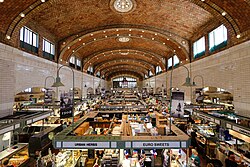
Local landmarks such as the West Side Market in Ohio City and the Cleveland Museum of Art continue to draw visitors and residents alike.
Professional Sports
Sports are central to Cleveland's identity, with several major league franchises calling the city home.
| Club | Sport | League | Venue | Est. in CLE |
|---|---|---|---|---|
| Cleveland Browns | Football | NFL | Huntington Bank Field | 1946 |
| Cleveland Cavaliers | Basketball | NBA | Rocket Arena | 1970 |
| Cleveland Guardians | Baseball | MLB | Progressive Field | 1901 |
Demographics and Society
Cleveland's population has shifted over the last century. After peaking in the 1950s at over 914,000 residents, the city has seen a decline, with a 2020 population of 372,624. The city is racially diverse, with Black or African American residents making up 47.5% of the population and White (non-Hispanic) residents at 32.1% as of 2020.
The city also maintains strong international ties through its sister city program, with partnerships spanning from Alexandria, Egypt, to Taipei, Taiwan.
Frequently Asked Questions
Who founded Cleveland?
Cleveland was founded on July 22, 1796, by General Moses Cleaveland.
What is the nickname of Cleveland?
Cleveland is commonly known as "The Forest City."
What are some of the major cultural attractions in Cleveland?
Major attractions include the Rock and Roll Hall of Fame, Playhouse Square, the Cleveland Museum of Art, and Severance Hall.
Which professional sports teams play in Cleveland?
The city is home to the Cleveland Browns (NFL), the Cleveland Cavaliers (NBA), and the Cleveland Guardians (MLB).
What is the climate like in Cleveland?
Cleveland has a seasonal climate with warm summers (averaging 83.7°F in July) and cold, snowy winters (averaging 22.3°F in January).