Claus von Stauffenberg and the July 20 Plot
Claus von Stauffenberg is remembered as the central figure of the most famous attempt to assassinate Adolf Hitler. An Oberst (Colonel) in the German Army, Stauffenberg transitioned from a professional soldier to a leading conspirator in the German resistance, culminating in the daring but failed operation on July 20, 1944.
Key Facts
- Full Name: Claus Philipp Maria Justinian Schenk Graf von Stauffenberg.
- Primary Action: Led the July 20 plot to assassinate Hitler at the Wolf's Lair.
- Military Rank: Oberst (Colonel).
- Major Injuries: Lost his left eye, right hand, and two fingers on his left hand during the Tunisian campaign.
- Fate: Executed by firing squad on July 21, 1944.
- Legacy: The Bendlerblock in Berlin now houses the Memorial to the German Resistance in his honor.
Early Life and Military Beginnings
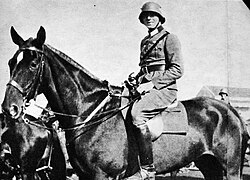
Born on November 15, 1907, at Stauffenberg Castle in Jettingen, Bavaria, Claus was born into the ancient House of Stauffenberg. He was the third of four sons born to Alfred Schenk Graf von Stauffenberg and Caroline Gräfin von Üxküll-Gyllenband. In 1926, he followed family tradition by joining the 17th Cavalry Regiment (Reiterregiment 17) in Bamberg.
During his early military years, Stauffenberg was introduced to the Georgekreis, an influential circle surrounding the poet Stefan George. This group became a breeding ground for many individuals who would later join the German resistance against the Nazi regime.
World War II and Moral Awakening
Stauffenberg served in several major campaigns, including the invasion of Poland, the Battle of France, and Operation Barbarossa (the invasion of the Soviet Union). It was during his time in Ukraine in 1942 that his opposition to the regime intensified. He expressed shock and outrage to fellow officers regarding the mass execution of Jews, stating that such crimes must not be allowed to continue.
In April 1943, while serving in the Tunisian campaign, Stauffenberg's vehicle was strafed by P-40 Kittyhawk fighter bombers. The attack left him severely wounded. He spent three months in a Munich hospital under the care of Ferdinand Sauerbruch, where he lost his right hand, his left eye, and two fingers on his left hand. Despite these devastating injuries, he was awarded the Wound Badge in Gold and the German Cross in Gold.
The Path to Resistance
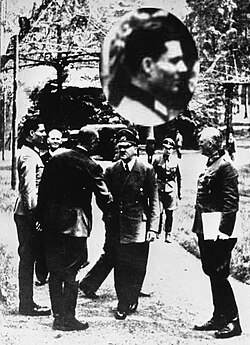
By 1944, Stauffenberg was convinced that Germany had lost the war. He believed that only an immediate armistice could prevent further unnecessary bloodshed. However, his vision for peace was complex; he maintained that Germany should retain its 1914 eastern borders, including territories in Poland such as Poznań and Wielkopolska.
Working closely with Henning von Tresckow, Stauffenberg became the driving force behind a conspiracy to kill Hitler and seize control of the state. His organizational skills and radical resolve pushed the hesitant military conspirators into action, leading to the planning of Operation Valkyrie.
The July 20 Plot and Execution
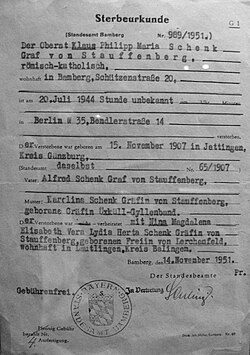
On July 20, 1944, Stauffenberg attempted to assassinate Hitler by planting a bomb at the Wolf's Lair. Although the explosion occurred, Hitler survived. The subsequent coup attempt in Berlin failed to secure power.
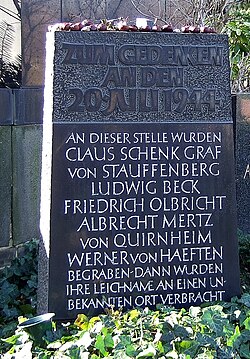
In a bid to save himself, General Friedrich Fromm conducted a makeshift court martial. Stauffenberg, along with 1st Lieutenant Werner von Haeften, General Friedrich Olbricht, and Colonel Albrecht Mertz von Quirnheim, was sentenced to death. They were executed by a firing squad in the courtyard of the Bendlerblock before 1:00 AM on July 21, 1944.
The aftermath was brutal. Hitler used the plot as a pretext to purge his enemies, leading to the execution of over 200 people and the imprisonment or death of over 20,000 others. The traditional military salute was also abolished and replaced by the Nazi salute.
Legacy and Family
Today, the site of the execution at the Bendlerblock is a memorial. The street was renamed Stauffenbergstrasse, and the Memorial to the German Resistance stands as a permanent exhibition of the various groups that opposed Hitler.
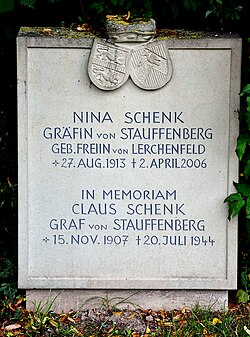
Stauffenberg's family continued to contribute to German society. His son Berthold became a Generalmajor in the post-war Bundeswehr, and his son Franz-Ludwig served in both the German and European parliaments. His wife, Nina Schenk Gräfin von Stauffenberg, lived until 2006.
| Category | Details |
|---|---|
| Born | November 15, 1907 (Jettingen, Bavaria) |
| Died | July 21, 1944 (Berlin) |
| Highest Rank | Oberst (Colonel) |
| Key Operation | Operation Valkyrie / July 20 Plot |
| Major Battles | Poland, France, Operation Barbarossa, Tunisia |
Frequently Asked Questions
Why did Claus von Stauffenberg try to kill Hitler?
Stauffenberg believed the war was lost and that killing Hitler was the only way to secure an immediate armistice, thereby preventing further bloodshed and protecting Germany from total destruction.
What happened to Stauffenberg after the failed plot?
He was tried in a summary court martial and executed by a firing squad in the courtyard of the Bendlerblock in Berlin in the early hours of July 21, 1944.
What were the physical injuries Stauffenberg sustained?
During the Tunisian campaign in 1943, he was wounded by fighter bombers, resulting in the loss of his right hand, his left eye, and two fingers on his left hand.
Did Stauffenberg support the Holocaust?
No. Evidence from fellow officers and captured documents indicates that Stauffenberg expressed outrage and shock at the mass shooting of Jews during his service in Ukraine in 1942.
What is the Bendlerblock today?
The Bendlerblock now houses the Berlin offices of the German Ministry of Defense and the Memorial to the German Resistance, which commemorates those who fought against the Nazi regime.