Classic Ragtime: The Structure and Legacy of the Classic Rag
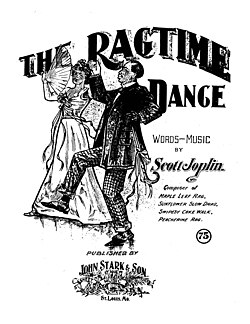
Ragtime is a uniquely American musical style defined by its infectious energy and rhythmic complexity. At the heart of this genre is the classic rag, a specific style of composition pioneered by Scott Joplin and the Missouri school of ragtime composers. While the term "rag" is short for ragtime, the "classic" designation was originally coined by Joplin's publisher, John Stark, to distinguish these sophisticated works from the more "common" rags produced by other publishers of the era.
In its early stages, ragtime lacked a standardized way to print its signature syncopated melodies—rhythms that shift the accent to the off-beat. Early sheet music varied wildly, appearing in common meter, 2/4 time, or 4/4 time, and often borrowing conventions from the musical march. However, as the 20th century began, the industry moved toward a unified set of notational and structural standards. Because Scott Joplin was the most successful composer of the period, his specific approach became the blueprint for what we now recognize as the classic rag form.
Key Facts
- Pioneers: Developed by Scott Joplin and the Missouri school of composers.
- Standard Meter: Most classic rags are set in 2/4 time.
- Core Structure: Typically follows an INTRO AA BB A CC DD sequence.
- The Trio: The CC DD section is known as the trio and usually shifts to the subdominant key.
- Rhythmic Foundation: Features a "walking bass" in the left hand and syncopation in the right.
The Anatomy of a Classic Rag
While many compositions vary, the idealized form of a classic rag follows a rigorous structural path. It typically begins with a four-bar introduction, followed by a series of 16-bar themes known as strains.
The Primary Sequence
The first half of the piece generally consists of two themes played in the original key:
- A Strain: The initial theme, played and then repeated.
- B Strain: A second theme, played and then repeated.
- Return: A final restatement of the A strain to close the first section.
The Trio and Conclusion
The piece then moves into the trio, which consists of two more 16-bar themes. These are typically played in the subdominant key (the key with one additional flat or one less sharp):
- C Strain: A third theme, played and then repeated.
- D Strain: A fourth theme, played and then repeated.
In summary, the idealized structural formula is: INTRO AA BB A CC DD.
Common Variations in Form
Few rags adhere strictly to the idealized model. Composers often adapted the structure to suit the mood or complexity of the piece. Common variations include:
- Introduction: The intro may be omitted or vary in length.
- Key Changes: The C and D strains may remain in the original key rather than shifting to the subdominant.
- The D Strain: This section may be omitted entirely, replaced by a return to the A or B strain, or it may return to the original key.
- Repetitions: Some repeats, particularly in the A strain, are occasionally omitted.
- Transitions: Brief phrases may be inserted between strains to smooth the transition.
Later in the ragtime era, the influence of Tin Pan Alley (the collection of New York City music publishers) led to a more concise three-strain form that omitted the D strain entirely.
The Internal Structure of a Strain
Beyond the overall layout of the song, individual strains possess their own internal logic. The music is divided by hand function: the treble clef (right hand) carries the syncopated melody, while the bass clef (left hand) provides a steady, alternating eighth-note pattern known as a walking bass.
A standard 16-bar strain is often divided into four 4-bar phrases, where the third phrase repeats the first. However, individual styles varied; for example, James Scott frequently used two-bar phrases, while Joseph Lamb preferred eight-bar phrases.
| Section | Component | Typical Length | Key/Characteristic |
|---|---|---|---|
| Opening | Introduction | 4 Bars | Sets the tempo and key |
| First Part | A & B Strains | 16 Bars each | Original Key; Syncopated |
| Second Part | Trio (C & D Strains) | 16 Bars each | Subdominant Key |
| Foundation | Left Hand | Continuous | Walking Bass |
Frequently Asked Questions
Who defined the "classic rag" style?
The style was pioneered by Scott Joplin and the Missouri school of composers, while the term "classic" was popularized by publisher John Stark to distinguish these works from more common ragtime pieces.
What is a "walking bass" in ragtime?
A walking bass is the rhythmic foundation played by the left hand in the bass clef, consisting of a regular, alternating pattern of eighth-notes.
What is the typical time signature of a classic rag?
While early ragtime varied, most classic rags settled on a 2/4 time signature.
What is the "trio" section of a rag?
The trio is the latter portion of the composition (the C and D strains), which typically shifts the music into the subdominant key.
How did Tin Pan Alley affect ragtime?
Under the influence of Tin Pan Alley, ragtime compositions evolved toward a shorter three-strain form, often omitting the final D strain.