Clarinet History, Acoustics, and Evolution
The clarinet is a versatile single-reed woodwind instrument known for its wide dynamic range and expressive tonal qualities. Classified as a single-reeded aerophone with keys (Hornbostel–Sachs 422.211.2–71), it has evolved from simple folk-like precursors into a sophisticated staple of modern orchestras and jazz ensembles.
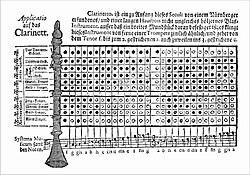
The instrument's journey began with the chalumeau, but the modern clarinet took shape through the innovations of makers like Jacob Denner. The term "clarinette" first appeared in 1710 in an order placed by the Duke of Gronsfeld for instruments crafted by Denner. By 1733, the English "clarinet" was in use, followed by the now-archaic "clarionet" in the late 18th century.

Key Facts
- Classification: Single-reed woodwind (aerophone).
- Key Systems: The Boehm system is the most common globally, while the Oehler system is prevalent in Germany.
- Standard Tuning: Modern clarinets are typically tuned to 440–442 Hz.
- Bore Shape: Primarily cylindrical with a subtle hourglass shape to correct pitch and responsiveness.
- Range: Varies by model, from the high-pitched piccolo clarinet to the massive octocontrabass clarinet.
The Evolution of Design and Mechanics
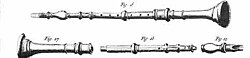
From Classical Roots to the Basset Clarinet
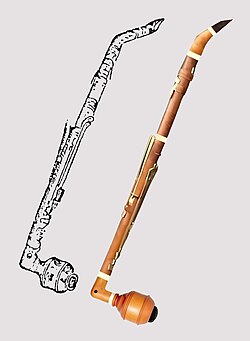
During the Classical period, clarinets typically featured five keys. Wolfgang Amadeus Mozart, a great champion of the instrument, sought to extend its lower range. This led to the creation of the basset clarinet by Theodor Lotz, which was approximately 18 centimeters longer and extended the range down to C3. Mozart utilized this expanded range in his 1791 Concerto for Clarinet and Orchestra in A major.
Technical Breakthroughs in the 19th Century
Early clarinets were limited by felt pads that failed to seal tightly. Iwan Müller revolutionized the instrument by inventing stuffed pads made of kid leather and countersunk tone holes. In 1812, he introduced the "clarinet omnitonic," featuring thirteen keys and seven finger holes, allowing musicians to play in all keys without switching instruments. Müller is also credited with inventing the thumb rest and the metal ligature.

The Boehm System and Modern Keywork
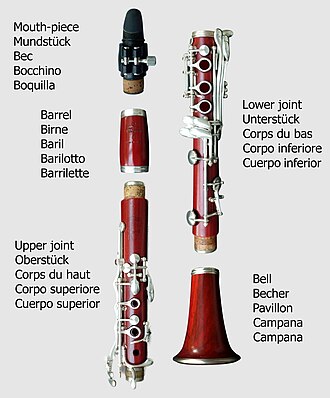
In the late 1830s, Theobald Böhm developed a ring and axle key system for the flute. Between 1839 and 1843, Hyacinthe Klosé and Louis Auguste Buffet adapted these concepts for the clarinet. This Boehm system introduced needle springs and ring keys, significantly simplifying complex fingering patterns. While Böhm himself was not directly involved in the clarinet's adaptation, the system bears his name and remains the global standard, alongside various modifications like the Full Boehm and Reform Boehm systems.
Acoustics and Construction
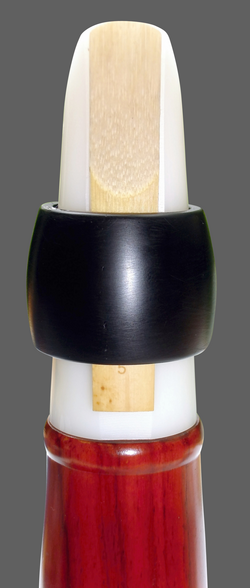
The clarinet's sound is produced by a vibrating reed held in place by a ligature on a mouthpiece. The air travels through a cylindrical bore (typically 14.6 to 14.9 mm in diameter). A nearly invisible hourglass shape within the bore helps refine the instrument's responsiveness and pitch.
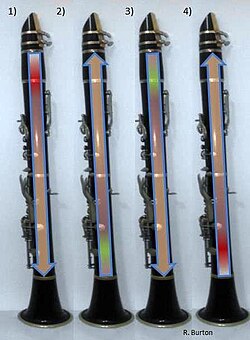
The bell at the end of the instrument flares outward to improve the tuning and tone of the lowest notes. Tuning is influenced by the length of the bore, temperature, and the dynamics of the performance.
The Clarinet Family and Ranges
The clarinet family spans a massive range of pitches, from the soprano to the subcontrabass.
| Instrument Name | Common Key | Written Range | Sounding Range |
|---|---|---|---|
| Piccolo Clarinet | A♭ or G | E3 – G6 | C4 – E♭7 |
| E♭ Clarinet | E♭ | E3 – A6 | G3 – C7 |
| B♭ Clarinet | B♭ | E3 – C7 | D3 – B♭6 |
| Basset Horn | F or G | C3 – C7 | F2 – F6 (in F) |
| Bass Clarinet | B♭ | C3 – C7 | B♭1 – B♭5 |
| Contrabass Clarinet | B♭ | C3 – A6 | B♭0 – G4 |
| Octocontrabass Clarinet | B♭ | C3 – A6 | B♭-1 – G3 |

Repertoire and Cultural Impact
Classical and Romantic Eras
Though it entered the orchestra later than other woodwinds, the clarinet became central to the works of Mozart, Beethoven, and Brahms. Carl Maria von Weber also composed major concertos that defined the instrument's virtuoso capabilities. By the 19th century, the clarinet was a permanent fixture in orchestral and chamber music, appearing in works such as Schubert's Octet and Mendelssohn's sonatas.
Jazz and Modern Genres
In the 20th century, the clarinet became a cornerstone of jazz. From the early New Orleans style to the big band era of the 1940s, performers like Benny Goodman and Artie Shaw brought the instrument to mainstream popularity. One of the most iconic moments in clarinet history is the opening glissando of George Gershwin's 1924 Rhapsody in Blue.
Frequently Asked Questions
What is the difference between the Boehm and Oehler systems?
The Boehm system uses a ring and axle key mechanism that simplifies fingering and is used worldwide. The Oehler system is a German modification that maintains different bore and mouthpiece characteristics, often preferred in German orchestral traditions.
What is a basset clarinet?
A basset clarinet is an extended version of the instrument, roughly 18 centimeters longer than a standard clarinet, allowing it to play lower notes down to C3. It was famously used by Anton Stadler and featured in Mozart's compositions.
How does the clarinet produce sound?
Sound is produced when a player blows air across a single reed, causing it to vibrate against the mouthpiece. This vibration creates a standing wave of air within the cylindrical bore, which is then modified by the player opening and closing tone holes.
What is the range of a standard B♭ clarinet?
The written range of a B♭ clarinet typically extends from E3 to C7, though the sounding pitch is a whole step lower (D3 to B♭6).
Who invented the modern clarinet key system?
While Theobald Böhm invented the ring key system for the flute, it was Hyacinthe Klosé and Louis Auguste Buffet who adapted and developed the Boehm system specifically for the clarinet between 1839 and 1843.