Carmen: The Legacy of Georges Bizet's Operatic Masterpiece
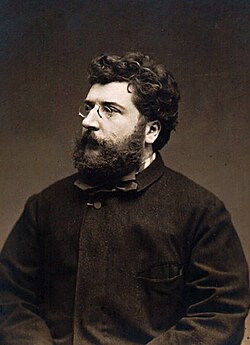
Few works in the history of classical music possess the enduring magnetism of Carmen. Composed by Georges Bizet, this French opera has evolved from a controversial premiere into one of the most performed works in the global repertoire. Set against the vibrant backdrop of Seville, Spain, around 1820, it tells a visceral story of passion, jealousy, and fate.
The opera's journey began in the 1860s, a period when Bizet, despite being a Prix de Rome laureate, struggled to find a stage for his works in the conservative atmosphere of Paris. While he found some success with the independent Théâtre Lyrique, it was not until a commission from the Opéra-Comique that he found the path to his greatest achievement.
Key Facts
- Composer: Georges Bizet
- Premiere Date: March 3, 1875
- Venue: Opéra-Comique, Paris
- Source Material: Based on the 1845 novella Carmen by Prosper Mérimée
- Librettists: Henri Meilhac and Ludovic Halévy
- Language: French
The Genesis of a Masterpiece
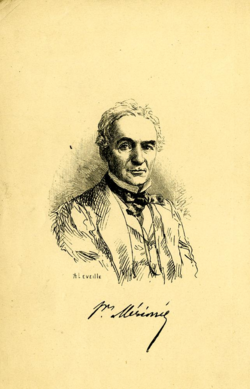
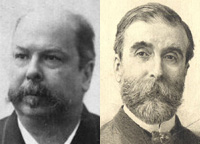
The creation of Carmen was a collaborative effort between Bizet and librettists Henri Meilhac and Ludovic Halévy. Bizet himself proposed the adaptation of Prosper Mérimée's novella, a blend of travelogue and adventure that Mérimée had published in 1845. The story's roots may have been influenced by Alexander Pushkin's poem "The Gypsies" or personal anecdotes from the Countess Montijo.
Bizet worked intensely on the composition during the summer of 1874 at an artists' colony in Bougival. He described the resulting 1,200 pages of music as a work of "clarity and vivacity, full of colour and melody." However, the road to the premiere was fraught with revisions. Bizet frequently altered the music to accommodate the technical limitations of the orchestra and the specific needs of the singers.
Structure and Musical Highlights
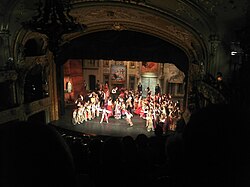
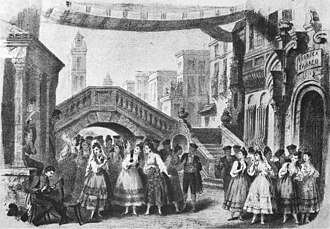
The opera is structured in four acts, moving from the public squares of Seville to the rugged mountains where smugglers hide.
Act-by-Act Settings
- Act 1: A square in Seville.
- Act 2: Lillas Pastia's Inn.
- Act 3: A wild spot in the mountains.
- Act 4: A square in Seville, featuring the walls of an ancient amphitheatre.
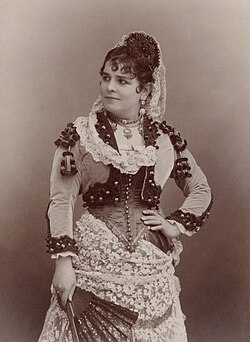
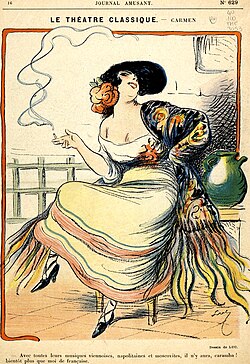
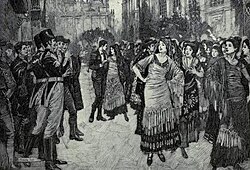
Musically, Carmen is defined by its iconic arias. The "Habanera" (L'amour est un oiseau rebelle) and the Toreador's song ("Votre toast") remain among the most recognized pieces of music in the world. Bizet's attention to detail extended to the text; he personally rewrote lyrics for the Habanera and the act 3 card scene to better align with Mérimée's original characterizations.
From Initial Struggle to Global Fame
![Vittoria Lepanto [it] in Carmen (1909)](/images/f3/f6/f3f6f877203103563707225144f7e48ecb16129fc5ee0d8bbe40e35da111430f.jpg)
The premiere on March 3, 1875, was not an immediate triumph. Some critics found the work immoral, and the management of the Opéra-Comique eventually refused to reinstate it. However, the opera found a second life in Vienna, where it received immense praise from legendary composers Richard Wagner and Johannes Brahms.
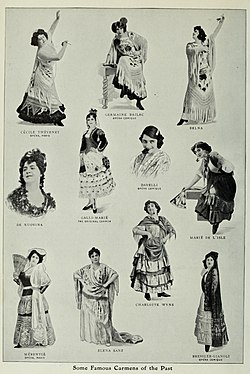
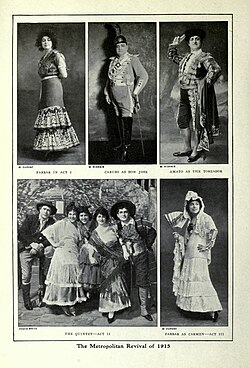
By the late 19th century, Carmen had conquered the world. It became a staple at the New York Metropolitan Opera, where the legendary tenor Enrico Caruso performed the role of José from 1906 until 1919. The opera's popularity was so vast that by 2011, the Met alone had staged it nearly a thousand times.
Performance Variations and Adaptations
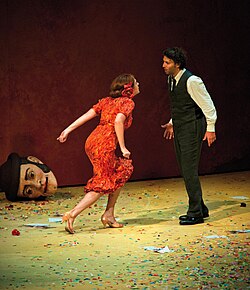
Over time, two distinct versions of Carmen emerged. In France, the Opéra-Comique maintained the dialogue version, which uses spoken word between musical numbers. Outside of France, the recitative version—where dialogue is replaced by sung passages—became the norm. Many international productions also added lavish ballet interludes, a practice that some purists, including Camille Saint-Saëns, viewed as a blemish on the original masterpiece.
| Milestone | Year | Location/Detail |
|---|---|---|
| World Premiere | 1875 | Opéra-Comique, Paris |
| Vienna Success | 1875 | Praised by Wagner and Brahms |
| American Premiere | 1878 | New York Academy of Music |
| Metropolitan Opera Debut | 1884 | New York City |
| Caruso's Debut as José | 1906 | Metropolitan Opera |
Frequently Asked Questions
What is the difference between the dialogue and recitative versions?
The dialogue version uses spoken French between musical numbers, which was the standard for the Opéra-Comique. The recitative version replaces this spoken dialogue with sung passages, a modification that became popular in productions outside of France.
Who wrote the original story that inspired the opera?
The opera is based on a novella titled Carmen, written by Prosper Mérimée and first published in 1845 in the journal Revue des deux Mondes.
Why was the opera initially considered controversial?
At the time of its premiere, the subject matter was viewed as immoral by some members of the Parisian establishment, leading to a mixed initial reception at the Opéra-Comique.
Which musical pieces from Carmen are the most famous?
The most renowned pieces are the "Habanera" (L'amour est un oiseau rebelle) from Act 1 and the Toreador's song ("Votre toast") from Act 2.
Did other famous composers admire the work?
Yes, both Richard Wagner and Johannes Brahms praised the opera. Brahms reportedly saw the Vienna production twenty times and expressed deep admiration for Bizet's genius.