Cladistics: The Science of Biological Classification and Common Ancestry
In the quest to map the vast diversity of life on Earth, scientists use a specialized approach known as cladistics (from the Ancient Greek kládos, meaning 'branch'). This method of biological classification categorizes organisms into groups called clades based on hypotheses of their most recent common ancestry.
Unlike older systems that might group animals by general appearance, cladistics relies on synapomorphies—shared derived characteristics that appear in a specific group but are absent in more distant ancestors. By identifying these unique traits, researchers can infer the evolutionary relationships between different taxa (groups of organisms).
Theoretically, a clade consists of a last common ancestor and all of its descendants. A fundamental rule of cladistics is that once a lineage belongs to an ancestral clade, it remains part of that clade forever. For instance, under a strict cladistic framework, if the term "fishes" were defined as a clade, humans would technically be included because we share a common ancestor with the earliest fish.
Key Facts
- Clades are groups defined by a common ancestor and all its descendants.
- Synapomorphies are the shared derived traits used to identify these relationships.
- Willi Hennig is credited with the original formulation of the method in 1950.
- Bifurcation is the process by which new subclades are generated through splitting.
- Cladistics is currently the most popular method for inferring phylogenetic trees from morphological data.
The History of Phylogenetic Systematics
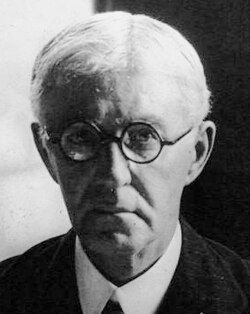
While the formal method of cladistics gained global prominence later, early iterations appeared as early as 1901 in the work of Peter Chalmers Mitchell regarding birds. This was followed by Robert John Tillyard's work on insects in 1921 and W. Zimmermann's research on plants in 1943.
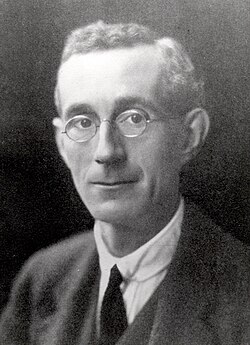
The terminology we use today evolved over several decades. The term "clade" was introduced by Julian Huxley in 1958, though it was coined by Lucien Cuénot in 1940. Other terms like "cladogenesis" (1958) and "cladistic" (1960) followed. Willi Hennig, who referred to his approach as phylogenetic systematics, published his foundational work in 1950. However, the method did not flourish in the English-speaking world until its translation in 1966.
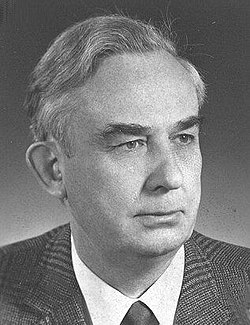
Throughout the 1970s, cladistics competed with two other major schools of thought: phenetics (championed by Peter Sneath and Robert Sokal), which focused on overall similarity, and evolutionary taxonomy, championed by Ernst Mayr.
Understanding Clade Types and Taxa
In cladistics, not all groupings are created equal. The validity of a group depends on whether it includes all descendants of a common ancestor.
Monophyletic Groups
A monophyletic group (or a true clade) includes the most recent common ancestor and all of its descendants. This is the only type of group recognized as valid in strict cladistics.
Paraphyletic Groups
A paraphyletic group includes a common ancestor but excludes one or more descendant groups. These are often referred to as "grades" in non-cladistic contexts. If a group is found to be paraphyletic, cladists must either include the missing descendants or abolish the group name.
Polyphyletic Groups
A polyphyletic group consists of members that do not share a recent common ancestor; instead, they are grouped together based on traits that evolved independently (convergent evolution).
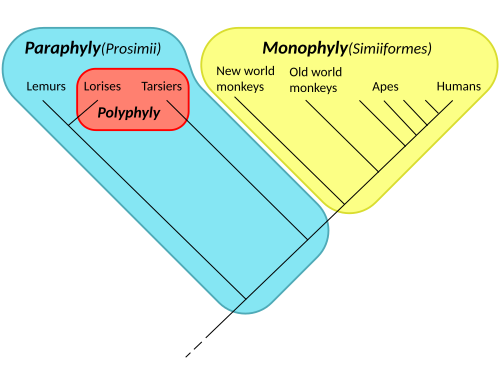
| Term | Includes Common Ancestor? | Includes All Descendants? | Cladistic Status |
|---|---|---|---|
| Monophyly | Yes | Yes | Valid Clade |
| Paraphyly | Yes | No | Invalid/Grade |
| Polyphyly | No | No | Invalid |
Methodological Nuances
Cladistics utilizes a branching structure to represent evolution. Stem-groupings refer to the branches leading down to the divergence of the next significant sister group. In a fully bifurcated tree, every new group added creates an additional named clade and a new level on that branch.
While the system is robust, certain biological realities can complicate the model. Sexual hybridization can blur the lines between closely related groups, and horizontal gene transfer (the movement of genetic material between unicellular and/or multicellular organisms other than by transmission from parent to offspring) can create complex networks rather than simple trees.
Frequently Asked Questions
What is the difference between a clade and a grade?
A clade is a monophyletic group containing an ancestor and all its descendants. A grade is a paraphyletic group that includes an ancestor and some, but not all, of its descendants, often grouped by a similar level of morphological complexity.
Who is considered the father of modern cladistics?
Willi Hennig is credited with the original formulation of the cladistic method in his 1950 book, though he called his approach "phylogenetic systematics."
How do scientists identify a clade?
Scientists look for synapomorphies, which are shared derived characteristics that are present in the group being studied but not in more distant ancestors or related groups.
Why would humans be considered "fish" in cladistics?
Because humans descended from a common ancestor that was a fish, and in cladistics, all descendants remain part of their ancestral clade regardless of how much they evolve.
What happens if a group is found to be paraphyletic?
To maintain cladistic validity, the researcher must either expand the group to include the excluded descendants or abolish the group entirely.