A Complete Guide to Chives: The Versatile Culinary Herb
Chives, known scientifically as Allium schoenoprasum, are a staple in Western cuisine and a beloved addition to many gardens. As a member of the Amaryllidaceae family, this perennial plant—meaning it lives for more than two years—is famous for its mild, onion-like flavor and its striking violet flowers. Whether used as a fresh herb in a kitchen or an ornamental plant in a flowerbed, chives offer a unique blend of culinary utility and ecological benefits.
Key Facts
- Scientific Name: Allium schoenoprasum
- Common Uses: Culinary flavoring, ornamental gardening, and insect repellent.
- Native Range: Widespread across Eurasia and North America.
- Distinctive Feature: Hollow, tubular, grass-like leaves.
- Ecological Role: High nectar producer that attracts bees.
Botanical Description
Chives are bulb-forming herbaceous plants that typically grow to a height of 25 centimeters (10 inches). They develop slender, conical bulbs that grow in dense clusters from the roots. The plant features scapes, which are the flowering stems, that are hollow and tubular, reaching lengths of up to 50 cm. The leaves are also hollow and terete, a botanical term meaning they are round in cross-section. These grass-like leaves are generally shorter than the scapes.
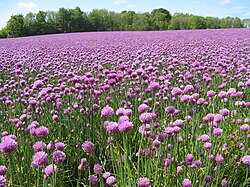
The flowers of the chive are pale purple and star-shaped, featuring six petals. They grow in a dense inflorescence, which is a cluster of flowers on a single stem, typically containing between 10 and 30 blooms. Before the flowers open, the cluster is protected by a papery bract. In the summer, the plant produces seeds within a small, three-valved capsule. Depending on the habitat, flowering typically occurs between April and June.
Distribution and Habitat
Chives are remarkably widespread, being the only species of the Allium genus native to both the New World (the Americas) and the Old World (Eurasia). In Asia, their natural range extends from the Ural Mountains in Russia to the Korean peninsula and parts of Japan, China, and the Caucasus. They are also found in parts of the Middle East, including Afghanistan, Iran, and Iraq.
In Europe, chives are native to almost every region, with a few exceptions such as Iceland and Hungary. In North America, they are native to Alaska and most of Canada, as well as specific regions in the United States, including the Pacific Northwest and the Northeastern states. While they have been introduced to various parts of Central and South America, they are not native to those regions.
Ecology and Pollinators
Chives play a dual role in the local ecosystem. Due to their sulfur compounds, they are naturally repulsive to many insects, making them useful in companion planting to protect other crops. However, their flowers are a major draw for pollinators. In a United Kingdom survey, chives were ranked among the top 10 plants for nectar production per unit of cover, making them an excellent choice for increasing beneficial insect life in a garden.
Cultivation and Care
Chives are relatively easy to grow and have been cultivated in Europe since the Middle Ages. They thrive in full sun and prefer well-drained soil that is rich in organic matter, ideally with a pH level between 6 and 7.
Growing from Seed
To grow chives from seed, they should be germinated at temperatures between 15 and 20 °C (59 to 68 °F) while being kept moist. In cooler climates, gardeners may choose to germinate them indoors or under a cloche (a protective glass or plastic cover) before transplanting the young shoots into the ground after about four weeks.
Propagation and Maintenance
Beyond seeds, chives can be easily propagated by division, which involves splitting the existing plant clumps into smaller sections to replant. In cold regions, the plant will die back to its underground bulbs during the winter and regrow in the spring. For continuous harvesting, gardeners can cut stalks to the base; the plant will continually regrow leaves throughout the growing season. It is important to watch for leek moth larvae, which can damage the leaves or bulbs.
Culinary and Cultural Uses
In the kitchen, chives are prized for their mild onion flavor. The scapes (stems) and leaves are used as a flavoring herb, while the edible flowers can be used in salads or to create blossom vinegars. They are a key component of the fines herbes in French cuisine, alongside parsley, chervil, and tarragon. Common pairings include omelettes, fish, potatoes, and cream cheese.
Historically, chives have held significant cultural value. The Romans believed they could help relieve sunburn or sore throats and even used them in fortune-telling. In the 19th century, Dutch farmers famously fed chives to cattle to influence the flavor of their milk. Today, they remain a versatile herb that can be used fresh or dry-frozen without losing much of their characteristic taste.
Nutritional Profile
Chives provide a variety of essential vitamins and minerals. Below is the nutritional value per 100 g (3.5 oz) serving:
| Nutrient | Quantity | % Daily Value (DV) |
|---|---|---|
| Energy | 126 kJ (30 kcal) | - |
| Protein | 3.27 g | - |
| Carbohydrates | 4.35 g | - |
| Dietary Fiber | 2.5 g | - |
| Vitamin K | - | 177% |
| Vitamin C | - | 65% |
| Folate (B9) | - | 26% |
| Beta-Carotene (Vit A) | 2612 μg | 24% |
| Manganese | - | 16% |
| Magnesium | - | 10% |
| Potassium | - | 10% |
| Iron | - | 9% |
Frequently Asked Questions
How do chives differ from garlic chives?
The primary difference lies in the leaves. Common chives (Allium schoenoprasum) have hollow, tubular leaves, whereas garlic chives (Allium tuberosum) have flat, strap-like leaves.
Can I use chive flowers in cooking?
Yes, the pale purple flowers are edible and can be used to garnish dishes, add color to salads, or be used to make blossom vinegars.
Are chives good for a pollinator garden?
Yes. Chives are excellent for attracting bees because they are high nectar producers, making them a valuable plant for increasing insect life in your garden.
How should I harvest chives?
When harvesting, you should cut the required number of stalks all the way down to the base. This allows the plant to continue regrowing leaves throughout the season.
Can chives be stored for later use?
Yes. While they are readily available fresh at most markets, chives can also be dry-frozen, which preserves much of their flavor for future culinary use.