Chinese Buddhism and the Concept of No-Mind
In the tradition of Chinese Buddhism, few concepts are as profound or as frequently misunderstood as no-mind (wuxin). Far from suggesting a void of consciousness or a state of mental vacancy, no-mind represents a sophisticated psychological and spiritual state of clarity. It is the realization of the mind's original, pure nature, stripped of the distortions of ego, desire, and rigid conceptualization.
The Origins of No-Mind in Buddhist Thought
The term was first explored by Chinese exegetes—scholars who interpret sacred texts—of the Prajñaparamita sutras. These thinkers, known as the "school of no-mind" (xinwu zong), including figures such as Zhi Mindu (fl. 326), viewed no-mind as a way to explain emptiness, the Buddhist concept that all phenomena lack a permanent, independent essence.
This foundation was further expanded in the Mahayana Awakening of Faith. This influential text introduces the concept of no-thought (wu-nien) in relation to the "One Mind." According to this doctrine, the ultimate reality—the Dharmakaya (the truth-body of the Buddha)—is pure, immutable, and without thought. While sentient beings are often deluded by ignorance into mistaking the mind for the fleeting thoughts it produces, the text argues that the mind itself never moves. By realizing that the mind is inherently wu-nien, a practitioner can enter the gate of Suchness, or the reality of things as they truly are.
No-Mind in the Chan Tradition
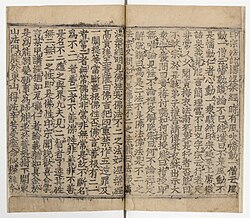
The concept of no-mind became a cornerstone of the Chan schools (the precursor to Japanese Zen). It is the central theme of the Treatise on No-Mind (Wuxin lun), a Dunhuang manuscript attributed to Bodhidharma. This text, which summarizes the Southern school tradition, shows potential influences from the works of Sengzhao and Daoist philosophy.
The master Huangbo Xiyun (died 850 CE) emphasized that achieving no-mind allows the "fundamental essence" to appear spontaneously. He taught that the Mind is Buddha and no-mind is the Way (Dao). To Huangbo, the state of no-mind is one of non-differentiation, where distinctions such as existence versus non-existence, self versus other, or positive versus negative disappear. He warned that seeking a specific goal or holding onto concepts of "holiness" only prolongs suffering in samsara (the cycle of birth and death).
Defining the State of No-Mind
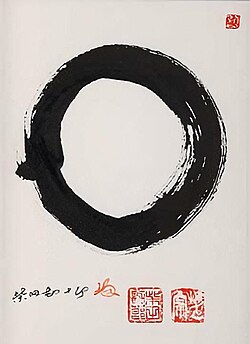
In Chan practice, no-mind is not the absence of mental activity, but a state where the original mind (benxin)—the intrinsically pure Buddha-mind—functions without obstruction, calculation, or desire. This state is not separate from everyday life; rather, it is a spontaneous way of interacting with the world.
Scholars like Muller and philosopher Izutsu Toshihiko have clarified common misconceptions about this state:
- It is not unconsciousness: No-mind is not mental torpor, lethargy, or absent-mindedness.
- It is not the cessation of thought: It does not refer to a permanent incapacitation of the thinking faculty.
- It is intense lucidity: Izutsu compares it to the state of a master musician, where action is fluid and precise.
Muller explains that when the discursive process (the habit of analytical, clinging thought) is interrupted, a deeper dimension of the mind is revealed. The conceptual faculty still works—often better than before—but it no longer operates in a rigid or clinging manner. This allows the practitioner to see the "suchness" of things, unfiltered by personal presuppositions.
Practical Application and the Platform Sutra
The Platform Sutra provides a nuanced breakdown of no-thought (wunian), defining it as "no-thought within thought." It suggests that while thoughts continue incessantly from one moment to the next, the key is non-abiding. If a person does not attach to any single thought, there is no clinging. In this context, "non" refers to the absence of duality and defilements, while "thought" refers to thinking of the fundamental nature of suchness.
This approach is mirrored in the Daoist concept of wu wei, where everything is accomplished through non-action. Zen teachers encourage students to cultivate this state not only in meditation but in every daily routine, leading to the realization that "the everyday mind is the way."
| Term | Literal/Technical Meaning | Practical Application |
|---|---|---|
| Wuxin | No-Mind | A state of non-clinging and freedom from discrimination. |
| Wu-nien | No-Thought | The interruption of discursive flow to see the "suchness" of reality. |
| Non-abiding | Not clinging to thoughts | Allowing thoughts to flow without attachment or fixation. |
| Dharmakaya | Truth-body / Ultimate Reality | The immutable, pure nature of the mind. |
Key Facts
- No-mind (wuxin) is a state of intense clarity and lucidity, not a lack of consciousness.
- The Platform Sutra defines no-thought as "no-thought within thought," emphasizing non-attachment.
- Huangbo Xiyun taught that the non-differentiating mind is the Buddha and is equivalent to emptiness.
- The state is characterized by spontaneity and effortlessness, similar to the Daoist concept of wu wei.
- It is achieved by interrupting the discursive process to experience the innate buddha-nature.
Frequently Asked Questions
Does "no-mind" mean that a person stops thinking entirely?
No. According to classic Chan texts and scholars like Muller, the conceptualizing faculty continues to function. However, it functions more effectively because it is no longer rigid, constricted, or driven by personal clinging.
How does no-mind differ from being absent-minded or lethargic?
Philosopher Izutsu Toshihiko argues that no-mind is the opposite of mental torpor. It is a state of high lucidity and awareness, comparable to the focused yet effortless state of a master musician.
What is the relationship between no-mind and the "everyday mind"?
Zen teachings suggest that no-mind should be cultivated in all daily activities, not just during formal meditation. The phrase "the everyday mind is the way" reflects the goal of achieving effortlessness in every aspect of routine life.
What does "non-abiding" mean in the Platform Sutra?
Non-abiding means that while thoughts arise and succeed one another without ceasing, the practitioner does not attach to or "abide" in any single thought. This lack of attachment prevents clinging.
Is no-mind considered a permanent state?
While it is a goal of practice, some masters, such as Baotang Wuzhu, viewed "no-thought" as an expedient tool. They argued that when true no-thought is achieved, even the concept of "no-thought" itself ceases to exist.