Chinese Buddhism: A Historical Journey from the Silk Road to the Modern Era
Chinese Buddhism, known in traditional Chinese as Hànchuán Fójiào, represents one of the most significant religious and cultural developments in East Asian history. From its early arrival via ancient trade routes to its evolution into unique, localized schools of thought, Buddhism has profoundly shaped the philosophy, art, and social fabric of China for centuries.
The religion's entry into the Chinese heartland was facilitated by the interlinked overland and maritime Silk Roads. During the Kushan Era, Mahayana Buddhism—a major branch of Buddhism focusing on the path of the Bodhisattva—first entered the Chinese Empire during the Han dynasty, creating what scholars refer to as the "great circle of Buddhism".
![Buddhist expansion in Asia: Mahayana Buddhism first entered the Chinese Empire (Han dynasty) through the Silk Road during the Kushan Era. The overland and maritime Silk Roads were interlinked and complementary, forming what scholars have called the "great circle of Buddhism".[7]](/images/ba/12/ba1218f6656400bfd14c6b8ba7ddb6a699c11d94e4fe71cb2c8bd8330dea4aa9.webp)
Key Facts
- Origins: Entered China via the Silk Road during the Han dynasty.
- Major Schools: Includes Chan (Zen), Pure Land, Huayan, and Zhenyan (Esoteric) Buddhism.
- Golden Age: The Tang dynasty saw Buddhism become a dominant cultural force, often surpassing Taoism in popularity.
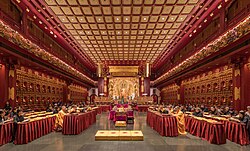
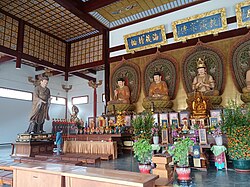
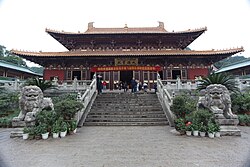
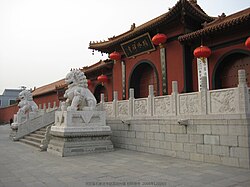
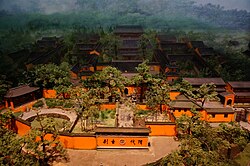
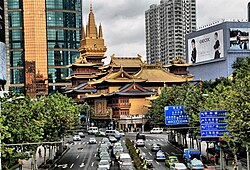
- Architecture: Traditional temples typically follow a classic Chinese palace layout.
- Cultural Impact: Influenced major literary figures, including poets like Wang Wei and Bo Juyi.
The Establishment and Flowering of Chinese Buddhism
The formal establishment of Buddhism in China gained significant momentum during the 4th-century Sixteen Kingdoms period. As northern China faced political upheaval, non-Han rulers often embraced Buddhism due to its foreign elements. During this time, monks like Fotu Cheng (232–348) held high-ranking government positions, and the religion began to spread to the south under the Eastern Jin dynasty.
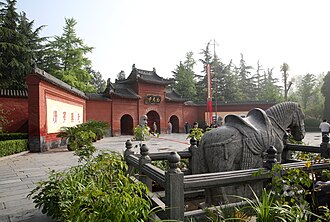
By the 6th and 7th centuries, Buddhism had undergone a process of sinicization—the adaptation of foreign concepts into Chinese cultural frameworks. This era saw the emergence of distinct traditions that remain influential today:
Major Historical Traditions
- Huayan School: Based on the Avatamsaka Sutra, developed by masters such as Dushun, Zhiyan, and Fazang.
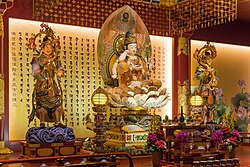
- Pure Land Tradition: Focused on the veneration of Amitabha Buddha, shaped by monks like Tanluan, Daochuo, and Shandao.
- Chan Buddhism: A meditative tradition rooted in the teachings of masters like Bodhidharma and Daman Hongren.
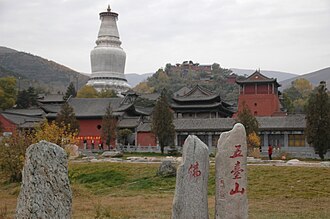
The Tang dynasty marked a pinnacle of Buddhist development. During this era, Buddhism was widely accepted across all social classes. The period is also noted for the arrival of Subhakarasimha, Vajrabodhi, and Amoghavajra, who established Zhenyan Buddhism (Chinese Esoteric Buddhism) between 716 and 720. This form of Vajrayana Buddhism became particularly popular among the social elite.
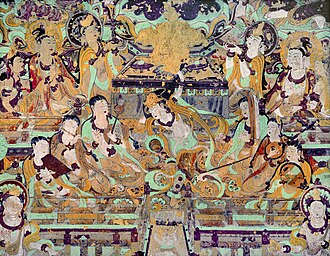
Following the Tang, the Song dynasty (960–1279) witnessed the rise of Chan Buddhism as the most influential school. It developed close ties to the imperial government and established organized systems of temple administration. This era also produced classic Chan texts, such as the Blue Cliff Record and The Gateless Gate.
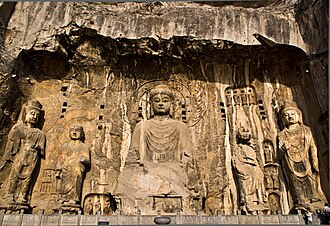
Artistic and Architectural Legacy
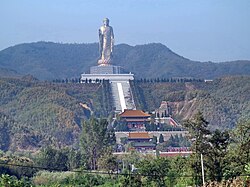
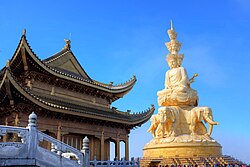
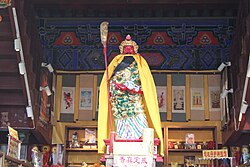
The influence of Buddhism is etched into the landscape of China through magnificent grottoes, pagodas, and timber structures. From the intricate carvings of the Longmen Grottoes to the massive statues of the Spring Temple Buddha, religious devotion has driven immense artistic achievement.
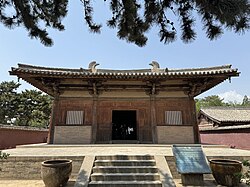
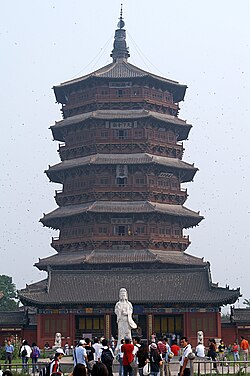
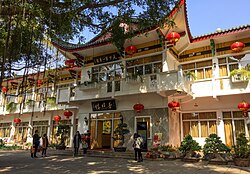
Traditional temple architecture often utilizes the palace layout, featuring grand halls and intricate courtyard designs. Notable examples include the oldest surviving timber architecture in China, the Nanchan Temple, and the massive pagoda of Fogong Temple.
| Tradition/Era | Key Characteristics | Notable Figures/Examples |
|---|---|---|
| Chan (Zen) | Meditative practice and sudden enlightenment | Bodhidharma, Linji school |
| Pure Land | Veneration of Amitabha Buddha | Tanluan, Shandao |
| Huayan | Based on Avatamsaka Sutra | Fazang |
| Zhenyan | Esoteric/Vajrayana Buddhism | Amoghavajra |
| Tang Dynasty | Golden Age of sinicized Buddhism | Longmen Grottoes |
Modernity and Contemporary Practice
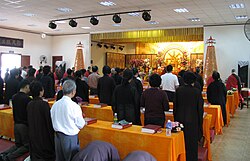
The history of Chinese Buddhism faced significant challenges during the Qing dynasty, particularly during the Taiping Rebellion (1850–1864), which resulted in the destruction of many temples and scriptures. In the late imperial period, while laypeople maintained a connection to Buddhist rituals, their relationship with formal institutions was often less structured.
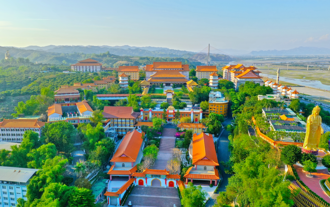
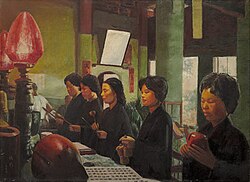
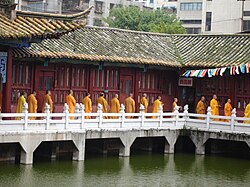
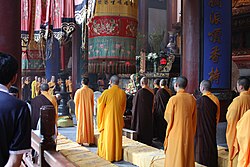
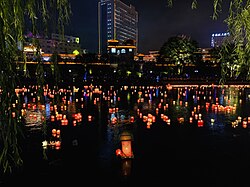
In the modern era, Buddhism continues to manifest through various forms, including new religious movements like Guanyin Buddhism and the True Buddha School. Today, practice ranges from monastic life to active lay participation in community service and ritual chanting.
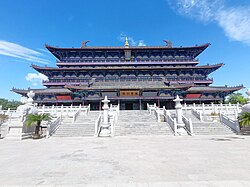

Frequently Asked Questions
How did Buddhism first arrive in China?
Buddhism entered China through the Silk Road, both via overland and maritime routes, during the Han dynasty through the Kushan Era.
What are the main schools of Chinese Buddhism?
The major traditional schools include Chan (meditative), Pure Land (devotional), Huayan (philosophical), and Zhenyan (esoteric).
What is the significance of the Tang Dynasty to Buddhism?
The Tang dynasty was a period of significant development where Buddhism became widely accepted across all social classes and deeply influenced Chinese literature and art.
How is a traditional Chinese Buddhist temple laid out?
According to scholars, Chinese Buddhist temples generally follow a traditional Chinese palace layout.
What is Chan Buddhism?
Chan Buddhism is a tradition based on the teachings of various masters, such as Bodhidharma, focusing on meditation and direct insight.