Wonhyo: The Great Harmonizer of East Asian Buddhism
In the history of East Asian philosophy, few figures loom as large as Wonhyo (617–686). A prolific scholar-monk and one of the most eminent philosophers in Korean history, his intellectual contributions helped shape the spiritual landscape of Korea, China, and Japan. Known for his ability to synthesize complex, often conflicting doctrines into a unified whole, Wonhyo remains a central pillar of Korean Buddhism.
With a literary output exceeding 80 works across 240 fascicles, his scholarship is considered among the most extensive in the history of East Asian Buddhism. His commentaries on fundamental texts—such as the Vajrasamādhisūtra, the Awakening of Faith, and the Mahāparinirvāṇasūtra—became enduring classics that influenced generations of masters across the continent.
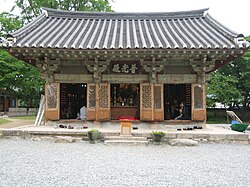
Key Facts
- Lifespan: 617–686 CE, during the transition from the Three Kingdoms era to the Unified Silla kingdom.
- Philosophical Focus: Harmonization of disputes (hwajaeng) and the "One Mind" theory.
- Major Influence: His work laid the foundation for the Hwaeom (Korean Huayan) school.
- Literary Legacy: Authored approximately 80 works; 22 remain extant today.
- Cultural Impact: His name is honored in Taekwon-Do patterns and major Korean landmarks.
The Life and Enlightenment of a Folk Hero
Born in Amnyang (modern-day Gyeongsan), Wonhyo spent much of his early career studying under various teachers and residing at Hwangnyongsa Temple. However, his life was defined by a transformative moment of insight that shifted his path from a traveling scholar to a localized sage.
According to hagiographical accounts, Wonhyo and his companion Uisang were traveling to Tang China in 661 to study Yogācāra (a school of Buddhist philosophy focusing on the nature of consciousness). During a heavy downpour, they sought shelter in what appeared to be an earthen sanctuary. Thirsty, Wonhyo reached out in the dark and drank from what he believed was a cool, refreshing gourd. Upon waking, he discovered he had actually been drinking brackish water from a human skull inside an ancient tomb.
This startling experience led to a profound realization regarding the power of the mind to transform reality. He experienced a direct insight into the cittamatra (mind-only) principle, concluding that because all phenomena are ultimately products of the mind, there was no need to travel to China to seek truth. This realization not only solidified his philosophical stance but also endeared him to the common people, turning him into a popular folk hero.
Core Philosophical Doctrines
Wonhyo’s philosophy is characterized by a drive to resolve contradictions. He did not align himself with a single specific tradition; instead, he drew from a vast array of sources, including Pure Land, Huayan, and Vinaya, to create a holistic vision of Mahayana Buddhism.
Harmonization of Disputes (Hwajaeng)
A central project of Wonhyo's career was hwajaeng, or the "harmonization of disputes." He believed that the various seemingly contradictory teachings found in Buddhist sutras were actually non-contradictory metaphors pointing toward the same ultimate truth. By using the Huayan concept of interpenetration—the idea that all things are interconnected and non-obstructing—he developed what he called "interpenetrated Buddhism" (t'ong pulgyo).
The One Mind and Essence-Function
At the heart of his worldview is the One Mind theory. Wonhyo posited that the "One Mind" is the ultimate reality that manifests in two inseparable aspects:
- Essence: The pure, non-dual source of all phenomena (often referred to as Suchness).
- Function: The relative phenomena and various manifestations of the world.
This relationship is known as essence-function (che-yong). Wonhyo argued that these two are not separate entities but a harmonious whole. This theory allowed him to bridge the gap between the absolute truth of enlightenment and the everyday experience of sentient beings.
Original Enlightenment and Practice
Wonhyo taught the theory of original enlightenment, suggesting that enlightenment is already immanent within the mind of every being. Therefore, spiritual practice is not about "attaining" something new, but rather "returning to the original source" by purifying the mind. He made these deep metaphysical concepts accessible to everyone, teaching commoners through simple practices like the recitation of Amitabha Buddha's name.
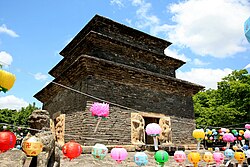
Summary of Wonhyo's Contributions
| Category | Details |
|---|---|
| Primary Philosophy | Hwajaeng (Harmonization) and One Mind theory |
| Key Schools Influenced | Hwaeom (Huayan) and Yogācāra |
| Major Works | Commentaries on the Awakening of Faith and Vajrasamādhisūtra |
| Cultural Honors | Wonhyo Bridge (Seoul), Won-Hyo Taekwon-Do pattern |
| Notable Descendant | Seol Chong (Great Confucian scholar of Silla) |
Frequently Asked Questions
What was Wonhyo's most significant philosophical contribution?
His most significant contribution was the concept of hwajaeng, the harmonization of doctrinal disputes. He demonstrated how different Buddhist teachings could coexist as non-contradictory expressions of a single ultimate truth.
How did Wonhyo influence Buddhism outside of Korea?
His commentaries were highly respected throughout East Asia. Chinese Huayan masters like Fazang and Li Tongxuan, as well as Japanese monks of the Kegon school, were significantly influenced by his scholarly work.
What is the "One Mind" theory?
The One Mind theory suggests that the ultimate reality is a single, non-dual source that contains both purity and defilement. It manifests as both the absolute essence and the relative functions of the world.
Is Wonhyo's work still being studied today?
Yes. A major joint project between Dongguk University and Stony Brook University is currently translating his twenty-three extant works into English, with the University of Hawaii Press publishing the series.
Why is Wonhyo considered a "folk hero"?
Beyond his high scholarship, Wonhyo was known for his ability to connect with common people. He translated complex metaphysics into simple, practical teachings that could be applied to everyday life, making Buddhism accessible to the masses.