Republic of Chile
The Republic of Chile is a vibrant South American nation characterized by its extraordinary geographic diversity, a complex political history, and a robust economy. From the arid deserts of the north to the glacial fjords of the south, Chile is a land of extremes that has evolved from ancient indigenous settlements into a modern, high-income presidential republic.
With its capital in Santiago, the nation serves as a critical hub for trade and diplomacy in the Southern Cone, balancing a rich cultural heritage with a forward-looking approach to energy and industry.
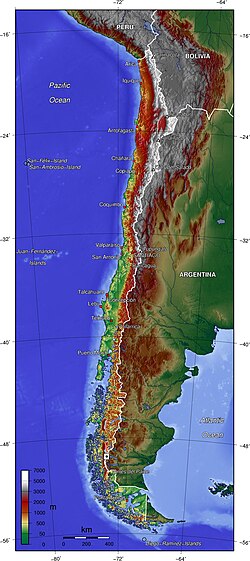
Key Facts
![Spain's Kingdom of Chile in 1810 highlighting the historiographical disputes surrounding it, as well as the Araucanía, a territory under indigenous self-government that belongs to Chile. In 1776 the Viceroyalty of the Río de la Plata was created and the territories of the cities of Mendoza and San Juan got transferred to the new entity.[36][37][38][39]](/images/ff/54/ff545fc1b81c0304c351c283193ad616931b01a5cd6e068ce4d2b3916fca2fe6.webp)
- Capital: Santiago, the largest city in the country.
- Government: Unitary presidential republic.
- Official Language: Spanish (with indigenous languages like Mapudungun and Quechua also spoken).
- Economy: A global leader in copper production and a high-income economy.
- Geography: A narrow strip of land bordered by the Andes Mountains and the Pacific Ocean.
- HDI: Very high (0.878 as of 2023).
History and Nation Building
Early History and Colonization
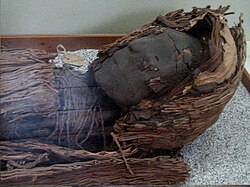
Long before European arrival, the region was inhabited by various indigenous groups. The Chinchorro mummies represent some of the oldest known burial practices in the world, dating back to approximately 5050 BCE. Later, the Mapuche people established a strong presence, maintaining a level of self-government in territories like Araucanía.
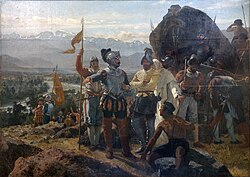
Spanish colonization began in the 16th century, marked by the founding of Santiago by Pedro de Valdivia at Huelén Hill. Over time, the territory transitioned through various administrative shifts, including the creation of the Viceroyalty of the Río de la Plata in 1776.
Independence and the 20th Century
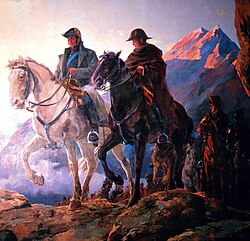
Chile's path to sovereignty began with the Government Junta on September 18, 1810, and was formally declared on February 12, 1818. Key figures such as Generals José de San Martín and Bernardo O'Higgins were instrumental in the crossing of the Andes to secure independence from Spain.
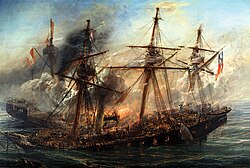
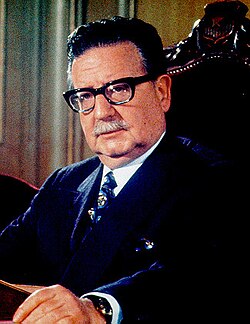
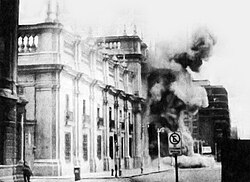
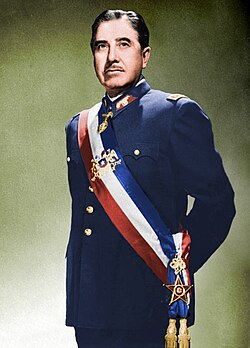
The 20th century was marked by significant territorial expansion following the War of the Pacific, specifically after the Battle of Iquique in 1879. However, the latter half of the century saw intense political volatility, culminating in the 1973 military coup that overthrew President Salvador Allende and installed the regime of Augusto Pinochet, which lasted until 1990.
Geography and Biodiversity
![Territorial losses of the Republic of Chile de jure (by law) according to Chilean historiography[44]](/images/ec/31/ec31ecc3a7492305b611101dc608d9546bf73c9a741062837219396ee18dea0d.webp)
Topography and Climate
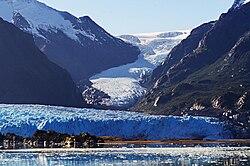
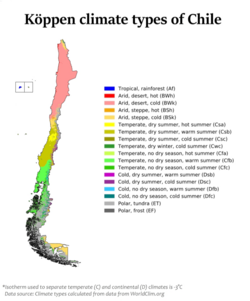
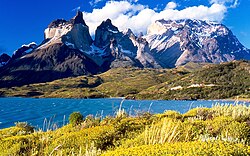
Chile's unique shape creates a variety of natural regions. The landscape is dominated by the Andes Mountains and includes the Amalia Glacier in Bernardo O'Higgins National Park. The climate varies drastically, as shown in the Köppen climate classification, ranging from the hyper-arid Atacama Desert to the rainy forests of the south.
Flora and Fauna
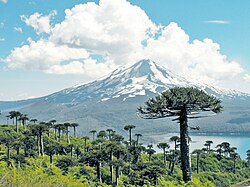
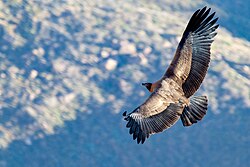
The nation is home to unique biodiversity, including the Araucaria araucana (monkey puzzle tree) and the national bird, the Andean condor. The national flower, Lapageria rosea, was officially declared in 1977.
![Lapageria rosea is endemic to Chile and it was officially declared the national flower on 24 February 1977[146]](/images/b9/f4/b9f4e3708382e49b5d3414cd713c3e504e0f8cdba2db38b220cdbfec74ed67dc.jpg)
Government and Administration
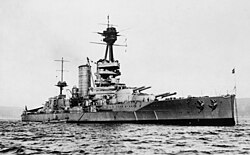
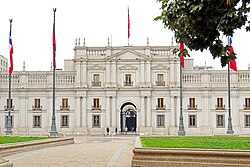
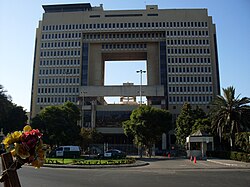
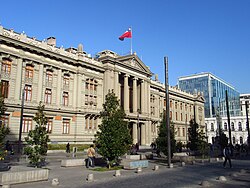
Chile operates as a unitary presidential republic. The legislative branch is the National Congress, consisting of the Senate (Upper House) and the Chamber of Deputies (Lower House). The seat of the presidency is the Palacio de La Moneda in Santiago.
Administrative Divisions
The country is divided into several regions, each with its own capital. The Santiago Metropolitan Region is by far the most populous, while regions like Magallanes and Chilean Antarctica cover the largest land areas.
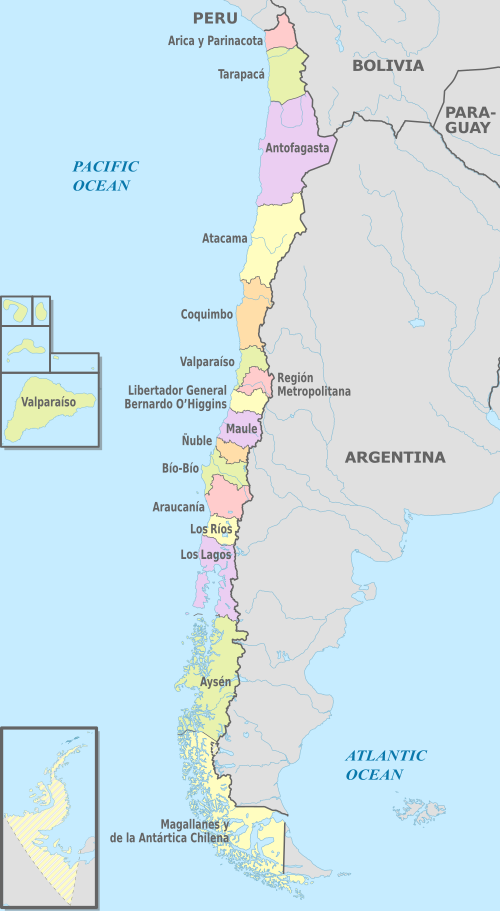
| Region | Capital | Population | Area (km²) |
|---|---|---|---|
| Santiago Metropolitan | Santiago | 7,400,741 | 15,403.2 |
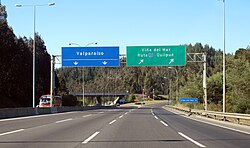
| Valparaíso | Valparaíso | 1,896,053 | 16,396.1 |
| Biobío | Concepción | 1,613,059 | 23,890.2 |
| Magallanes and Chilean Antarctica | Punta Arenas | 166,537 | 132,297.2 |
Economy and Infrastructure
Mineral Resources and Agriculture
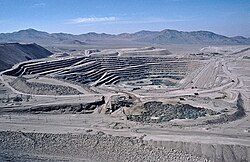
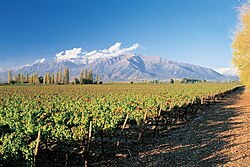
Chile is world-renowned for its mining industry, particularly copper. Chuquicamata stands as the largest open-pit copper mine globally. Beyond minerals, the country is a major producer of agricultural goods, including high-quality wine from vineyards in regions like Puente Alto.
Urbanization and Energy
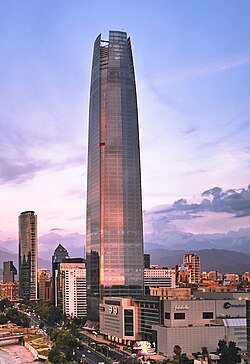
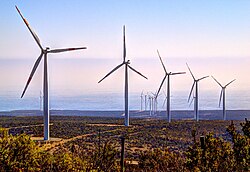
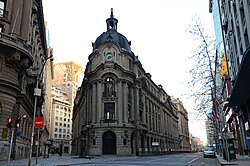
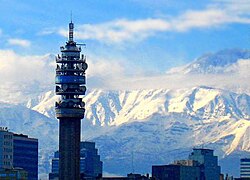
Modern Chile is characterized by high-tech urban centers, exemplified by the skyscrapers of "Sanhattan" in Santiago, including the Gran Torre Costanera. The nation is also transitioning toward sustainable energy, investing heavily in wind farms and solar power.
Culture and Society
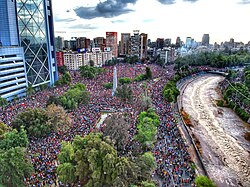
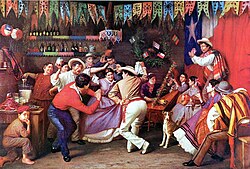
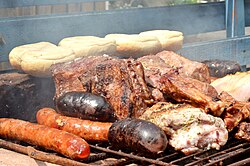
Chilean culture is a blend of indigenous roots and Spanish influence. This is evident in its music, dance (such as the Zamacueca), and cuisine, featuring staples like the asado (barbecue) and marraqueta bread.
Religion remains a significant part of social life, with Christianity (primarily Catholicism) being the most practiced faith, though a growing percentage of the population identifies as having no religion.
Frequently Asked Questions
![Chilean proverb written in Mapuche language and Chilean Spanish. The Mapudungun alphabet used here does not reflect an agreed-upon standard. In fact, there are three distinct alphabets currently used to write the Mapuche language.[246]](/images/8a/36/8a36df33b6a97ab9f6211e5536a32b9743cbf542c375d265331b243dd0d4c7a5.jpg)

What is the primary driver of Chile's economy?
The primary driver is the mining sector, specifically copper production, though agriculture and tourism also play significant roles.
Who were the Mapuche people?
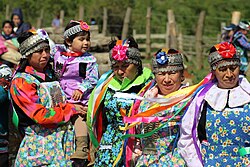
The Mapuche are an indigenous group of south-central Chile who historically maintained a strong resistance to Spanish colonization and continue to preserve their culture and language today.
What is the significance of the Palacio de La Moneda?
Built between 1784 and 1805, the Palacio de La Moneda is the official seat of the President of Chile and a symbol of the nation's political history.
How is Chile's geography unique?
Chile is one of the narrowest countries in the world, stretched between the Andes Mountains to the east and the Pacific Ocean to the west, resulting in a vast range of climates and ecosystems.
What is the current form of government in Chile?
Chile is a unitary presidential republic with a National Congress consisting of a Senate and a Chamber of Deputies.