Chicago Defender: The Voice of the Great Migration and Black America
Founded in 1905, the Chicago Defender stands as one of the most influential publications in American history. More than just a newspaper, it served as a catalyst for social change, a shield against racial violence, and a beacon of hope for millions of African Americans seeking a life of dignity and opportunity.
From its early days as a print publication to its current status as a digital news platform, the Defender has documented the struggle for equality and the triumph of the Black spirit across more than a century of American life.
Key Facts
- Founded: May 5, 1905, by Robert S. Abbott.
- Primary Impact: Played a pivotal role in encouraging the Great Migration from the rural South to the urban North.
- Distribution: Historically spread via Pullman porters who delivered copies surreptitiously to the South.
- Evolution: Transitioned from a weekly to a daily (1956), back to a weekly (2008), and finally to a digital-first format (2019).
- Cultural Legacy: Established the Bud Billiken Parade and Picnic, now one of the largest parades in the U.S.
Foundation and the Great Migration
The Chicago Defender was established by Robert S. Abbott, who used the publication to campaign aggressively against the violence of the Jim Crow era—a period characterized by state-sanctioned racial segregation and disenfranchisement. Abbott utilized moralistic rhetoric and vivid exposés of lynchings in the South to highlight the systemic nature of racial crimes.
By promoting Chicago as a "promised land" with abundant factory jobs and a vibrant social scene, the Defender became a primary driver of the Great Migration. This massive movement saw 1.5 million Black Americans leave the rural South between the early 20th century and 1940, with another 5 million following between 1940 and 1970.
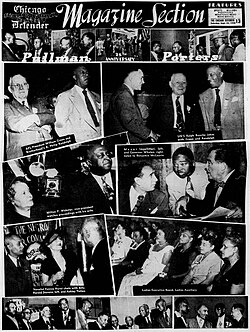
To reach readers in the South where such a paper might be banned, Abbott utilized an informal distribution network of Pullman porters. These workers carried the newspaper by rail, ensuring that the call for migration and equality reached those most oppressed by Southern laws.
Cultural Influence and Community Building
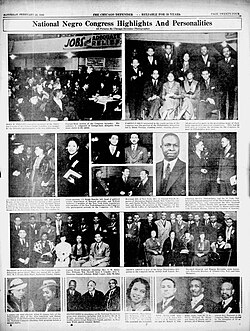
The Defender did not only focus on politics; it celebrated Black success and urban life. It was the first Black newspaper to include a full entertainment section, highlighting theaters, restaurants, and sports, such as the American Black Giants baseball team. It also featured contributions from legendary figures like poet Gwendolyn Brooks and writer Langston Hughes, who penned an opinion column from the 1940s through the 1960s.
In 1923, the paper launched the Bud Billiken Club for children. This initiative led to the creation of the Bud Billiken Parade and Picnic in 1929. Today, this event attracts over one million attendees and 25 million television viewers.
The Sengstacke Era and National Expansion
In 1940, leadership passed to Robert Abbott's nephew, John H. Sengstacke. Under Sengstacke, the paper expanded its focus to include racial segregation within the U.S. military during World War II. Sengstacke's influence extended to the highest levels of government; in 1948, President Harry S. Truman appointed him to a commission to study the integration of the armed forces.
Sengstacke was also a pioneer in industry organization, founding the National Negro Publishers Association (now the National Newspaper Publishers Association or NNPA), which now comprises over 200 member newspapers. In 1956, the publication became the Chicago Daily Defender, becoming the largest Black-owned daily newspaper in the United States.
Political Shifts and Social Advocacy
The Defender was not afraid to challenge political norms. In 1928, it broke a long-standing tradition by refusing to endorse a Republican presidential candidate, citing the party's failure to advance civil rights and its acquiescence to segregationism. Later, in 1967, the paper published editorials decrying antisemitism, arguing that Jews and Black Americans shared common struggles and should stand together in the fight for justice.
Modern Transition and Real Times Inc.
In January 2003, ownership of the Defender and its sister publications (including the Pittsburgh Courier and Michigan Chronicle) transferred to Real Times Inc., a group led by Thom Picou and Robert Sengstacke. This transition ensured the continuation of the Sengstacke family legacy while bringing in new investment from a group of Black businessmen from Detroit and Chicago.
As media consumption shifted, the Defender adapted. In July 2019, the publisher announced the end of its print edition to focus exclusively on its digital presence. While print runs had dropped to 16,000, the digital edition continued to thrive, reaching nearly half a million unique monthly visitors.
| Category | Details |
|---|---|
| Founder | Robert S. Abbott (1905) |
| Key Successor | John H. Sengstacke (1940) |
| Notable Contributors | Langston Hughes, Gwendolyn Brooks, Ida B. Wells |
| Major Milestones | Great Migration advocacy, Daily status (1956), Digital transition (2019) |
| Current Owner | Real Times Inc. |
Frequently Asked Questions
How did the Chicago Defender help the Great Migration?
The newspaper used moralistic editorials, political cartoons, and advertisements for jobs in Chicago to encourage African Americans in the rural South to move North to escape Jim Crow violence and seek economic opportunity.
Who were the Pullman porters and why were they important?
Pullman porters were Black railway workers who acted as a secret distribution network, smuggling copies of the Defender into Southern states where the publication was often illegal or discouraged.
What is the Bud Billiken Parade?
Started in 1929 through the paper's "Junior Defender" page, the Bud Billiken Parade and Picnic is an annual Chicago event that promotes children's development and has grown into one of the largest parades in the United States.
When did the Chicago Defender stop printing physical copies?
The Chicago Defender ceased its print edition in July 2019, transitioning fully to an online digital publication to better reach its audience.
What was the significance of the paper's 1928 political stance?
The Defender refused to endorse the Republican Party in 1928, signaling a major shift in Black political allegiance due to the party's failure to protect civil rights and its ties to segregationism.