Chemists: The Scientists Shaping the Composition of Matter
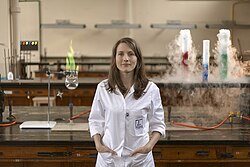
A chemist is a graduated scientist or an officially enrolled student trained in the study of chemistry. At its core, the work of a chemist involves studying the composition of matter and its properties. By analyzing substances at the level of molecules and their component atoms, chemists can precisely describe properties through quantitative measurements, including substance proportions and chemical reaction rates.
Beyond simple observation, chemists apply their expertise to identify the composition of unfamiliar substances, synthesize large quantities of naturally occurring materials, and create entirely new artificial substances and processes. While their work is distinct, it often overlaps with materials science and metallurgy. Furthermore, chemists collaborate closely with chemical engineers, who focus on the cost-effective design and construction of large-scale chemical plants for commercial manufacture.

Key Facts
- Definition: A scientist trained to study the composition, properties, and reactions of matter.
- Central Science: Chemistry is often called the "central science" due to its foundational role across various scientific disciplines.
- Foundational Figure: Antoine Lavoisier is regarded as the "Father of Modern Chemistry" for establishing the law of conservation of mass.
- Core Tool: The periodic table, created by Dmitri Mendeleev, is essential for organizing chemical elements.
- Professional Ethics: The Global Chemists' Code of Ethics emphasizes sustainability, safety, and public appreciation of the science.
The Evolution of Chemistry
The origins of chemistry are rooted in the human fascination with fire. As a mystical force capable of transforming substances, fire led to the early discovery of glass and iron. This curiosity evolved into alchemy, a protoscience driven largely by the desire to convert base metals into gold. The term "chemist" itself is derived from the Neo-Latin chimista, an abbreviation of alchimista.

Modern chemistry emerged as a rigorous science in 1783, when Antoine Lavoisier introduced the law of conservation of mass. This transition from alchemy to science was further solidified by Dmitri Mendeleev's creation of the first modern periodic table of elements.

The strategic importance of the field became evident during World War I, with some claiming that the side with the superior chemists would prevail. Today, the highest achievement in the field is the Nobel Prize in Chemistry, awarded annually since 1901.

Education and Professional Pathways
Formal Education
Entry into the profession typically requires at least a four-year bachelor's degree in chemistry. Because chemistry is the "central science," undergraduate programs emphasize a well-rounded foundation in physics and mathematics. For those pursuing research or advanced roles, a Master of Science or a Doctor of Philosophy (PhD) is often required, allowing for specialization in specific sub-disciplines.
Technical Roles
Not all chemistry-related roles require a full chemistry degree. The field distinguishes between different levels of technical expertise:
- Chemical Technician: Typically holds an associate degree and performs routine analyses for quality control or clinical laboratory work.
- Chemical Technologist: Possesses more education or experience than a technician (often a bachelor's degree in another science plus chemistry credits). They focus more on the management and operation of laboratory instrumentation and environmental quality control.
Career Opportunities and Skills
The career path of a chemist is diverse. Those with bachelor's degrees often work in research assistance, quality assurance, manufacturing, or regulatory affairs. Experienced chemists may move into leadership roles as managers, consultants, or entrepreneurs. Some integrate their chemistry background with other credentials to become forensic chemists, patent law specialists, or scientific reporters.
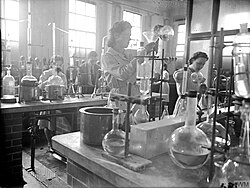
Essential skills for the modern chemist include a deep knowledge of chemical principles, familiarity with product development, and the ability to apply scientific strategies to solve complex problems. In the modern lab, chemists utilize specialized software such as Agilent ChemStation, Waters Empower, and Microsoft Excel, and are increasingly employing artificial intelligence for drug discovery.
Major Subdisciplines of Chemistry
Chemistry is organized into several primary branches, many of which overlap with biology, physics, and engineering.
| Subdiscipline | Primary Focus |
|---|---|
| Analytical Chemistry | Analysis of material samples to determine chemical composition and structure. |
| Biochemistry | Chemical processes and interactions occurring within living organisms. |
| Inorganic Chemistry | Properties and reactions of inorganic compounds, including atomic structure and bonding. |
| Organic Chemistry | The study of carbon-based compounds, including their structure and reactions. |
| Physical Chemistry | The physical basis of chemical systems, focusing on energetics, dynamics, and thermodynamics. |
| Theoretical Chemistry | Using mathematical and physical reasoning (e.g., quantum mechanics) to solve chemical problems. |
| Medicinal Chemistry | The design, synthesis, and development of pharmaceutical drugs. |
Professional Standards and Ethics
Chemists often join professional bodies such as the American Chemical Society (ACS) in the US, the Royal Society of Chemistry in the UK, or the Institution of Chemists in India to collaborate and maintain standards.
The Global Chemists' Code of Ethics, codified in 2016, outlines essential principles for the profession:
- Promoting public appreciation of chemistry.
- Prioritizing sustainability and environmental protection.
- Upholding the integrity of scientific research and publications.
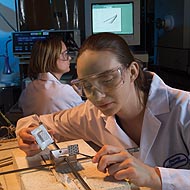
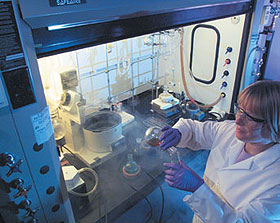
- Adhering to safety protocols, including the use of personal protective equipment.
- Ensuring chemical security throughout the supply chain.
Frequently Asked Questions
What is the difference between a chemist and a chemical engineer?
A chemist focuses on the study of the composition and properties of matter and the development of new substances. A chemical engineer focuses on the design, construction, and cost-effectiveness of large-scale plants to manufacture those chemicals commercially.
What is the "central science"?
Chemistry is referred to as the central science because it bridges the physical sciences (like physics) with the life sciences (like biology) and applied sciences (like medicine).
What is the difference between a chemical technician and a chemical technologist?
A chemical technician typically has an associate degree and performs routine, simpler analyses. A chemical technologist has more education or experience and is more involved in the management and operation of the instrumentation used for analysis.
Who is considered the Father of Modern Chemistry?
Antoine Lavoisier is considered the Father of Modern Chemistry due to his pivotal work in 1783, specifically his establishment of the law of conservation of mass.
What are the most common degrees required to become a professional chemist?
A bachelor's degree is the minimum requirement for most entry-level positions. However, research-heavy roles typically require a Master of Science or a PhD.