Cheetah Hunting: A Global History of Taming the World's Fastest Land Animal
For millennia, humans have been fascinated by the speed and agility of the cheetah. Unlike many other large predators, the cheetah's temperament allowed it to be tamed and utilized as a specialized hunting tool for the nobility and royalty of various civilizations. From the courts of Ancient Persia to the palaces of the Mughal Empire and the estates of medieval Europe, the practice of hunting with cheetahs represents a unique intersection of animal husbandry and aristocratic sport.
Key Facts
- Origins: Likely began in ancient Persia, India, or Afghanistan.
- Training: Taming was an elaborate process that could take up to a full year to complete.
- Peak Usage: Prominent in the Sasanian Empire, Mughal India, and under Holy Roman Emperor Frederick II.
- European Terminology: Cheetah keepers in the court of Frederick II were known as leoparderii.
- Current Status: The Asiatic cheetah is now critically endangered and exists only in Iran.
Ancient Roots and Early Civilizations
The earliest traces of cheetah domestication appear in Ancient Egypt, where animals were imported from the south. While it is speculated that Egyptians used them for hunting, concrete evidence is lacking. The Romans, however, left more tangible records; a 4th-century mosaic from Lod, Israel, depicts a hunting cheetah. Interestingly, Romans often referred to the animal as leopardos or leontopardos, mistakenly believing the cheetah was a hybrid of a lion and a leopard due to the difficulty of breeding them in captivity.
The practice likely matured in the East. Persian literature credits the Sasanian Empire with the first systematic taming of cheetahs. The epic poem Shahnameh mentions King Bharām Gūr using them in the fifth century, attributing the original taming to the legendary King Tahmuras. Similarly, Arab traditions and pre-Islamic art from Yemen indicate that cheetah hunting was established prior to the Hijrah in the fifth century, becoming more prevalent by the seventh century AD.
In the Middle East, these cats were treated as high-status companions, often riding in a specialized seat on the back of a nobleman's saddle during the journey to the hunt.
Expansion Across Asia
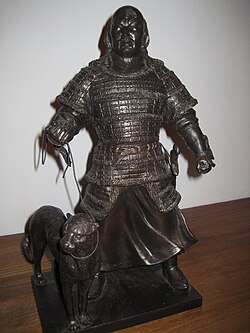
The use of hunting cheetahs extended deep into East and Central Asia. Evidence from the Tang dynasty in China includes a painting in the tomb of Li Shu showing a cheetah being carried on horseback, a practice that continued through the Ming dynasty. In the 13th century, Marco Polo documented that Kublai Khan utilized well-trained "big leopards" for hunting, a fact supported by Mongol empire tomb figurines from the reign of Kublai Khan (1260–1294).
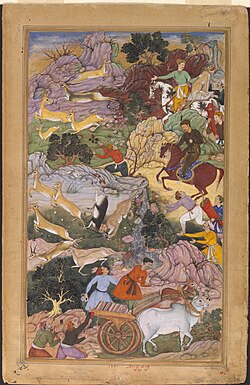
In India, written records of cheetah hunting emerge in the 13th century. The practice reached a zenith during the Mughal Empire. Emperor Akbar, in particular, was known for his passion for the sport; Mughal art from the late 16th century depicts him hunting with these cats, and records suggest he owned as many as one thousand cheetahs at one time.
Cheetahs in Medieval Europe
Cheetah hunting gained prominence in Europe during the 13th century, though the first sightings occurred earlier. Between 1096 and 1099, a French monk named Rodulfus Tortarius observed a chained leopard in a royal procession for the King of England in Normandy. However, scholars generally credit Frederick II, Holy Roman Emperor, as the first person to actually hunt with cheetahs in Europe after importing them from Tunisia.
Frederick II established a professional class of handlers called leoparderii. His commitment to the sport was significant; in 1260, he ordered 60 carpets specifically for these keepers. The practice spread to other rulers, including Henry III of England and Charles I of Anjou, the latter of whom employed five leoparderii under the supervision of a Saracen master named Salem.
In Spain, the tradition was likely adopted from Muslim influences, with royal menageries in Aragon and Navarre keeping trained cheetahs. Other notable owners included James I of Cyprus, who kept twenty-four cheetahs, and French monarchs Francis I and Henry II. The practice in France ended abruptly when Henry III ordered the slaughter of all wild animals in the French court at the end of the 16th century.
The Global Decline and Modern Status
The decline of cheetah hunting began in the 17th century. The Ottoman court dismissed its cheetah handlers between 1686 and 1687. While Western travelers like Jean-Baptiste Tavernier and François Bernier still reported seeing cheetah hunts in Persia and India during the 1600s, the practice slowly faded. The final royal hunts in India occurred between the 1920s and 1940s.
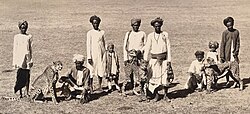
This decline mirrored the ecological collapse of the species. The Asiatic cheetah vanished from Egypt, the Maghreb, the Middle East, and India. Today, the subspecies is critically endangered, surviving only in Iran. While some individuals in Persian Gulf nations still keep cheetahs as exotic pets, these animals are typically captured illegally from the wild.
| Region/Empire | Key Figures/Periods | Notable Detail |
|---|---|---|
| Ancient Rome | 4th Century | Believed cheetahs were lion-leopard hybrids. |
| Persia | Sasanian Empire | Likely origin of taming; mentioned in Shahnameh. |
| China/Mongolia | Tang Dynasty / Kublai Khan | Cheetahs transported on horseback. |
| India | Mughal Empire (Akbar) | Emperor Akbar reportedly owned 1,000 cheetahs. |
| Europe | Frederick II | Introduced hunting cheetahs via Tunisia; used leoparderii. |
Frequently Asked Questions
How long did it take to tame a cheetah for hunting?
Taming was an elaborate and time-consuming process that could take up to a full year to complete.
Who were the leoparderii?
The leoparderii were specialized cheetah keepers employed by Holy Roman Emperor Frederick II and other European nobles to handle and train the animals.
Why did the Romans think cheetahs were hybrids?
Because cheetahs were extremely difficult to breed in captivity, the Romans speculated they were a cross between a lion and a leopard, referring to them as leopardos or leontopardos.
Where can the Asiatic cheetah be found today?
The Asiatic cheetah is now critically endangered and survives only in Iran, having disappeared from India, Egypt, the Maghreb, and the Middle East.
Which Mughal emperor was most famous for using cheetahs?
Emperor Akbar is the most prominent figure, with historical records and art suggesting he owned as many as one thousand hunting cheetahs.