Charlie Chaplin: The Life and Legacy of a Cinematic Icon
Few figures in the history of entertainment have left as indelible a mark as Sir Charlie Chaplin. A polymath of the early 20th century, Chaplin was not merely an actor but a director, composer, screenwriter, producer, and editor. He transformed the medium of film from a novelty into a sophisticated art form, blending slapstick comedy with poignant social commentary.
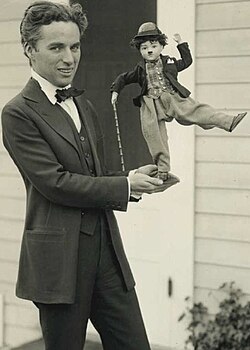
From his humble and difficult beginnings in London to becoming a global phenomenon, Chaplin's journey is one of resilience and artistic obsession. He is most remembered for creating the "Tramp," a character who became a universal symbol of the underdog, crossing linguistic and cultural barriers through the power of visual storytelling.
Key Facts
- Full Name: Sir Charlie Chaplin, KBE.
- Primary Role: Actor, director, and composer.
- Most Famous Character: The Tramp.
- Key Contributions: Co-founded United Artists and pioneered the blend of comedy and drama in feature films.
- Lifespan: 1889–1977 (died at age 88).
- Nationality: British.
Early Years and the Rise to Fame
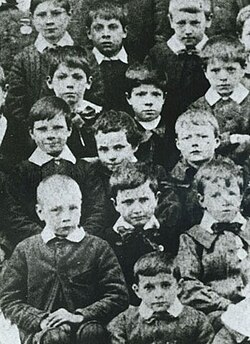
Born in London, England, Chaplin's childhood was marked by significant hardship. These early experiences of poverty and struggle deeply influenced his later work, providing the emotional foundation for his "sad clown" persona.
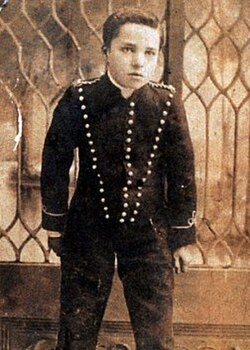
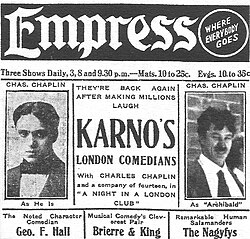
Chaplin began his career as a young performer in stage comedy and vaudeville. His early talent was evident in plays such as Sherlock Holmes, and by 1913, he had toured America with the Fred Karno comedy company, gaining the experience that would soon propel him into the burgeoning world of cinema.
Entering the Film Industry
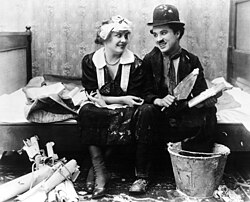
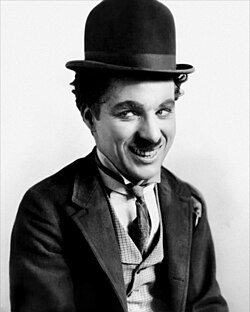
Chaplin's transition to film began between 1914 and 1917, where he worked with several studios, including Keystone, Essanay, and Mutual. It was during this period that he developed the iconic look and mannerisms of the Tramp, a character who combined elegance with poverty.
The Golden Era of Silent Features
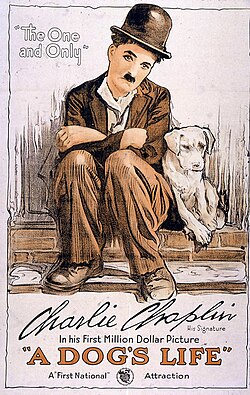
By 1918, Chaplin had achieved global stardom. He sought greater creative control over his work, leading to the co-founding of United Artists. This move allowed him to produce and direct his own features, moving away from short comedies toward longer, more complex narratives.
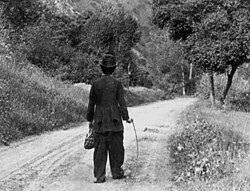
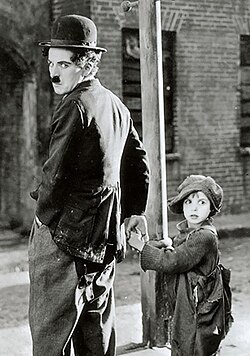
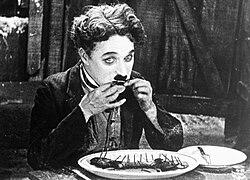
His work during the 1920s and 30s saw the evolution of the Tramp from a mischievous prankster to a figure of pathos. Films like The Kid (1921) were groundbreaking for combining comedy with genuine drama, while The Gold Rush (1925) showcased his mastery of physical comedy.
Defying the Sound Era
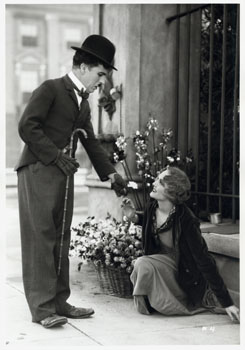
As the film industry transitioned to "talkies" (films with synchronized sound), Chaplin famously resisted the change. He believed that the universal appeal of the Tramp relied on pantomime. He continued to produce silent films, such as the critically acclaimed City Lights (1931), long after other studios had abandoned the format.
Social Commentary and Political Satire
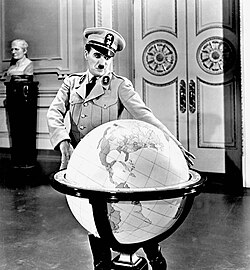
In the mid-1930s and 40s, Chaplin's work took a more critical turn toward society and politics. Modern Times (1936) served as a grim contemplation on the automation of the individual in an industrial world. Perhaps his most daring work was The Great Dictator (1940), in which he used satire to attack Adolf Hitler and fascism.
![Modern Times (1936), described by Jérôme Larcher as a "grim contemplation on the automatisation of the individual"[215]](/images/e2/b1/e2b15d9479cf937b7953b38acf341592b87892e37b65b7b8edba5c993883cb22.jpg)
Personal Life and Later Years
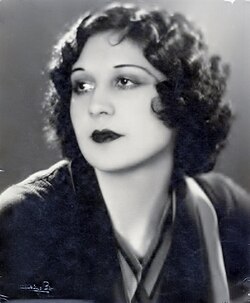
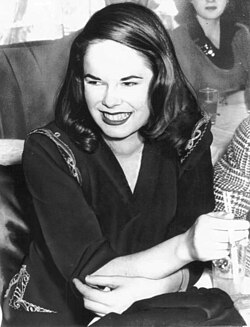
Chaplin's personal life was often as dramatic as his films. He was married four times: to Mildred Harris, Lita Grey, Paulette Goddard, and finally Oona O'Neill. His marriage to Oona in 1943 brought him stability, and together they had eight children.
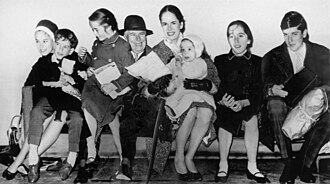
Despite his success, Chaplin faced significant legal troubles and accusations of communist sympathies in the United States. These controversies eventually led to him being banned from the U.S. for a period, prompting his move to Switzerland in 1953.
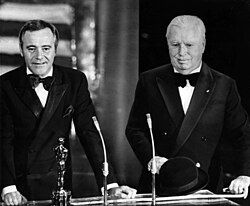
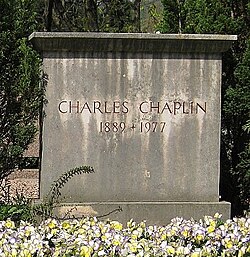
In his final years, Chaplin's reputation was renewed. He returned to the United States in 1972 to receive an Honorary Academy Award, marking his first visit in 20 years. He passed away on December 25, 1977, in Corsier-sur-Vevey, Switzerland.
Artistic Method and Legacy
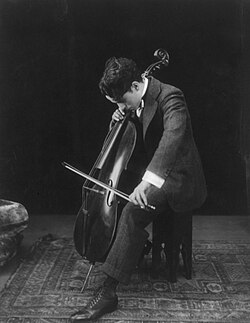
Chaplin was a perfectionist who controlled every aspect of his production. He not only directed and acted but also composed the music for his films, often playing the cello himself. His style was characterized by a unique ability to find humor in tragic circumstances, making his work timelessly relatable.
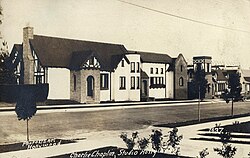
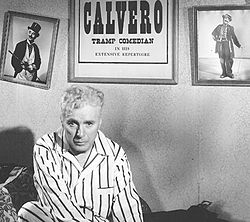
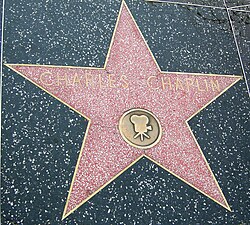
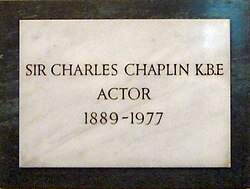
Today, Chaplin is commemorated worldwide, from his star on the Hollywood Walk of Fame to memorial plaques in London. His influence persists in every comedian who uses physical storytelling to convey deep human emotion.
![Chaplin as the Tramp, cinema's "most universal icon", in 1915[466]](/images/1f/88/1f88f48f15494dc5f50b1e19ce6443b66b41a04db60edfd80795a0a59d05ca38.jpg)
| Film Title | Year | Key Theme/Note |
|---|---|---|
| The Kid | 1921 | First film to exceed one hour; blended comedy and drama. |
| The Gold Rush | 1925 | Masterpiece of physical comedy. |
| City Lights | 1931 | Regarded as one of his finest works; remained silent. |
| Modern Times | 1936 | Critique of industrialization and automation. |
| The Great Dictator | 1940 | Satire of Adolf Hitler and fascism. |
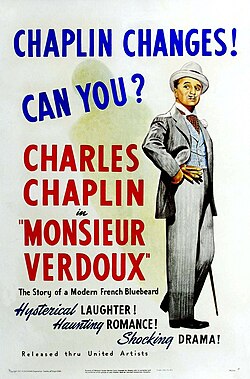
| Monsieur Verdoux | 1947 | Dark comedy about a serial killer. |
| Limelight | 1952 | Autobiographical story of a fading star. |
Frequently Asked Questions
Why did Charlie Chaplin resist sound in his films?
Chaplin believed that the universal appeal of the Tramp character relied on pantomime and visual storytelling. He feared that adding dialogue would limit the character's reach and destroy the timeless, international nature of his comedy.
What was the significance of The Great Dictator?
The film was a bold political statement that used satire to mock Adolf Hitler and the rise of fascism during World War II, marking a shift from his purely comedic roots to explicit social and political commentary.
Why did Chaplin leave the United States?
Due to increasing political tensions, legal troubles, and accusations regarding his political beliefs (specifically communist accusations), Chaplin faced a hostile environment in the U.S., leading him to settle in Switzerland in 1953.
Who was the Tramp?
The Tramp was Chaplin's most famous on-screen persona—a gentlemanly vagabond who faced the hardships of life with dignity, resilience, and a touch of mischief, serving as a universal icon for the marginalized.
Did Charlie Chaplin write his own music?
Yes, Chaplin was an accomplished composer and cellist. He composed the scores for many of his films, ensuring that the music perfectly complemented the timing and emotion of his visual gags.