Chalmette, Louisiana
Located in southeastern Louisiana, Chalmette is a census-designated place (CDP) and the parish seat of St. Bernard Parish. Situated east of downtown New Orleans and south of Arabi, this community sits along the Mississippi River, serving as a vital part of the New Orleans–Metairie–Kenner metropolitan statistical area. The name "Chalmette" is derived from the French word for "pasture" or "fallow land," honoring Antoinette Chalmette, the paternal great-grandmother of the community's founder.
Key Facts
- Location: St. Bernard Parish, Louisiana, USA.
- Population: 21,562 (as of the 2020 Census).
- Elevation: Approximately 3 feet (0.91 meters) above sea level.
- Historical Significance: Site of the 1815 Battle of New Orleans.
- Geography: Total area of 7.97 square miles, with 7.17 square miles of land.
Historical Foundations
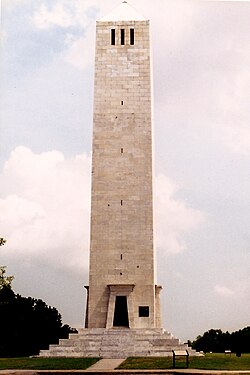
Chalmette was founded by Louis-Xavier Martin de Lino de Chalmette (1720–1755), a native of Quebec. The area's most defining historical event occurred in January 1815 during the Battle of New Orleans. Fought on the plantation then owned by Ignace Martin de Lino de Chalmette, the conflict saw American forces under Major General Andrew Jackson defeat British forces led by Lieutenant General Sir Edward Pakenham.
To prevent the British from using the plantation for cover, Andrew Jackson ordered its complete destruction. Today, this site is preserved as a national monument and is part of the Jean Lafitte National Historical Park and Preserve. Adjacent to the battlefield is the Chalmette National Cemetery and the Malus-Beauregard House, a Greek Revival-style plantation home built in 1830 that remains open to the public.
Industrial and Civic Growth
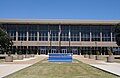
Beyond its military history, Chalmette played a role in regional industry, hosting a major Kaiser Aluminum plant from 1951 to 1983. The community also developed various civic amenities, including the Frederick J. Sigur Civic Center and the Val Riess Recreation Complex, which provides facilities for baseball, softball, basketball, and volleyball.
The Impact of Hurricane Katrina
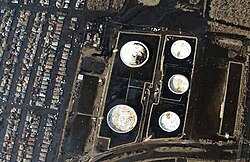
On August 29, 2005, Chalmette faced a catastrophic event when Hurricane Katrina triggered a 25-foot (7.6 m) storm surge. The surge overflowed through the Mississippi River–Gulf Outlet Canal (MRGO)—a commercial channel constructed by the U.S. Army Corps of Engineers in the 1960s—flooding the town with waters reaching 14 to 15 feet in some areas.
The flooding caused extensive destruction, leaving most buildings unsalvageable. A significant environmental crisis occurred at the Murphy Oil facility, where the storm surge overturned a massive oil tank, resulting in a major oil spill. While the U.S. EPA published findings on the water quality, some civilian ecological groups expressed concerns regarding ongoing health hazards from toxic chemicals.
The Road to Recovery
Recovery efforts were centered around several key hubs. The church of Our Lady of Prompt Succor became a spiritual and administrative anchor, serving as the only location for funerals during the first year post-storm. "Camp Hope" (originally Camp Premier), operated by Habitat for Humanity at P.G.T. Beauregard Middle School, provided a base for the National Guard and relief volunteers. Other organizations, such as the St. Bernard Project, assisted with debris removal and home repairs.
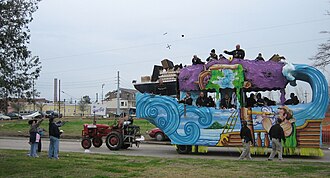
The community's resilience was highlighted in February 2006, when the Knights of Nemesis held a Mardi Gras parade through the ruins of the town, signaling a determination to rebuild.
Education and Demographics
The education system underwent significant restructuring following the hurricane. The St. Bernard Parish School Board established the St. Bernard Unified School in late 2005 to ensure students had a place to learn. Eventually, this reverted to Chalmette High School (grades 9–12), while Andrew Jackson High School and Trist Middle School were repaired to serve younger students. Private and Catholic schools were consolidated into a single campus at Our Lady of Prompt Succor.
Demographically, Chalmette has seen significant shifts. After a sharp population decline following Katrina (from 32,069 in 2000 to 16,751 in 2010), the population rebounded to 21,562 by 2020. The racial composition has also evolved; as of 2020, the population is 50.8% non-Hispanic white, 25.82% Black or African American, and 15.02% Hispanic or Latin American.
| Census Year | Total Population | Change (%) |
|---|---|---|
| 1980 | 33,847 | — |
| 1990 | 31,860 | -5.9% |
| 2000 | 32,069 | +0.7% |
| 2010 | 16,751 | -47.8% |
| 2020 | 21,562 | +28.7% |
Frequently Asked Questions
What is the historical significance of Chalmette?
Chalmette is most famous as the site of the Battle of New Orleans in 1815, where American forces led by Andrew Jackson defeated the British. The battlefield is now a national monument.
How did Hurricane Katrina affect the town?
A 25-foot storm surge from the MRGO canal flooded most of the town with waters up to 15 feet deep, destroying the majority of buildings and causing a massive oil spill at the Murphy Oil facility.
What is the current population of Chalmette?
According to the 2020 U.S. Census, the population of Chalmette is 21,562 people.
Who are some notable people from Chalmette?
Notable residents and figures include NBA player Mitchell Robinson, professional wrestler Kevin Northcutt, and film director Tommy Wiseau.
What are the main recreational facilities in the area?
The community features the Frederick J. Sigur Civic Center and the Val Riess Recreation Complex, which offers various sports fields and multi-purpose buildings.