Census Operations: History, Methodology, and Global Impact
A census (derived from the Latin censere, meaning 'to assess') is the systematic process of acquiring, recording, and calculating information about the members of a specific population. While most commonly associated with national population and housing counts, censuses are also utilized to track agriculture, business, traditional culture, supplies, and traffic.
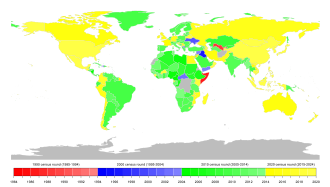
According to the United Nations (UN), a standard population and housing census must feature individual enumeration, universality within a defined territory, simultaneity, and defined periodicity. The UN recommends that these counts be conducted at least every ten years to ensure data remains relevant for international coordination and policy planning.
Key Facts
- UN Standards: Population censuses should ideally occur every decade and cover every individual in a defined territory.
- Ancient Roots: One of the earliest accurate censuses was recorded in China in AD 2 during the Han dynasty.
- Diverse Types: Beyond people, the Food and Agriculture Organization (FAO) defines agricultural censuses as data collection at the holding level to analyze agricultural structures.
- Modern Challenges: The COVID-19 pandemic disrupted census operations in 77% of 155 surveyed countries.
- Sampling: Many nations use a "short form/long form" strategy to gather detailed data from a random sample without burdening the entire population.
The Evolution of Population Counting
The practice of the census dates back to the Roman Republic, where it served as a registry of adult males fit for military service. Over centuries, it evolved from a tool for taxation and military mobilization into a cornerstone of modern social science and international statistical comparison.
Early Global Examples
In China, the Han dynasty conducted a census in AD 2 that recorded 57,671,400 individuals across 12,366,470 households. This count focused on taxable families to determine income and potential military mobilization. Another significant Chinese census followed in AD 144.

Other early records appear in India as far back as 300 BC. In the 16th century, the Spanish Empire expanded census-taking to its colonies. In 1577, King Philip II ordered a general description of holdings in the Indies, utilizing a 50-item questionnaire to gather relaciones geográficas (geographic relations) regarding the land and its people between 1579 and 1585.
![The Tehran census in 1869[30]](/images/9c/bf/9cbfd8786b2fc5b250c4f3b74a15f7f365f220cdbec2d43c3e2c12c653763c6c.png)
Methodologies and Implementation
Modern censuses are no longer the sole method of gathering demographic data but are part of a broader system of surveys and administrative data. While administrative systems offer high detail, they often raise concerns regarding privacy and potential bias.
Enumeration Strategies
To balance the need for deep data with the practicalities of cost and public burden, many countries employ a short form/long form sampling strategy. In this model, every resident completes a basic short form, while a randomly selected proportion is asked to provide more detailed information via a long form.
For example, the UK required all residents to fill out the full form until 2001, though only a 10% sample was analyzed in detail. In Canada, the decision to end the mandatory long-form census led to significant controversy and the resignation of the head of Statistics Canada, Munir Sheikh.
Agricultural Censuses
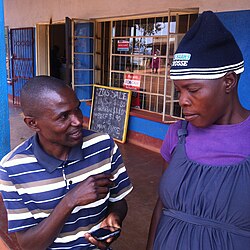
The FAO defines the census of agriculture as a statistical operation that collects and disseminates data on the structure of agriculture. Unlike population censuses, these are conducted at the holding level to facilitate research, private and public investment, and the analysis of the agricultural labor force.
Challenges and Controversies
Census taking is not always a neutral administrative act; it can become a flashpoint for political and social tension.
Census Boycotts
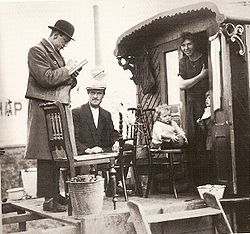
Historian Laurence Cooley identifies two types of boycotts. The first is motivated by the census design itself, such as in Kenya (2009) and Myanmar (2014), where ethnic groups sought specific identification categories. The second type uses the census as a symbolic target for unrelated political aims, such as the 1911 UK suffrage movement's "no vote, no census" campaign, or boycotts in West Germany during 1983 and 1987.

The Impact of COVID-19
The 2020 census round (2015–2024) faced unprecedented hurdles. The COVID-19 pandemic caused disruptions in 77% of surveyed countries, primarily due to a lack of personal protective equipment (PPE) for enumerators and shifting deadlines. These delays, combined with declining international funding and trust in institutions, have led to gaps in global demographic data.
World Population Estimates
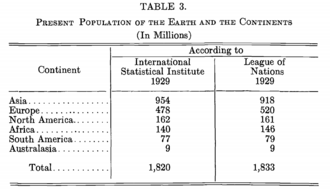
Before modern systematic censuses, scholars attempted to estimate the global population. Early attempts were made by Giovanni Battista Riccioli (1661), Johann Peter Süssmilch (1741, revised 1762), and Karl Friedrich Wilhelm Dieterici (1859). In 1931, Walter Willcox estimated the 1929 world population to be approximately 1.8 billion.
| Census Type | Primary Focus | Key Standard/Authority |
|---|---|---|
| Population & Housing | Individuals and households | UN (Every 10 years) |
| Agriculture | Agricultural holdings | FAO (Structure of agriculture) |
| Administrative | Existing government records | Varies by country |
Frequently Asked Questions
What is the difference between a short-form and long-form census?
A short-form census collects basic data from the entire population, while a long-form census collects detailed socio-economic data from a smaller, randomly selected sample to reduce the burden on citizens and the statistical office.
How often should a population census be conducted?
The United Nations recommends that population and housing censuses be taken at least every ten years to maintain accurate and timely demographic statistics.
Why do some groups boycott the census?
Boycotts occur either to protest the way the census is designed (such as demanding specific ethnic categories) or as a symbolic protest against the government for unrelated political issues, such as voting rights.
How did COVID-19 affect global census efforts?
The pandemic disrupted operations in 77% of surveyed countries, leading to delayed deadlines and difficulties in deploying enumerators due to health risks and a shortage of protective equipment.
What is an agricultural census?
Defined by the FAO, it is a statistical operation that collects data at the holding level to understand the structure of agriculture, labor inputs, and work activities within the sector.