Caversham History: From Medieval Shrines to Modern Landmarks
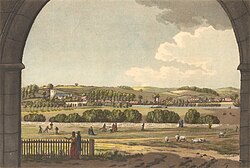
Caversham, first recorded as Cavesham in the Domesday Book of 1086, has a rich tapestry of history stretching back over a millennium. Located within the hundred of Binfield, early records indicate that the area was already a thriving community with significant amounts of cultivated land. Over the centuries, it has evolved from a site of spiritual pilgrimage and noble estates to a strategic military point and a hub for global media monitoring.
The landscape of Caversham has long been defined by its relationship with the River Thames and the bridge that connects it to Reading. This geography made it a focal point for both religious devotion and political conflict.
Key Facts
- Earliest Record: Mentioned as Cavesham in the 1086 Domesday Book.
- Religious Significance: Home to a famous shrine to the Virgin Mary and the healing well of St. Anne.
- Noble Ties: Once a demesne of William Marshal, Earl of Pembroke, who died here in the 13th century.
- Military History: Site of fierce fighting during the English Civil War in April 1643.
- Modern Legacy: Former home of BBC Monitoring (1943–2018) and the site of a rare early performance by Lennon and McCartney.
Spiritual Heritage and Pilgrimage
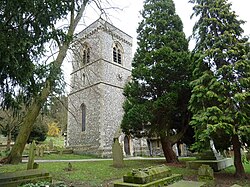
Before 1106, a shrine to the Virgin Mary was established in Caversham. While its exact original location is unknown, it is believed to have been near St Peter's Church. The shrine became a major destination for pilgrims, complemented by the chapel of St. Anne on the bridge and a well whose waters were reputed to have healing properties.
By the 15th century, the shrine's statue was plated in silver and dressed in realistic clothing. Its prestige was such that Catherine of Aragon visited on July 17, 1532. However, this era of devotion ended on September 14, 1538, when the shrine was destroyed by order of Henry VIII. Today, only the dry well remains, protected by a wall and a domed iron grill, while a modern shrine has been established at the Roman Catholic Church of Our Lady and St. Anne.
Noble Estates and Medieval Life
In the Middle Ages, Caversham Manor served as one of the demesnes—land attached to a manor—of William Marshal, the Earl of Pembroke and regent for King Henry III. Marshal eventually passed away in Caversham during the 13th century.
The medieval community was primarily centered on the north side of Caversham Bridge, east of St Peter's Church. Built in the 12th century, the church and its rectory were originally donated by the third Earl of Buckingham to Notley Abbey, an Augustinian house in Buckinghamshire. Following the Dissolution of the Monasteries, these lands were transferred to Christ Church.
Remnants of the rectory can still be found in the Caversham Court park and herb garden. Visitors can find information panels, foundation stones, and a ha ha—a recessed landscape barrier that creates an uninterrupted view—overlooking the River Thames, Reading, and Tilehurst.
Conflict and Transformation
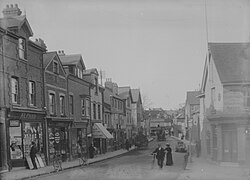
Caversham's strategic location made it a target during the English Civil War. In April 1643, fierce fighting erupted around Caversham Bridge. At the time, Royalists held Reading, which was under siege by Parliamentary forces led by the Earl of Essex. Royalist troops marching from Oxford attempted to relieve the town but suffered a heavy defeat, leading to the town's fall to the Parliamentarians shortly after.
The area's architecture also shifted over time. The fortified manor house was replaced in the 16th century by Caversham House and Park. The site saw various iterations, including the residence of William Cadogan. The current Caversham Park House, constructed in 1850, served as the base for BBC Monitoring from 1943 to 2018, where global mass media was analyzed. The BBC Written Archives Centre continues to operate on part of this site.
Modern Landmarks and Cultural Curiosities
The grounds of Caversham House have hosted diverse events, including the 1926 Royal Show. In 1927, the Henley Road Cemetery was established on part of that site, followed by the opening of the Reading Crematorium in 1932.
Caversham also holds a unique place in music history. In April 1960, the Fox and Hounds pub hosted the only public performance of John Lennon and Paul McCartney as a duo, where they performed under the name "the Nerk Twins." This historic spot is now commemorated with a blue plaque.
| Period/Year | Event/Entity | Significance |
|---|---|---|
| 1086 | Domesday Book | First written mention as "Cavesham" |
| 12th Century | St Peter's Church | Established via the Earl of Buckingham |
| 1538 | Henry VIII's Decree | Destruction of the Virgin Mary shrine |
| 1643 | English Civil War | Battle for Caversham Bridge |
| 1943–2018 | BBC Monitoring | Global media analysis at Caversham Park House |
| 1960 | The Nerk Twins | Lennon and McCartney's only duo performance |
Frequently Asked Questions
When was Caversham first mentioned in writing?
Caversham was first recorded as "Cavesham" in the Domesday Book in 1086, noting a sizeable community with significant cultivated land.
What happened to the shrine of the Virgin Mary?
The shrine, which was a popular pilgrimage site visited by Catherine of Aragon, was destroyed on September 14, 1538, under the orders of King Henry VIII.
Who was William Marshal?
William Marshal was the Earl of Pembroke and regent during the minority of King Henry III; he owned Caversham Manor and died in the village during the 13th century.
What is the significance of the Fox and Hounds pub?
The pub is famous for hosting the only public performance of John Lennon and Paul McCartney as a duo in April 1960, performing as "the Nerk Twins."
What was the role of Caversham Park House in the 20th century?
From 1943 until 2018, the house was occupied by BBC Monitoring, which analyzed news and information from mass media worldwide.