Cavalry History: The Evolution of Mounted Warfare

Cavalry History: The Evolution of Mounted Warfare

Derived from the French word cavalerie (from cheval, meaning horse), cavalry refers to soldiers who fight mounted on horseback. For millennia, cavalry served as the most mobile element of any army, providing critical advantages in speed, height, and inertial mass over infantry. From the nomadic horse archers of the Asian steppes to the armored knights of medieval Europe, the role of the horseman has shifted to meet the demands of changing technology and tactics.

Historically, cavalry was divided into two primary roles: light cavalry, used for reconnaissance, screening, and skirmishing; and heavy cavalry, utilized for decisive shock attacks and economy of force. While the term specifically applies to horse-mounted troops, other mounted forces—such as those using camels, elephants, or chariots—are generally categorized separately.
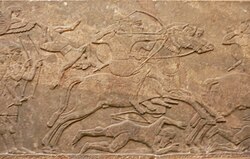
Assyrian cavalry
Assyrian cavalry

Key Facts

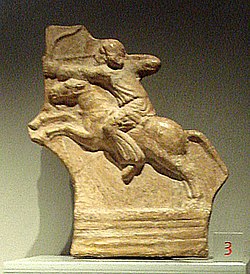
Parthian horseman, now on display at the Palazzo Madama, Turin
  • Mobility Advantage: Cavalry provided superior speed and height, allowing for rapid deployment and powerful charges.
  • Evolution of Armor: Heavy armor peaked in the Middle Ages but declined by the 18th century due to the rise of muskets and cannons.
  • Dragoons: Originally mounted infantry who rode horses for transport but fought on foot, they eventually evolved into standard cavalry.
  • Mechanization: Most global powers transitioned from horses to armored vehicles between 1929 and 1945.
  • Modern Role: Today, horse cavalry is primarily used for ceremonial duties or in specific guerrilla warfare contexts where infrastructure is poor.

The Ancient and Medieval Eras
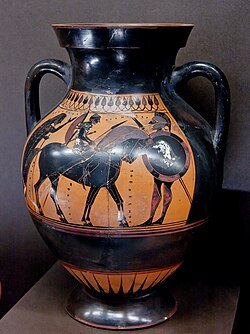
Warrior's departure; an Athenian amphora dated 550–540 BC

Early Origins and Asia

In nomadic societies across Asia, cavalry was often the primary military force. The Huns under Attila and the later Mongol armies relied heavily on the mobility of the horse to dominate vast territories. In East Asia, China, Korea, and Japan developed sophisticated mounted traditions, including the samurai of Japan, who combined archery and swordsmanship.
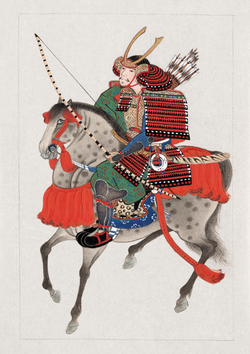
A mounted samurai with bow and arrows, wearing a horned helmet. c. 1878

The Mediterranean and Europe

Ancient Greece saw the rise of specialized cavalry in city-states like Thebes and Thessaly, and later in the conquests of Macedonia. The Roman Republic and early Empire initially relied on auxiliaries, but the Late Roman Empire adopted cataphracts—heavily armored cavalry—to counter eastern threats.
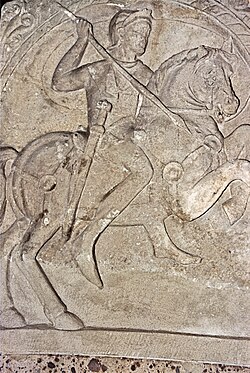
Tombstone of a Roman auxiliary trooper from Cologne, Germany. Second half of the first century AD.

During the European Middle Ages, cavalry evolved into the iconic mounted knight. These warriors wore heavy armor to maximize the impact of a charge. However, by the 17th century, the proliferation of gunpowder weapons rendered full plate armor obsolete. By the mid-18th century, most armor had disappeared, though some units kept a cuirass (a thickened breastplate) for protection against blades and distant gunfire.
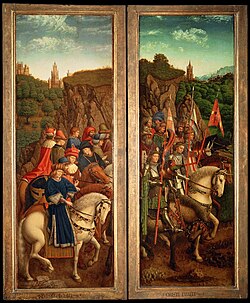
Knightly cavalry and noblemen, painting by Jan van Eyck (c. 1390–1441)

The Age of Professional Armies (18th–19th Century)
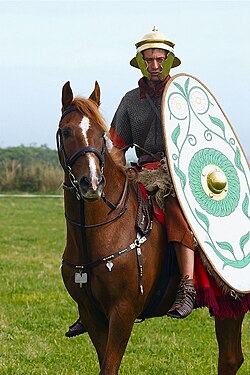
Reenactor as a Roman auxiliary cavalryman

By the early 19th century, European cavalry was generally categorized into three main types:

  • Dragoons: Medium cavalry, originally mounted infantry.
  • Hussars: Light cavalry, primarily armed with sabres and used for scouting.
  • Lancers (or Uhlans): Light cavalry armed with lances for piercing charges.
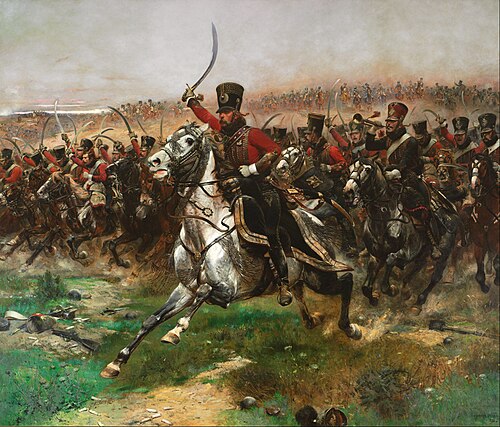
French 4th Hussars at the Battle of Friedland, 1807

The 19th century saw the expansion of cavalry into imperial territories. In India and Pakistan, prestigious regiments like Skinner's Horse and the Governor General's Bodyguard were established, blending local traditions with colonial military structures.
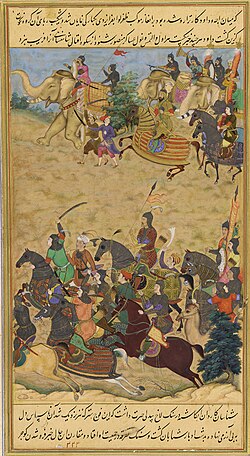
Akbar leads the Mughal Army during a campaign

The Decline and Mechanization of the Horse

Chinese caltrop jar
Chinese caltrop jar

The First World War

The early stages of World War I still featured massive cavalry movements. However, the introduction of trench warfare, machine guns, and barbed wire severely limited their effectiveness. The British Army, influenced by the South African War, began emphasizing dismounted action, though lances were briefly readopted in 1912 before the war's realities forced a shift in tactics.
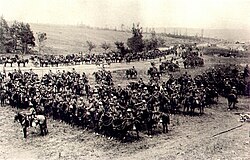
19th Lancers near Mametz during the Battle of the Somme, 15 July 1916

World War II and the Final Charges

By the 1930s, the transition to mechanized units was well underway. The British Army mechanized all cavalry regiments between 1929 and 1941, forming the Royal Armoured Corps. The U.S. Cavalry abandoned sabres in 1934 and began converting to vehicles in 1933.

Despite this, horses were still used in specific theaters. The 26th Cavalry Regiment (Philippine Scouts) fought the Japanese in 1942, and the U.S. 10th Mountain Division used captured German horses in Italy in 1945. The Soviet Union maintained cavalry divisions until the early 1950s, with the 4th Guards Cavalry Division being disbanded in April 1955.
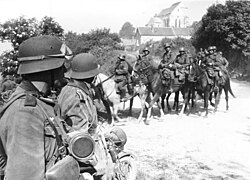
A German cavalry patrol in May 1940, during the Battle of France

Cavalry in the Modern Era

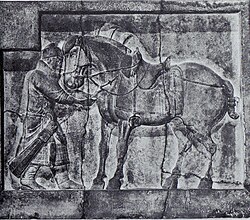
A bas-relief of a soldier and horse with saddle and stirrups, from the tomb of Chinese Emperor Taizong of Tang (r. 626–649), c. 650

In the late 20th and early 21st centuries, horses have appeared in guerrilla warfare in regions like Afghanistan and Portuguese Africa, where poor roads make vehicles impractical. In these cases, they function as mounted infantry rather than shock cavalry. Today, the horse is primarily seen in ceremonial roles, such as the Household Cavalry in the UK or the Lancieri di Montebello in Italy.
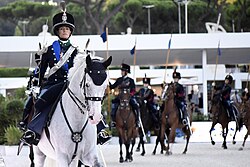
Italian Army regiment "Lancieri di Montebello" (8th) on public duties in Rome 2019

Summary of Cavalry Types and Roles
Cavalry Type Primary Role Typical Armament Key Era
Light Cavalry (Hussars) Reconnaissance & Screening Sabre 18th–19th Century
Heavy Cavalry (Knights/Cuirassiers) Shock Attack & Breakthrough Lance/Sword & Armor Medieval–19th Century
Mounted Infantry (Dragoons) Rapid Deployment to Foot Combat Musket/Carbine 17th–18th Century
Horse Archers Skirmishing & Harassment Composite Bow Ancient/Nomadic

Frequently Asked Questions
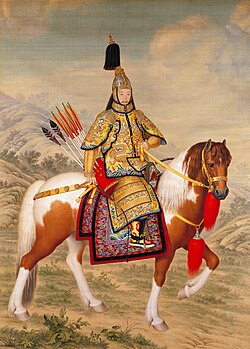
The Qianlong Emperor in ceremonial armor on horseback, painted by Giuseppe Castiglione, dated 1739 or 1758
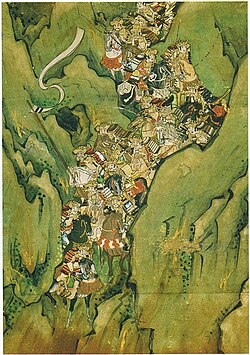
In the Battle of Ichi-no-Tani, Japanese cavalry moving down a mountain-side
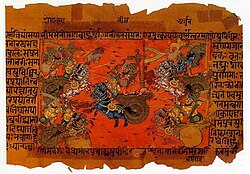
Manuscript illustration of the Battle of Kurukshetra
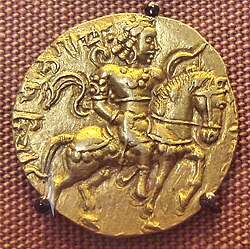
Coin of Chandragupta II or Vikramaditya, one of the most powerful emperors of the Gupta empire during times referred to as the Golden Age of India
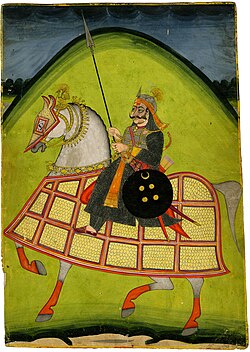
Rajput warrior on horseback
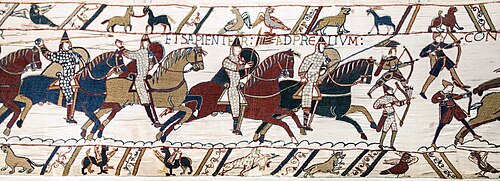
Horse-mounted Normans charging in the Bayeux Tapestry, 11th century
A 13th-century depiction of a riding horse. Note resemblance to the modern Paso Fino
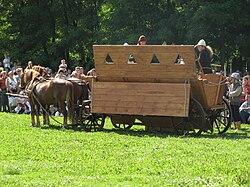
A Hussite war wagon: it enabled peasants to defeat knights
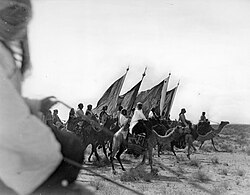
Arab camelry
Arab camelry
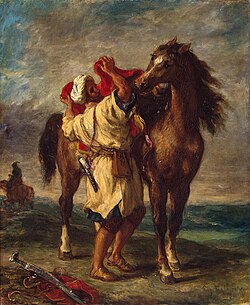
A Moroccan with his Arabian horse along the Barbary coast
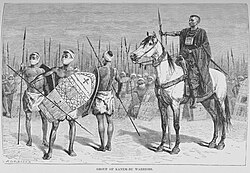
Kanem-Bu warriors armed with spears in the retinue of a mounted war chief. The Earth and Its Inhabitants, 1892
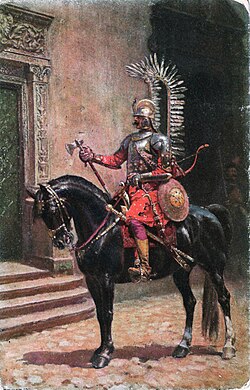
A Polish winged hussar
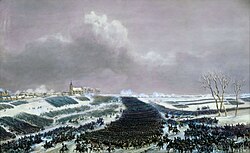
Cavalry charge at Eylau, painted by Jean-Antoine-Siméon Fort
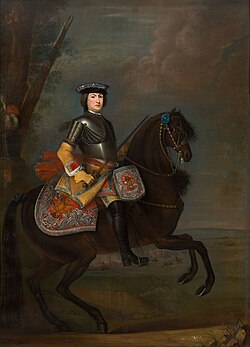
Portrait of a Dutch cavalry officer at the Battle of Ekeren
The British 28th infantry Regiment formed into a square at the Battle of Quatre Bras for protection from cavalry
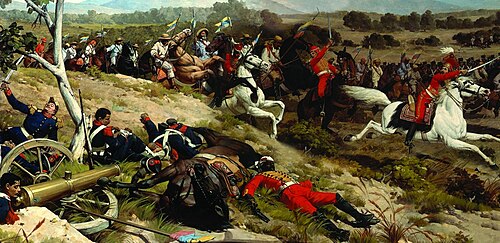
The charge of the Venezuelan First Division's cavalry at the Battle of Carabobo
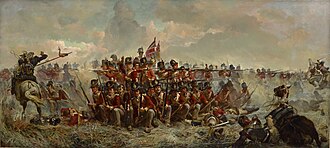
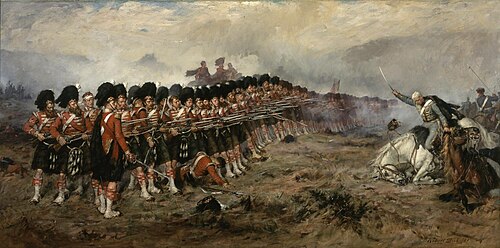
"The Thin Red Line" at the Battle of Balaclava, where the 93rd Regiment held off Russian Cavalry
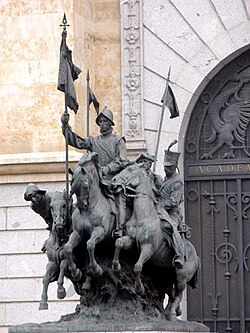
Monument to the Spanish Regiment of light cavalry of Alcántara
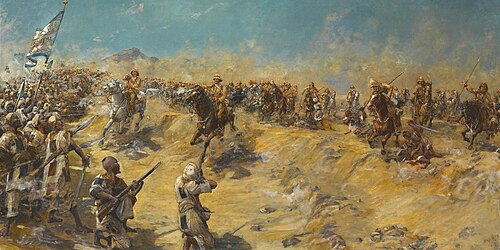
The charge of the 21st Lancers at Omdurman
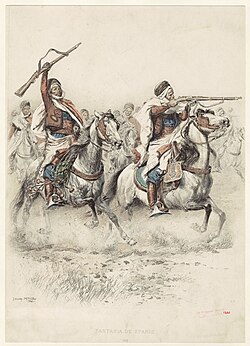
Algerian spahis of the French Army 1886
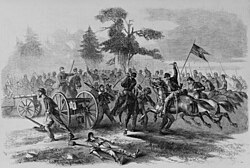
Union Cavalry capture Confederate guns at Culpeper
Italian cavalry officers practice their horsemanship in 1904 outside Rome
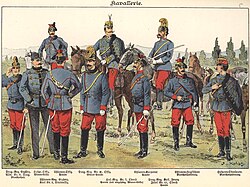
Austro-Hungarian cavalry, 1898
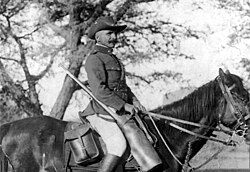
German cavalryman in September 1914, German South-West Africa
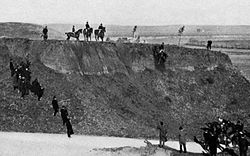
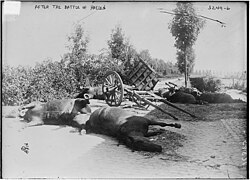
Dead German cavalry horses after the Battle of Halen – where the Belgian cavalry, fighting dismounted, decimated their still mounted German counterparts
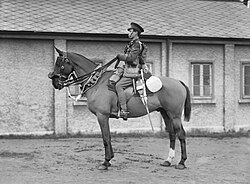
A British cavalry trooper in marching order (1914–1918)
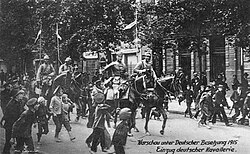
German dragoons, armed with lances, after the capture of Warsaw, August 1915
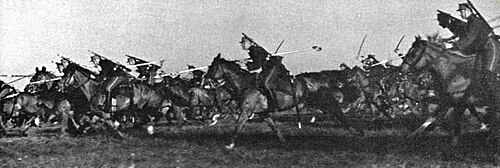
Lithuanian lancers training in the 1930s
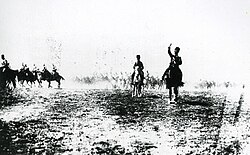
Turkish cavalry during mopping-up operation 1922
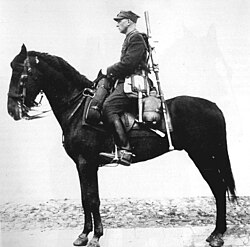
Polish uhlan with anti-tank rifle. Military instruction published in 1938.
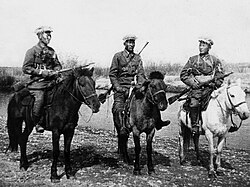
Mongolian cavalry in the Khalkhin Gol (1939)
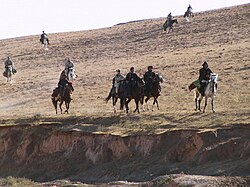
U.S. Special Forces and Combat Controllers on horseback with the Northern Alliance of Afghanistan, which frequently used horses as military transport
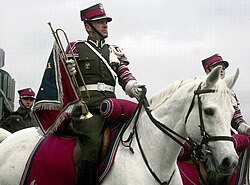
A trumpeter of the Representative Cavalry Squadron in the Polish Army
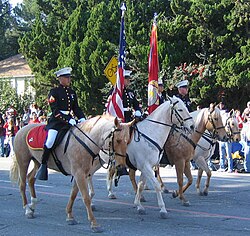
Horse-mounted color guard from Marine Corps Logistics Base Barstow
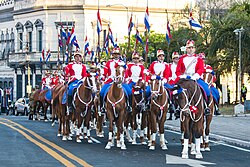
Horse-mounted guards from the Armed Forces of Paraguay at the inauguration of President Santiago Peña in August 2023
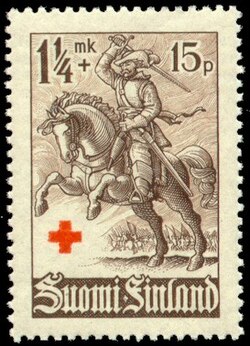
A cavalryman of Hakkapeliitta, the Finnish cavalry of Thirty Years' War, featured on a 1940 Finnish stamp

What is the difference between cavalry and mounted infantry?

Cavalry are soldiers who fight while remaining on horseback, using the horse's speed and mass as a weapon. Mounted infantry, such as early dragoons, use horses for rapid transportation but dismount to fight on foot.

Why did cavalry armor disappear?

The development of muskets and cannons in the 17th century made heavy plate armor ineffective. As firearms became more powerful, the weight of the armor became a liability rather than a protection, leading to its obsolescence by the mid-18th century.

When did the U.S. Cavalry stop using horses?

The U.S. Army's last horse cavalry actions occurred during World War II, specifically with the 26th Cavalry Regiment in the Philippines (1942) and the 10th Mountain Division in Italy (1945). The Second Cavalry Division was dismounted in March 1944.
What happened to cavalry regiments after mechanization?

Most cavalry regiments were converted into armored units. For example, the British cavalry became part of the Royal Armoured Corps, replacing horses with tanks and armored cars while often retaining their traditional cavalry titles.

Are horses still used in military operations today?
While rare, horses are still used as mounted infantry in guerrilla warfare in areas with poor transport infrastructure, such as in Afghanistan. Otherwise, their use is almost exclusively limited to ceremonial duties and state guards.