Catalonia Independence Referendum 2017: Results and Aftermath
On October 1, 2017, the autonomous community of Catalonia held a highly contentious referendum on whether to become an independent state in the form of a republic. The event was marked by intense political friction between the regional government in Barcelona and the central government in Madrid, leading to a day of significant civil unrest and international scrutiny.
The vote was the culmination of years of rising Catalan nationalism—the movement seeking self-determination or independence for the region based on its distinct language, culture, and history.
Key Facts

- Date: October 1, 2017.
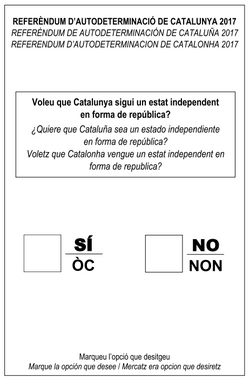
- Primary Question: "Do you want Catalonia to become an independent state in the form of a republic?"
- Yes Vote: 2,044,038 (92.01% of valid votes).
- No Vote: 177,547 (7.99% of valid votes).
- Turnout: 43.03% of registered voters.
- Official Languages: Ballot papers were provided in Catalan, Castilian Spanish, and Aranese Occitan.
Organization and Political Tension
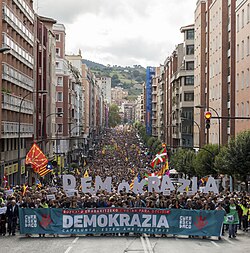
The referendum was organized by the Catalan government under the leadership of President Carles Puigdemont. Preparations involved extensive coordination with local municipalities, including a meeting on September 16, 2017, with approximately 700 mayors of Catalonia to ensure the vote could proceed.
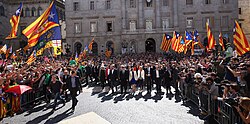
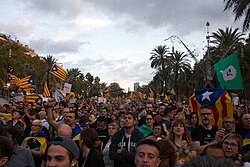
Despite the regional government's efforts, the Spanish central government declared the referendum unconstitutional. This led to a period of high tension, including raids on Catalan government buildings on September 20, 2017, which sparked widespread protests in Barcelona.
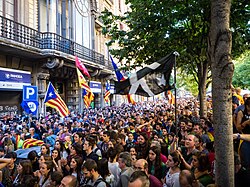
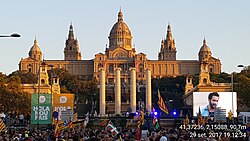
The campaign reached its peak with a final mass rally in front of the Palau Nacional on September 29, 2017, where supporters gathered under the "Sí" (Yes) flags of the Catalan National Assembly.

The Voting Process and Police Intervention
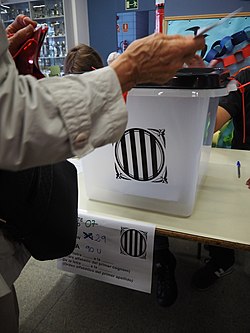
To facilitate the vote, the Catalan government prepared ballot papers in the three official languages of the region: Catalan, Castilian Spanish, and Aranese Occitan.
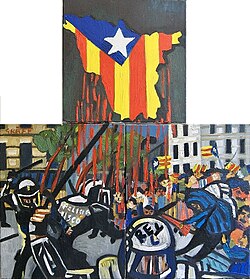
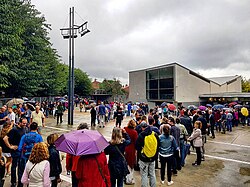
The day of the vote, October 1, was characterized by severe clashes. The Spanish National Police and Civil Guard launched operations to shut down polling stations and seize ballot boxes. One notable incident occurred at the Institut Pau Claris polling station, where police stormed the building to stop the vote.
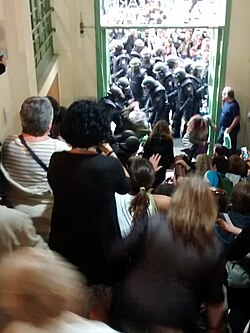
Despite these interventions, many voters queued for hours to cast their ballots in a gesture of defiance.
Referendum Results

The Government of Catalonia reported a landslide victory for the "Yes" camp, although the turnout was limited to 43.03% due to the police operations and the boycott by those opposing independence.
| Choice | Votes | Percentage |
|---|---|---|
| Yes | 2,044,038 | 92.01% |
| No | 177,547 | 7.99% |
| Invalid/Blank | 64,632 | 2.83% |
| Total Votes | 2,286,217 | 100.00% |
Regional Breakdown
Support for independence was high across all provinces, with the highest percentages of "Yes" votes recorded among Catalans living abroad (98.72%) and in the province of Girona (96.00%).
Aftermath and Consequences
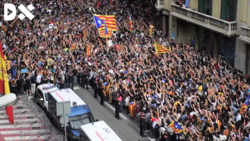
The immediate aftermath of the referendum was marked by violence and political instability. Reports indicated hundreds of injuries resulting from police charges on voting day. This led to a general strike in Catalonia to protest police brutality.
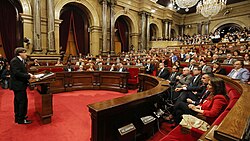
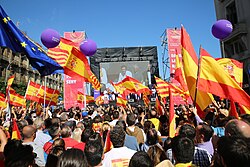
The political fallout was swift. President Carles Puigdemont addressed the Catalan Parliament on October 10, 2017, as the region faced a constitutional crisis. Simultaneously, counter-demonstrations took place in Barcelona by those opposing independence and supporting Spanish unity.
Beyond the political sphere, the crisis had economic repercussions, with a reported spike in companies relocating their legal headquarters out of Catalonia to avoid instability.
Frequently Asked Questions
What was the main question of the 2017 referendum?
The voters were asked: "Do you want Catalonia to become an independent state in the form of a republic?"
Was the referendum recognized by the Spanish government?
No, the Spanish government and the Constitutional Court declared the referendum illegal and unconstitutional, leading to police operations to prevent the vote.
What was the final turnout for the vote?
Out of 5,313,564 registered voters, 2,286,217 cast their ballots, resulting in a turnout of 43.03%.
Which provinces showed the strongest support for independence?
Girona (96.00%) and Lleida (95.14%) showed the highest support among the provinces, while Catalans abroad recorded the highest overall percentage at 98.72%.
What were the immediate consequences of the vote?
The vote led to widespread protests, a general strike against police brutality, the relocation of numerous businesses from the region, and a severe political crisis between Barcelona and Madrid.