Catalan People: History, Culture, and Identity
The Catalans are a Romance people with a rich and complex history centered in the northeast of the Iberian Peninsula. With a total population of approximately 9 million, they maintain a distinct cultural and linguistic identity that spans borders, primarily residing in Spain and France, with significant diaspora communities in the Americas.
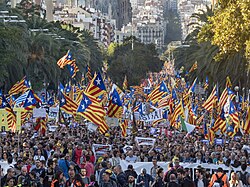
Identity among Catalans is multifaceted. According to July 2024 government surveys, 41.1% of residents in Catalonia identify as only Catalan or more Catalan than Spanish, 44.1% feel both Catalan and Spanish, and 11.6% identify as only Spanish or more Spanish than Catalan.
Key Facts
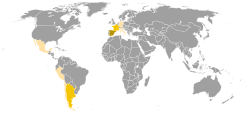
- Total Population: Approximately 9 million people.
- Primary Regions: Spain (over 8 million) and France (approx. 491,000).
- Language: Catalan is spoken by over 9.8 million people globally.
- National Day: September 11, commemorating the fall of Barcelona in 1714.
- UNESCO Heritage: The castells (human towers) are recognized as Masterpieces of the Oral and Intangible Heritage of Humanity.
Historical Evolution
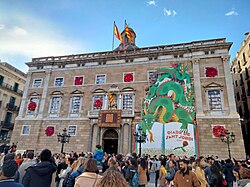
Early Foundations and the Middle Ages
The region's early history was shaped by the struggle between Christian and Muslim forces. In 718, Muslim Arabs took control of the area to access French territory. However, the Franks resisted these incursions, notably at the Battle of Tours in 732, leading to the creation of "Old Catalonia"—a northern border region consisting of counties such as Barcelona, Ausona, and Urgell. While the north resisted settlement, "New Catalonia" in the south remained under Arab rule for several centuries.
By the 10th century, the County of Barcelona became independent from West Francia. In 1137, it entered a dynastic union with the Kingdom of Aragon, forming the Crown of Aragon. This union fueled the Reconquista (the Christian effort to reclaim the peninsula), leading to the establishment of the kingdoms of Valencia and Majorca. By the mid-14th century, the state became known as the Principality of Catalonia.
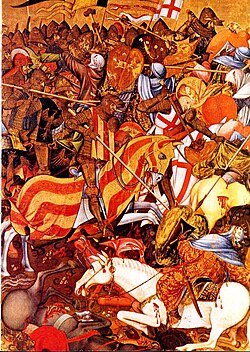
Conflict and Integration
The late 15th century saw the union of the Crown of Aragon with the Crown of Castile through the marriage of Isabella I and Ferdinand II. While realms initially kept their own laws and borders, tensions grew, leading to the Reapers' War in 1640. This conflict eventually resulted in the Treaty of the Pyrenees (1659), which split the Principality, placing the northern strip under French rule.
The War of the Spanish Succession (1705–1714) marked a turning point. Following the capitulation of Barcelona on September 11, 1714, the Bourbon victory led to the abolition of Catalan political institutions and legal systems.
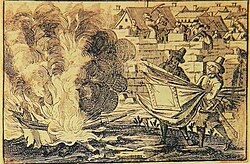
Modern Era and Autonomy
Throughout the 19th and 20th centuries, Catalan identity faced varying degrees of suppression. Under the Spanish Second Republic (1932), autonomy was briefly regained before being crushed by Francisco Franco's nationalist forces in 1939. Following Franco's death in 1975 and the Spanish Constitution of 1978, Catalans regained their right to cultural expression. Today, political discourse fluctuates between those seeking greater autonomy or independence and those favoring the status quo.
Culture and Society
Language and Communication
The Catalan language is a cornerstone of the people's identity. As of 2011, there were over 9.8 million speakers, with 5.9 million in Catalonia. While 4.4 million are native speakers, many use Catalan as a second language. In Spain, most speakers are bilingual in Catalan and Spanish. Conversely, in Roussillon (France), a language shift has occurred, leaving only a minority of French Catalans speaking the language.
Traditions and Lifestyle
Catalan culture is famous for its unique traditions, most notably the castells—elaborate human towers that have been part of the culture since 1712.
![The castells, human towers, are part of the Catalan culture since 1712 and were declared by UNESCO to be amongst the Masterpieces of the Oral and Intangible Heritage of Humanity.[30]](/images/39/09/39095aa4a8a07bb45a18770a127fe3bd85f98da2ff3b0f5aeb0ed4ed97515201.jpg)
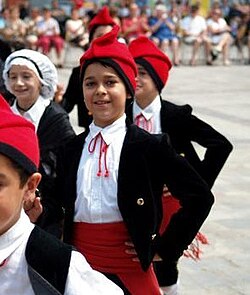
Traditional attire often includes the barretina, a distinctive headgear worn by children and adults alike.
Cuisine and Diet
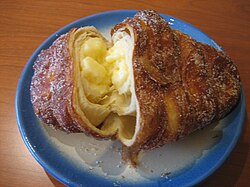
Catalan gastronomy is world-renowned, featuring chefs like Ferran Adrià i Acosta and Jordi Roca i Fontané. The traditional diet follows a specific daily rhythm:
- Breakfast: A light start with fruit, coffee, or pa amb tomàquet (bread with tomato), often split into two sessions.
- Lunch: The main meal (13:00–14:30), typically consisting of three courses: pasta/vegetables, meat/fish, and fruit/yogurt.
- Dinner: A lighter meal (20:00–22:30), often a single main dish accompanied by moderate amounts of wine.
Religion and Beliefs
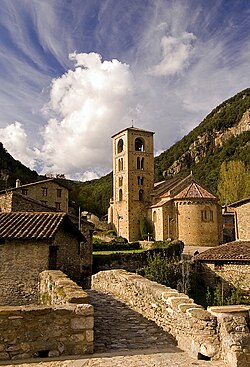
Historically devoted Catholics, the region has undergone several waves of secularization. While 52.4% of Catalans still declare themselves Catholic, there is a significant rise in agnosticism and atheism (30.2%). Recent immigration has also introduced other faiths, including Islam (7.3%), Evangelicalism (2.5%), and Buddhism (1.3%).
Demographics and Distribution
While the heart of the population is in Spain, the Catalan diaspora is widespread, particularly in Latin America.
| Region/Country | Estimated Population | Notes |
|---|---|---|
| Spain | 8,005,784 | Born in Catalonia (2023) |
| France | 491,000 | Born in Pyrénées-Orientales (2023) |
| Argentina | 188,000 | Estimates vary |
| Mexico | 63,000 | - |
| Germany | 43,000 | 2020 data |
| Andorra | 16,555 | 2024 data |
Frequently Asked Questions
What is the significance of September 11 in Catalonia?
September 11 is commemorated as Catalonia's National Day, marking the anniversary of the capitulation of Barcelona in 1714, which led to the loss of Catalan political institutions and the imposition of absolutism.
What are castells?
Castells are traditional human towers built by teams of people. They are a vital part of Catalan culture since 1712 and are recognized by UNESCO as Masterpieces of the Oral and Intangible Heritage of Humanity.
Is Catalan a separate language or a dialect?
Catalan is a distinct Romance language spoken by over 9.8 million people. It is the primary language of Catalonia and is also spoken in parts of France, Andorra, and the Balearic Islands.
What is pa amb tomàquet?
Pa amb tomàquet, meaning "bread with tomato," is a staple of the traditional Catalan breakfast and a key element of their regional cuisine.
How do Catalans view their identity today?
Identity is diverse; while many feel exclusively Catalan or more Catalan than Spanish, a large portion of the population (44.1%) identifies as both Catalan and Spanish.